Order Flow Trading: How to Read It, and Where It Falls Short
Dylan Forexia6 min read
Order flow trading is reading the orders that actually traded, and the ones still waiting, to see who pushed price and whether anybody stopped them. Instead of asking only where price went, you ask who hit the bid or lifted the offer, how much, and what happened to price afterwards. It works well in markets that have a real record of trades, and it works badly, or not at all, in markets that do not. Spot forex is the main one that does not.
This page defines the tools, gives a four-step way to read them and an example in words, and is plain about the limits, because those are what most guides skip.
What is order flow trading?
A candle shows four numbers: open, high, low, close. It hides the thousands of orders that made them. Order flow trading goes back to those orders.
There are two kinds, and the difference is the whole subject.
| Resting orders | Executed orders | |
|---|---|---|
| What they are | Limit orders waiting in the book | Trades that already happened |
| Where you see them | Order book, depth, book heatmap | Time and sales (the tape), footprint |
| Can be cancelled | Yes, any time | No |
| Tells you | Where people say they would act | Where people did act |
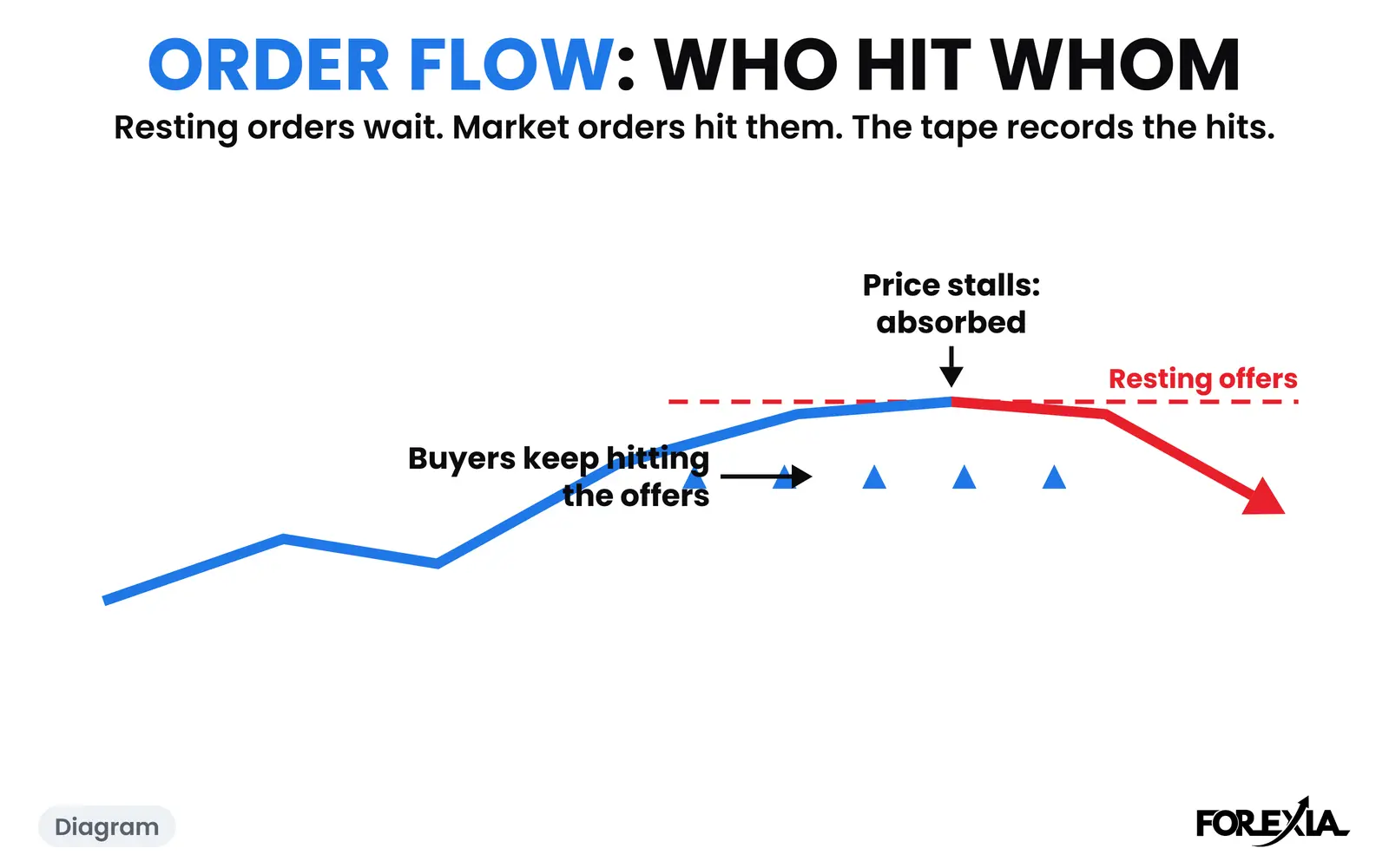
A market order crosses the spread and trades at once, so it is aggressive. A limit order waits and is passive. Every trade has one of each: an aggressive buyer lifting a passive seller's offer, or an aggressive seller hitting a passive buyer's bid. Order flow is the record of which side was aggressive, how hard, and whether the passive side held.
What are the building blocks?
Five tools make up most of what traders mean by order flow, and each shows a different part of the picture.
- Bid, ask and spread. The best price a buyer will pay and a seller will take, and the gap between them. Price mostly moves up when buyers pay the ask and down when sellers hit the bid; pulling resting orders can move it too.
- Market depth (the order book). The resting orders at each price on both sides. It shows intent, and intent can be withdrawn. Large orders in the book can be pulled before price reaches them.
- Time and sales (the tape). A list of each trade as it happens, with size, price and which side was aggressive. It is the cleanest record there is, and it moves fast.
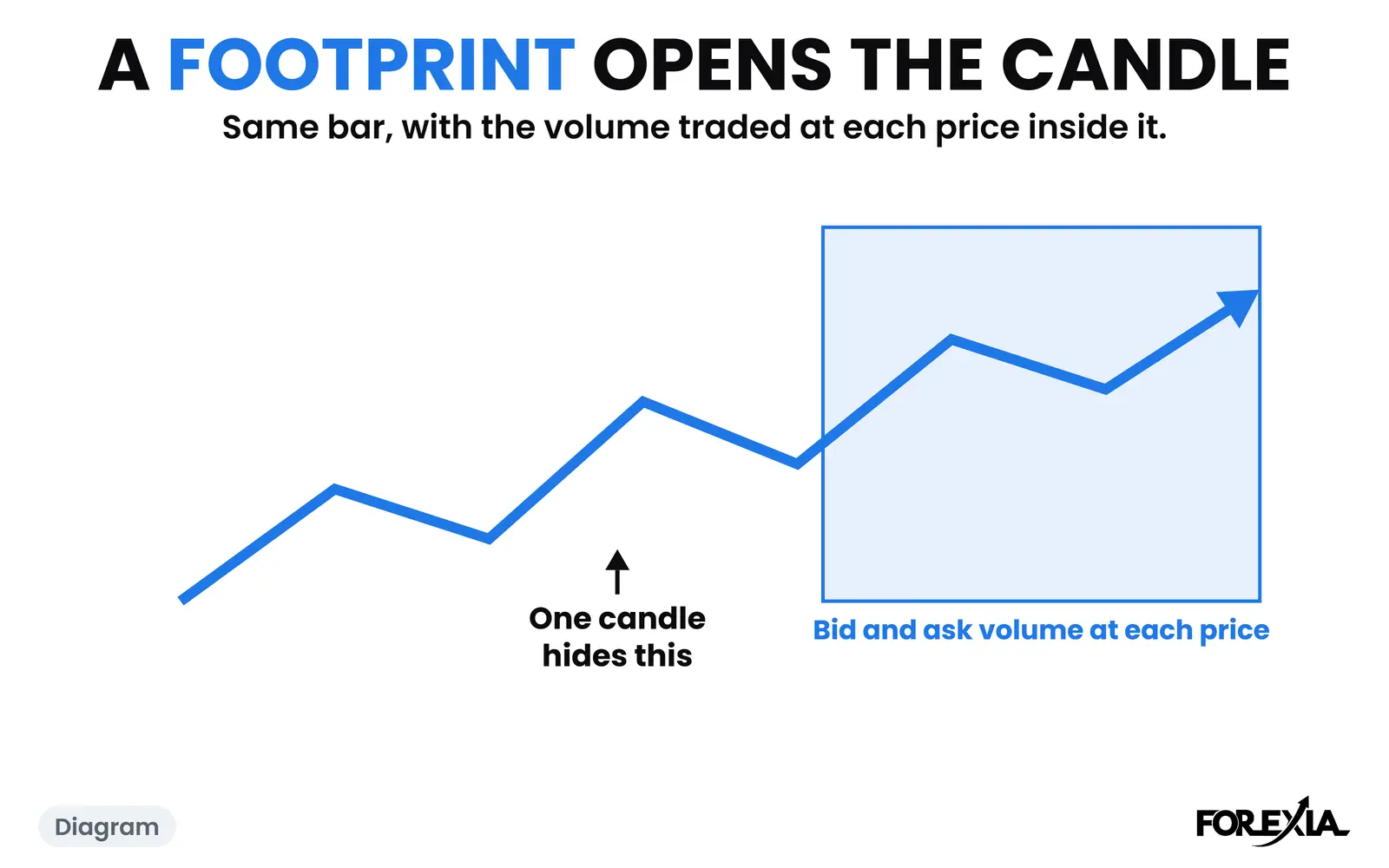
- Footprint chart. Volume traded at each price within each bar, split into trades at the bid and trades at the ask. See the footprint chart page for reading one.
- Delta and cumulative delta. Delta is volume bought at the ask minus volume sold at the bid. A positive bar was bought more aggressively than sold. Cumulative delta adds the bars up. It measures aggression, which is not the same as direction: price can fall on positive delta if the offers keep absorbing.
How do you read order flow, step by step?
A reading method, written out so you can test it. Each step needs something you can point to on a screen.
- Pick a market with a real tape. Futures, and perpetual futures on a venue where every trade is on one order book. If the volume on your chart is a count of price changes, there is nothing here for the method to read.
- Mark the place you care about before looking at the flow. A previous day's high or low, a round number, the edge of a range. Flow at a random price tells you little. Flow at a level where stops and entries cluster tells you what the crowd is doing there. Our liquidity pages cover where those levels sit.
- Ask whether aggression is being absorbed. If buyers hit the ask again and again and price does not rise, someone is selling into them with limit orders: that is absorption. If price rises easily on small buying and the offers thin out, there is nothing in the way.
- Write down what would prove you wrong. A level or an event: price accepting beyond the zone, or delta turning the other way while price holds. If you cannot name it, you are not reading, you are hoping.
A worked example in words
An illustrative case, not a real day: price rises into the previous day's high. At the high the tape shows a burst of market buys, the footprint shows large volume at the ask, and delta for the bar is strongly positive. Price does not go through. The next bar opens a little lower, and the ask side has thinned.
One reading: the buyers were the ones trapped. They bought into an area full of resting sellers and stops, and when the sellers held the line, the buyers' own stops became the fuel for the move down. That is a liquidity sweep, seen from inside.
Another reading is that there is more buying to come. The flow does not decide between them. What decides is what price does next, and the invalidation: if price closes and holds beyond the high, the absorption reading was wrong.
Does order flow work in forex?
Our forex order flow explained page covers the forex side at length; in short:
Only in part, and you should know which part.
- Spot forex has no central tape. Trades take place between banks, dealers and brokers, and nobody sees all of them. Your broker sees its own clients. Most charting platforms show tick volume, a count of price changes, which is a rough stand-in and not the real thing.
- Currency futures do. Futures on the major currencies trade on an exchange with a real tape, real volume and real depth. Many traders read order flow there and apply it to the spot pair.
- Perpetual futures on a single order book do. A venue where every order goes to one on-chain book, such as Hyperliquid, publishes the trades and the book (Hyperliquid docs). You see one venue's flow, not the whole market's, but it is a complete record of that venue.
Order flow also does not replace positioning data. The CFTC's weekly Commitments of Traders report shows what large speculators hold in currency futures, three days after the Tuesday it describes, in our COT report. It is slow and wide; the tape is fast and narrow.
What are the limits of order flow trading?
The method is narrower than its guides usually admit, and the limits below are the ones that matter most.
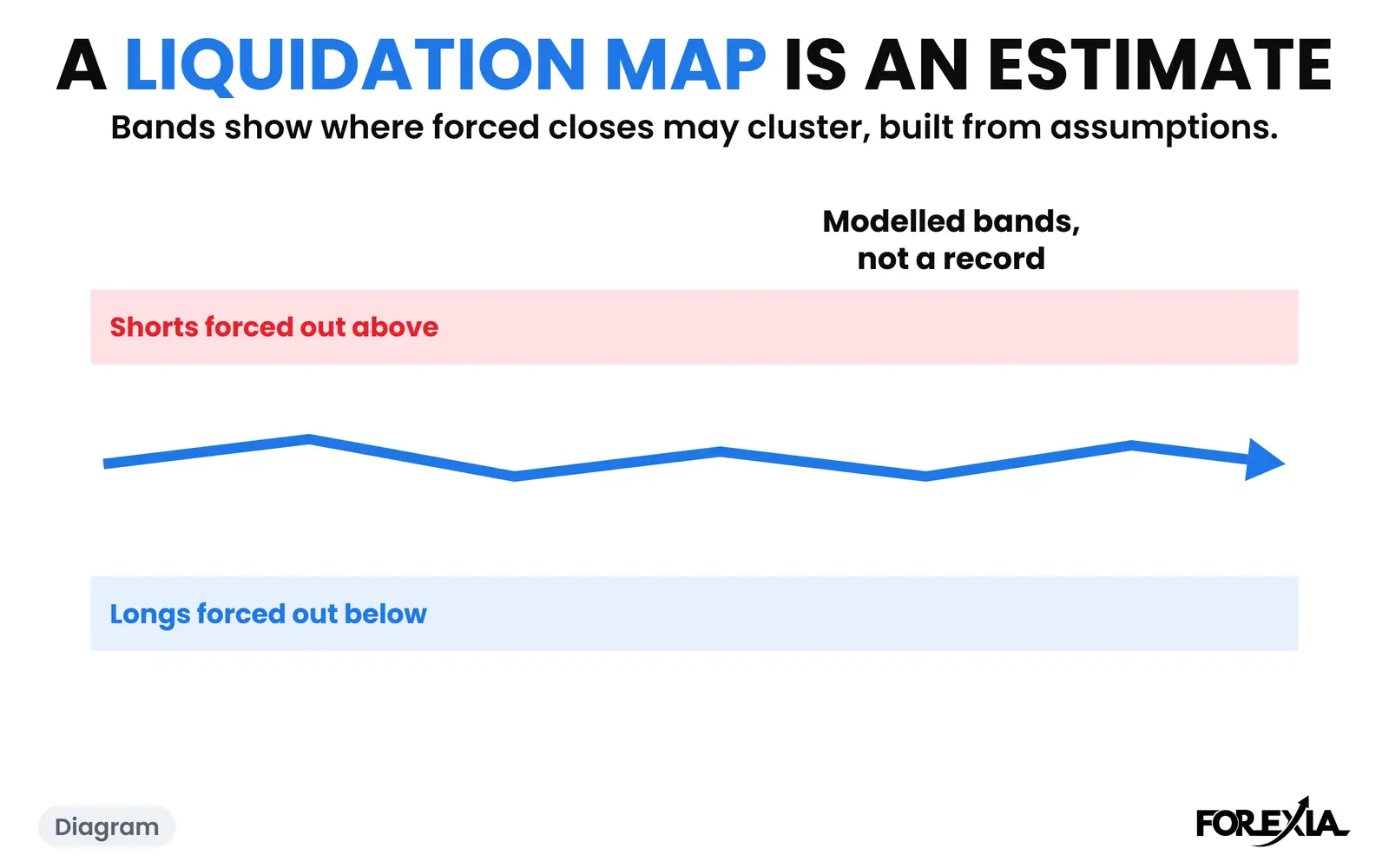
- Large resting orders can be fake. Orders in the book can be placed and cancelled in a blink. Executed trades cannot be cancelled, which is why many readers trust the tape over the book.
- Aggression is not direction. A seller using a limit order and a buyer using a market order shows as a buy. The label says who crossed the spread, not who was right.
- Some flow is split up. A large order is often cut into small pieces and spread over time and venues, so a single print is rarely the whole story.
- It needs a fast screen and attention. Order flow suits short time frames. On a daily chart it adds little over what the candles already show.
- We have not tested it. Whether reading order flow improves results is not something this page can tell you. Test it on your own records before you size up.
Common mistakes
Four errors account for most bad reads.
- Reading flow with no level. Delta bars at a random price are noise.
- Trusting the book over the tape. What was posted is a promise; what was traded is a fact.
- Treating tick volume as real volume. On spot forex it is a different thing.
- Skipping the invalidation. A read with no way to be wrong cannot be checked.
Trading perpetual markets
The Forexia trading terminal lists perpetual futures on crypto, forex, gold, stocks and indices from your own wallet. Each fill pays a platform fee plus Hyperliquid's own fee, shown on the order ticket before you send, and markets have a spread. Leveraged trading can lose you more than you put in. Only trade money you can afford to lose. This is not financial advice.
Frequently asked questions
What is order flow trading?
Order flow trading is reading the orders that actually traded, and the orders still waiting, to see who was aggressive and whether they were absorbed. It uses the order book, the tape of executed trades and volume at each price, rather than the candle alone.
Can you do order flow trading in forex?
Only partly. Spot forex has no central exchange, so there is no single tape. Your broker shows its own flow, and the volume on most forex charts is tick count. Currency futures and perpetual futures on a single order book have a real tape, and that is where order flow tools work best.
What is the difference between order flow and volume?
Volume says how much traded. Order flow says who traded: whether the buyers or the sellers were the ones that crossed the spread. Two bars with the same volume can have opposite order flow, one bought at the offer all the way up and one sold into the bid.
Do you need a footprint chart for order flow trading?
No. A footprint chart is one way to see volume at each price, split into buys and sells. The order book and the time-and-sales tape show the same activity in a different form, and a simple delta line is a start.