Forex Order Flow Explained Without Jargon
Dylan Forexia6 min read
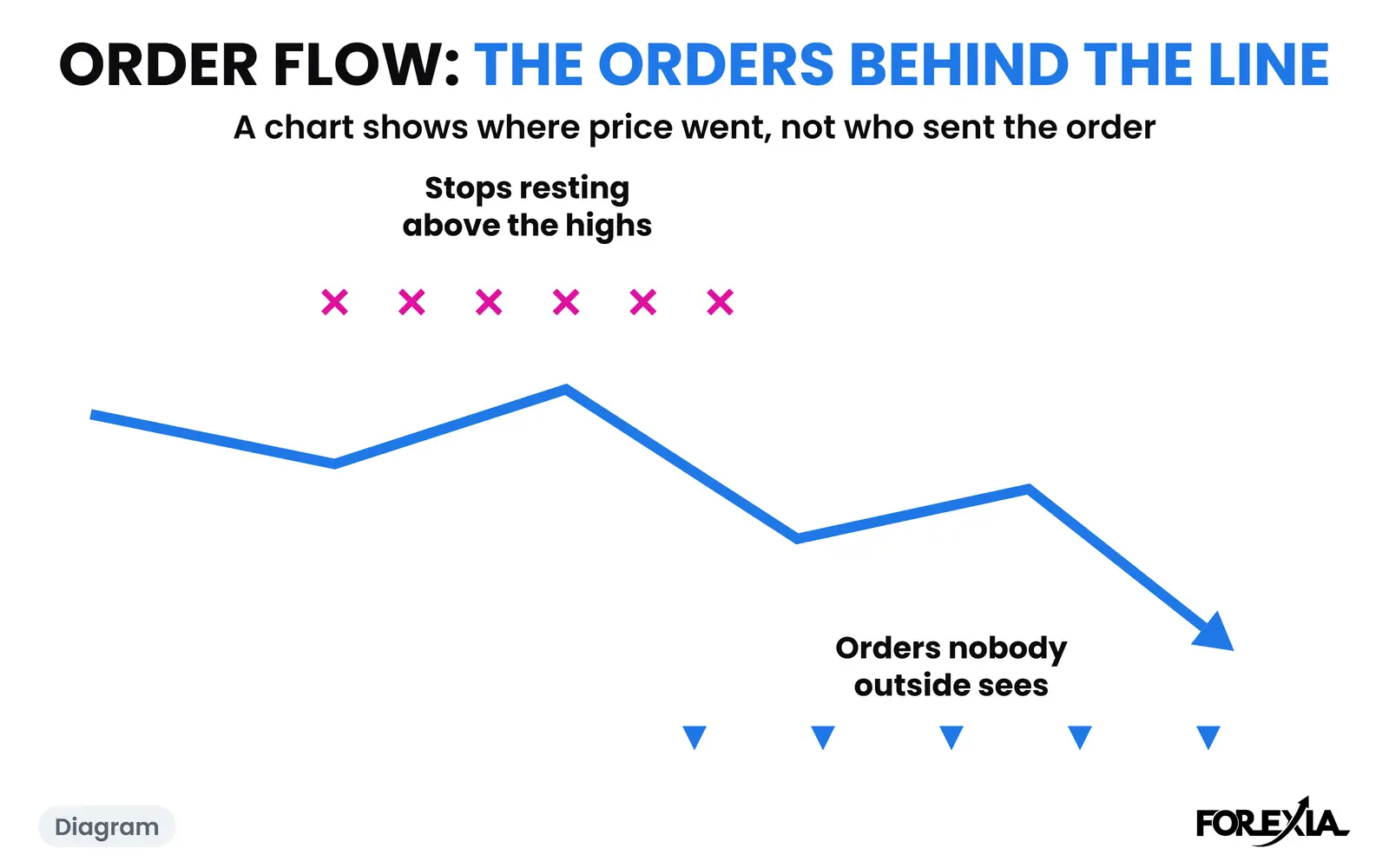
Forex order flow explained in one paragraph: it is the stream of buy and sell orders that arrives and moves price. In forex nobody can see all of it. Spot trading has no central exchange, no consolidated order book and no public tape, so each dealer sees only its own flow and each broker shows only its own slice. A chart shows where price went. It does not show who sent the orders.
This page says what order flow is, what retail tools show of it, and what a chart can fairly suggest. The wider map is on the institutional trading page.
Forex order flow explained: what is it, exactly?
It is every order that reaches the market, in the order it arrives. Orders come in two kinds. A market order trades now at the best price on offer. A pending order, such as a stop or a limit, waits for price to reach it. Price moves because market orders use up the quotes at one price and force the next.
In stocks, an exchange publishes that flow: the order book, the trades and their volume. Forex has no such place. The Bank for International Settlements counts $9.6 trillion a day in April 2025 across banks, funds and companies, in swaps, forwards and spot, and no one sees it as one list.
Why can't you see the whole of it?
Because most of it never leaves the dealer. In the major hubs, dealers match more than 80% of customer trades within their own internal liquidity pools, which the BIS calls internalisation. A customer's buy meets another's sell on the dealer's own book, and no one else is shown it.
So any picture of forex order flow is a partial one. A dealer sees its own clients. A broker sees its own accounts. A retail platform's volume is a count of that platform's activity, or of price changes, and not the market's total. Retail-driven trading is a memo line in the BIS tables, $242 billion a day, 2.5% of turnover, and the survey sees only the part that reached a dealer.
What do the different kinds of order do to price?
Each kind leaves a different mark, and it helps to know which is which.
- A market order takes what is quoted. It moves price by its size, and the larger it is, the further it travels.
- A limit order waits at a price and adds to the quotes there. A cluster of them can slow price, though nobody outside sees the cluster.
- A stop order is dormant until price touches it, and then it becomes a market order. A pile of stops behind a level turns into a burst of market orders when the level goes.
The third is why levels matter in our read. A stop is a promise to trade at whatever price follows, and when many fall due together, they feed each other. Whether a given burst came from stops, or from a hedge, is exactly what a chart cannot say.
What do traders use instead of the real thing?
They use stand-ins, and each has a limit.
- Broker position data. It shows how that broker's clients are placed. It is one firm's sample.
- Futures volume and depth. Currency futures trade on an exchange, so they publish both. They are a sample of the market, with their own contract sizes and times.
- The COT report. It shows large traders' futures positions once a week, for the Tuesday before, published on Friday. It is positioning, not orders. Our COT report guide sets out what it can and cannot say, with its caveats.
- The chart itself. Candles show where price traded, and the levels where it turned. That is the stand-in we use, and it has the biggest limit of all: it records the result of the orders and never the orders.
What can a chart suggest about orders?
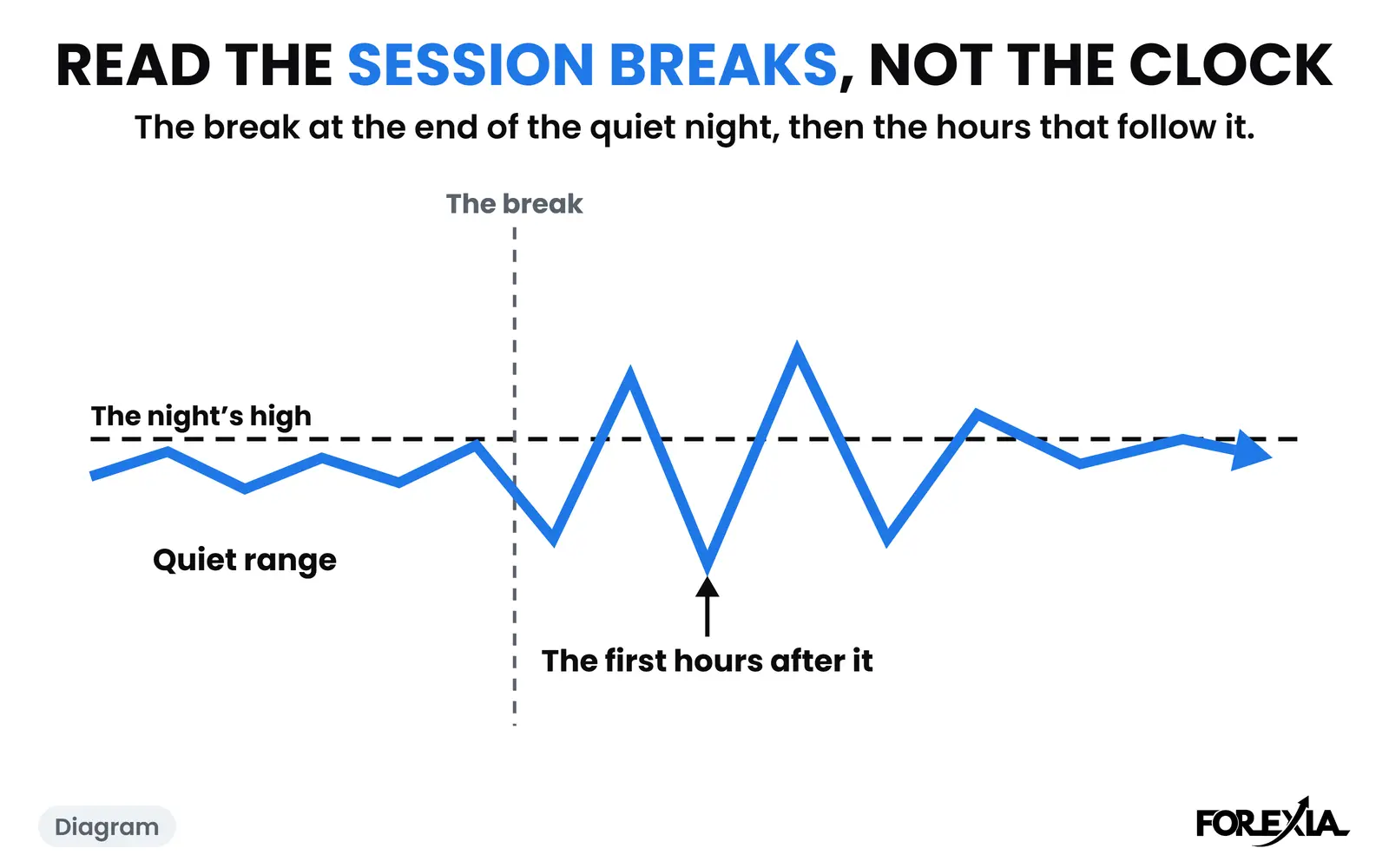
It can suggest where orders probably rest, and nothing more. Traders who learned the same chart mark the same places: above a quiet range's high, below its low, past yesterday's high. Stops and breakout orders pile up there. When price reaches such a place, a lot of orders can trade at once, and a large seller or buyer who needs the other side may find it there. That is our read, labelled as one. Liquidity Mapping is what we call marking those places before the session.
What a chart cannot do is tell you whose order it was. A fast candle through a level might be a dealer hedging, a client's order, a stop being set off, or news. The candle looks the same each time.
What does order flow look like on a real day?
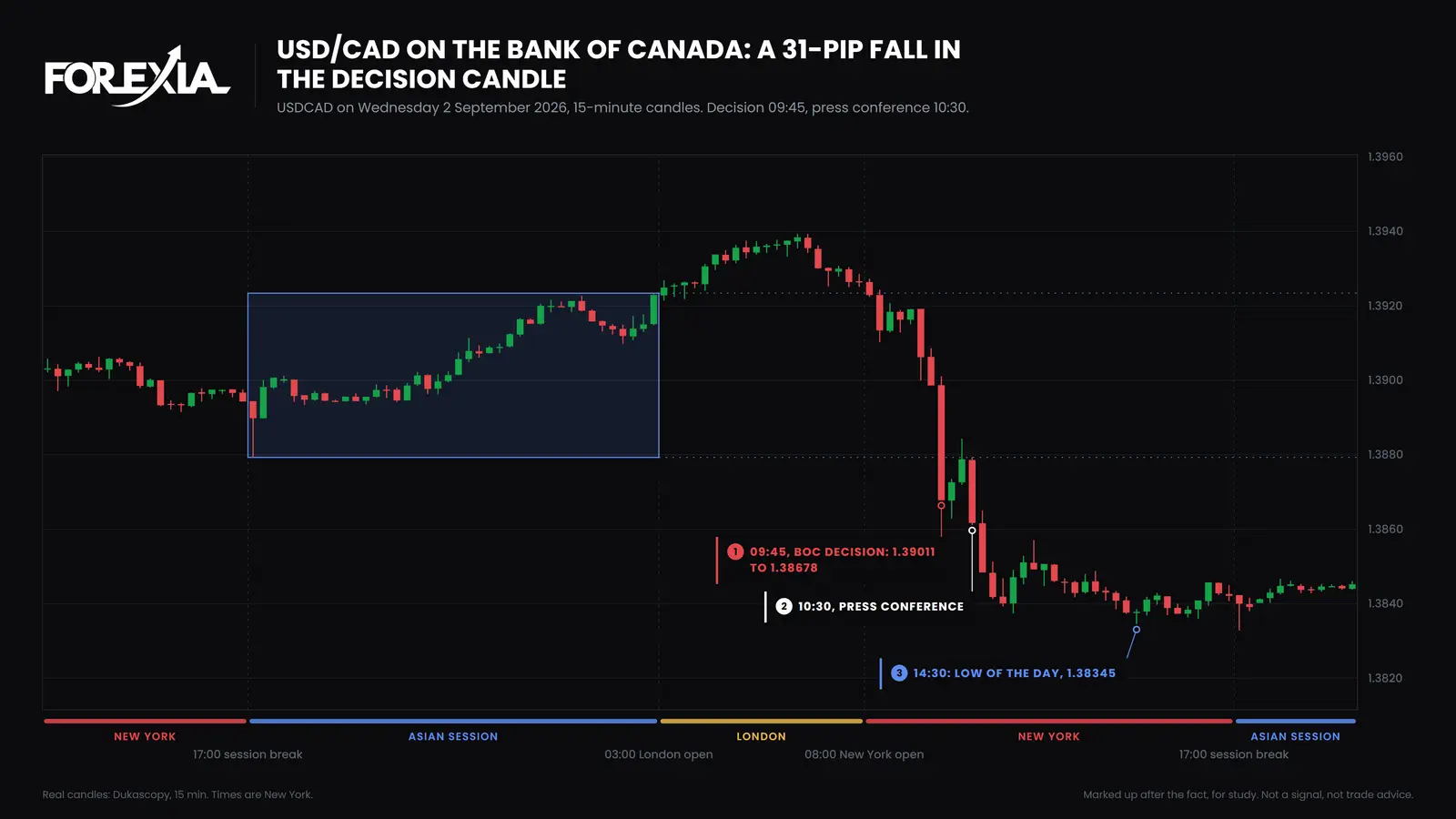
Here is one dated day, read from the three seats: retail, the market maker and the observer. Candles are 15-minute Dukascopy, in New York time.
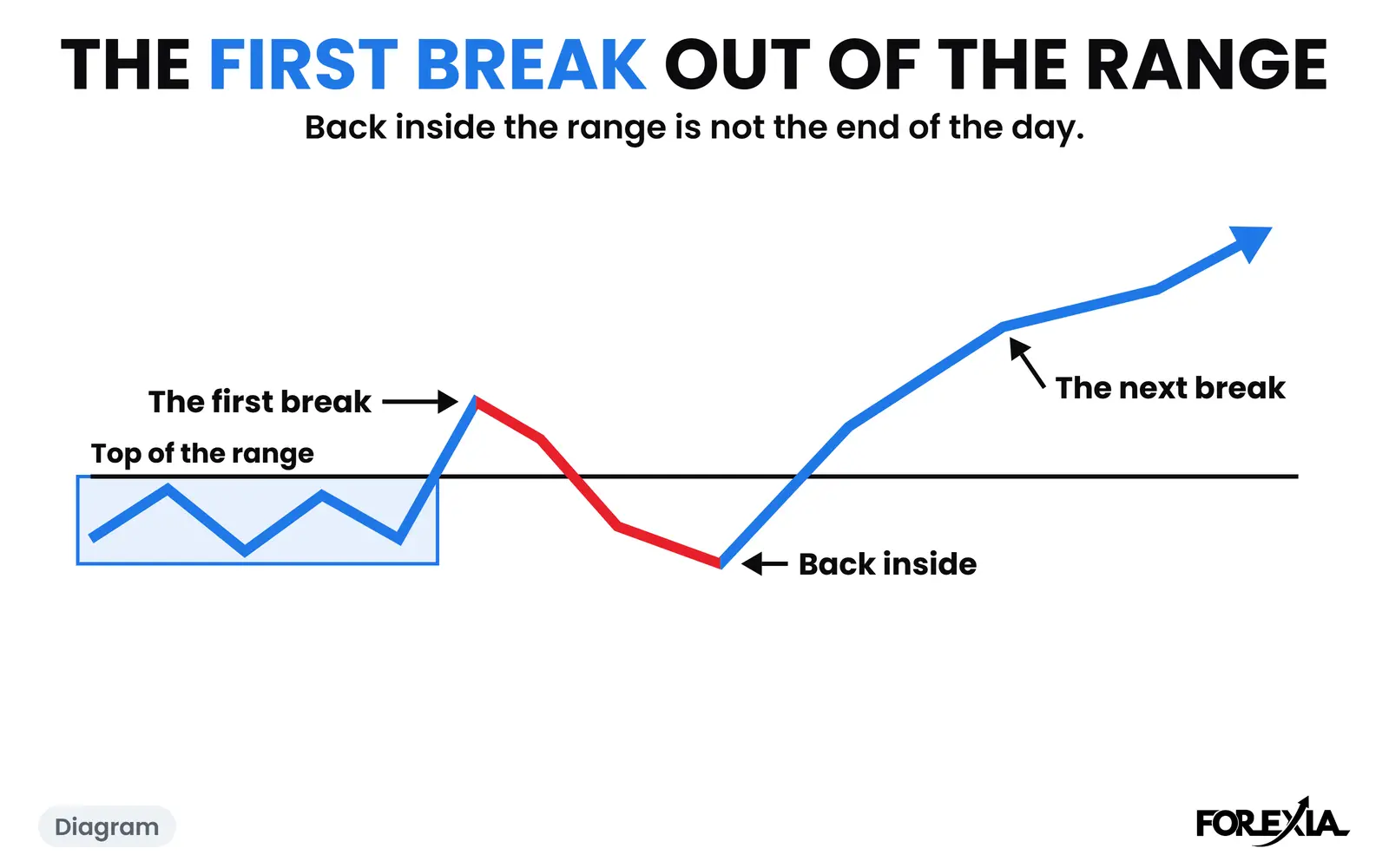
USD/CAD on Wednesday 15 April 2026 spent Asia in a 24-pip range, 1.37580 to 1.37816. It did not sit tightly: it drifted and closed near the top of its own range, which our write-up counts against the pattern. At 07:30 New York, in the London session, price pushed 6 pips above the top, to 1.37879, the high of the day. The first 15-minute close back under the range top came at 08:15, at 1.37799. Price then fell 62 pips, to 1.37263 by 14:15, through the whole Asian range. We found no medium or high-impact release for the dollar or the Canadian dollar lined up with the push.
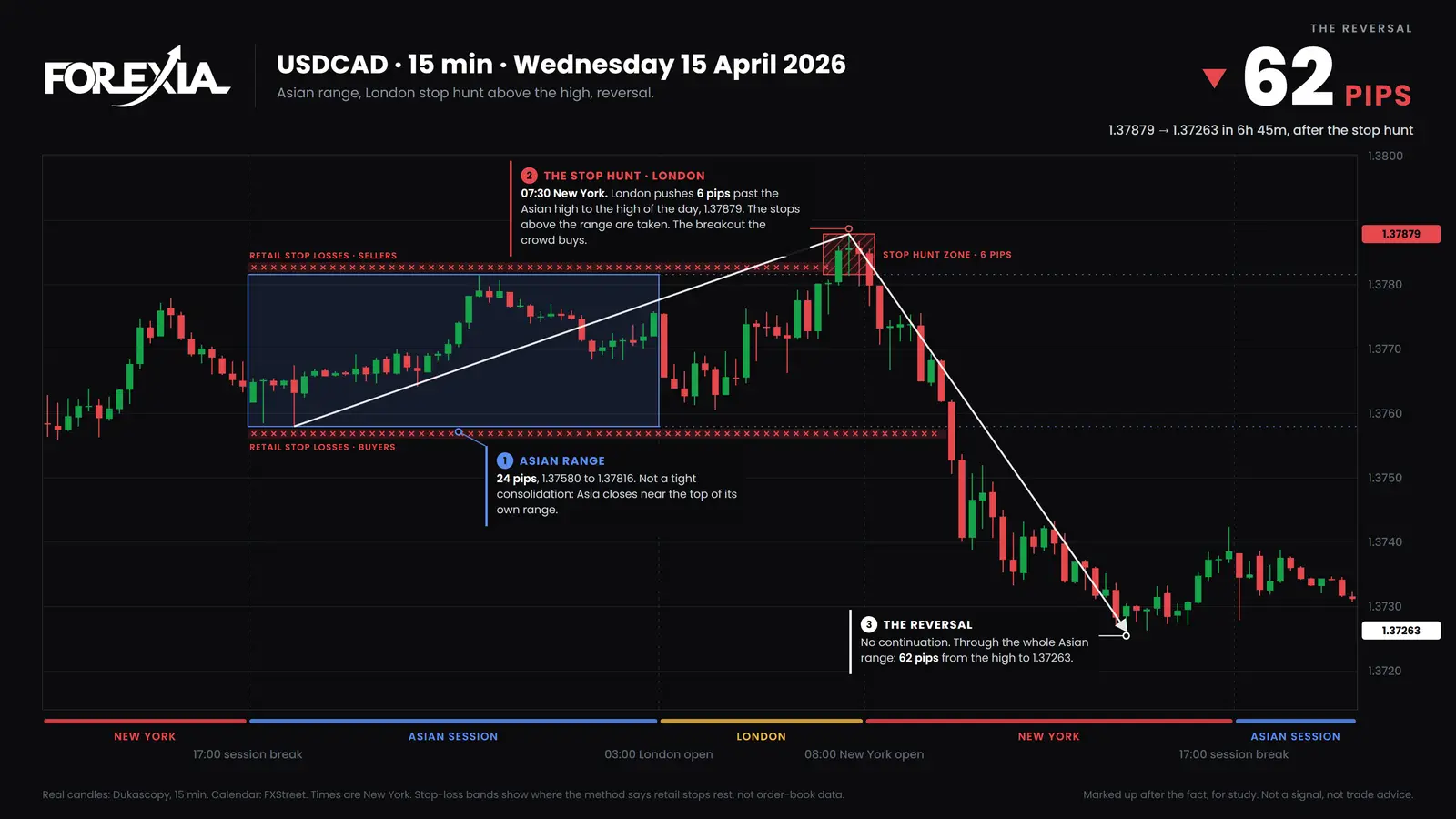
- Retail sees a breakout and buys it, or sells the range and has a stop taken.
- The market maker, as we read it, sees orders. The breakout buyers and the stops of earlier sellers above the range are buyers in one place, which a large seller can use.
- The observer waits to see whether price closes back under the range, which it did 45 minutes after the high.
This is a reading, not order flow data. Nobody outside saw who sold at 1.37879. The day was chosen because it reversed, and its range was not clean. A reversal seen afterwards is not a setup, and when we ran the idea as a fixed rule it did not make money. The stop hunt page gives the sample and the limits.
What do traders get wrong about order flow?
Three errors recur.
- Reading a platform's volume as the market's. It is that platform's activity, and with most flow matched inside dealers nobody's platform shows the total.
- Calling every fast candle an institution. Many are news, and many stops are simply too tight. The stop hunt, which most traders call a liquidity sweep, is a reading of a finished day.
- Treating order flow as an edge in itself. Several of the sources that rank for this search say as much: it is advanced, it gives no sure advantage, and for most retail traders it is neither necessary nor practical.
For the dealers who sit in the middle of the flow, read what market makers do in forex, and for how your broker's model affects your fill, market maker vs ECN broker. The plain question of who takes the other side of a trade is answered in who is on the other side of your trade.
Course 1 of ForexiaPRO, Reading the Map, teaches this read step by step, starting from lesson 1.1.2, Retail, Market Maker, Observer.
Frequently asked questions
What is order flow in forex?
Order flow is the stream of buy and sell orders, market and pending, that arrives and moves price. In forex the whole stream is not visible to anyone, because spot trading has no central exchange, no consolidated order book and no public tape. Each dealer sees its own flow, and each broker shows only its own slice.
Can retail traders see forex order flow?
Only a slice. A broker's platform can show its own clients' positions or its own volume, which is that firm's activity and not the market's. Futures on an exchange do publish volume and a book, and some traders use those as a stand-in, though the futures are a sample of the spot market and not the whole.
Is volume on a forex chart real volume?
On a retail platform it is usually a count of price changes or that broker's own activity. With most customer trades matched inside dealers, nobody's platform shows the market's total.
Does the COT report show order flow?
No. It shows large traders' futures positions once a week, for the Tuesday before, published on Friday. It has no column for intent and arrives days late. It is a picture of positioning, not of orders arriving.
How do big orders move forex prices?
A large order that is filled at once uses up the quotes at the best price, so price moves against it as it fills. That is why large orders are worked over time and matched against other flow where possible. We read stops and breakout orders above an obvious level as the kind of flow a large seller can find. That is a reading, and nobody outside can confirm it.