What Do Market Makers Do in Forex? A Plain Account
Dylan Forexia6 min read
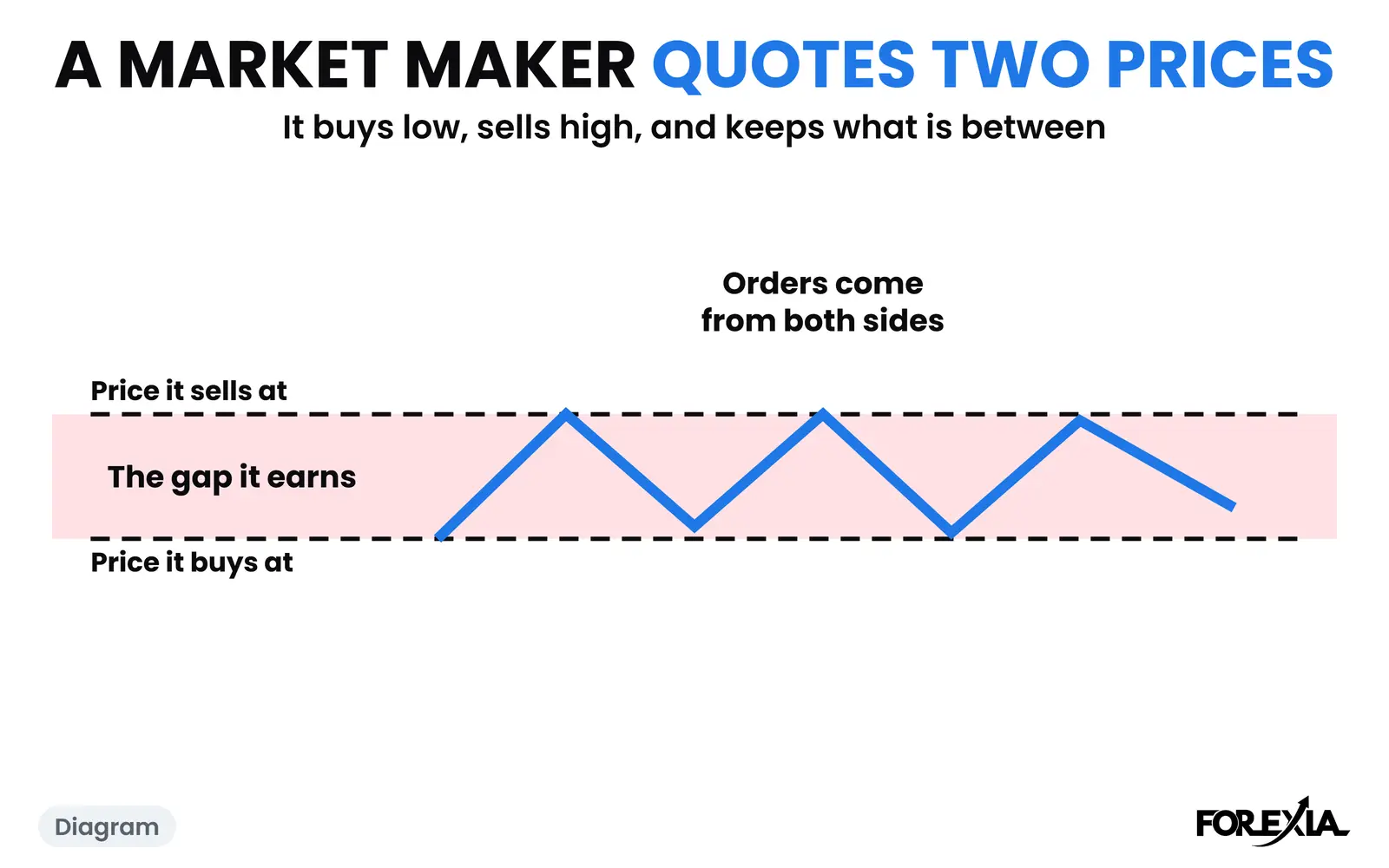
A market maker in forex is a firm that quotes two prices at once, one to buy at and one to sell at, and takes whichever side a customer wants. It earns the gap between the two and works off whatever risk it is left holding. That is the whole role. Nothing in it needs a view on where price goes next.
This page keeps to the role. For the wider picture of who trades forex and how much, see institutional trading.
What do market makers do in forex, and why two prices?
It quotes a bid and an offer so that a customer can always trade at once. You want to sell, so it buys, at its bid. You want to buy, so it sells, at its offer. The gap between the two is the spread, and it is what the firm is paid for being there.
That is why the role is called making a market. Without someone standing ready on both sides, a seller would have to wait for a buyer to appear. The Bank for International Settlements counts these firms as dealers and asks them every three years what they traded. Its survey for April 2025 put forex at $9.6 trillion a day.
What happens to the risk a market maker takes on?
It either holds it or passes it on, and passing it on is most of the craft. A dealer that has bought from you is now long. It can wait for a customer who wants to buy, offset the position with another dealer, or hedge it.
The first of these matters most. In the major hubs, dealers match more than 80% of customer trades within their own internal liquidity pools, which the BIS calls internalisation. One customer's buy meets another's sell on the dealer's own book, and no outside venue ever shows it. So a market maker spends much of its day not trading on the outside at all.
Large dealers also need capital to hold positions, credit lines to deal with each other, and systems to price quickly. That is why the biggest are banks. The BIS notes that electronic trading firms now do the same job, with speed in place of a large balance sheet.
Who are the market makers in forex?
Banks, and increasingly electronic trading firms. The BIS survey collects from dealers, and the biggest hubs are in a few cities: the UK has about 38% of trading and the US about 19%, and with Singapore and Hong Kong they hold 75%. A non-bank market maker does the same job as a bank dealer, quoting both sides all day, and the BIS says such firms can substitute speed for balance sheet.
Gold has its own wholesale market, over the counter and centred on London, where the same role exists. On our charts $1 of gold counts as 1 pip.
What does a market maker not do?
It does not need to predict anything, and it does not need you to lose. A dealer is paid by the flow passing through it, so a quiet day with no one trading earns it little, and a large one-way move is a problem for it, not a prize. What it does need is to get out of the position it holds at a price it can live with.
That is the one real link to the chart. A dealer with a large position to work off needs the other side, and the other side is easiest to find where many orders already sit. We read stops and breakout orders above an obvious high as exactly that. It is an inference from the shape of the market. No dealer has told us it, and no published data ties a candle to a bank's order.
Is a market maker the same as my broker?
No, though the words overlap and most confusion starts there. A broker that fills your order itself is often called a market maker broker or a dealing desk. It quotes you a private price and may keep your trade. The market makers we mean are the dealers in the wholesale market, where your broker is at most a small customer. Our comparison, market maker vs ECN broker, takes the broker models one by one.
Your broker cannot move EUR/USD. It can change your fill, through its spread and its own feed.
Do market makers hunt stops?
Here we have to separate what can be shown from what is our read.
What can be shown: large orders move price. A dealer hedging a position near where a client has a stop can trigger that stop. The FX Global Code, kept by central banks and the industry, says a firm handling a stop should disclose that its own hedging near the trigger may move the price and set the stop off, and it lists trading designed to move the market to a stop level as unacceptable. The code is voluntary.
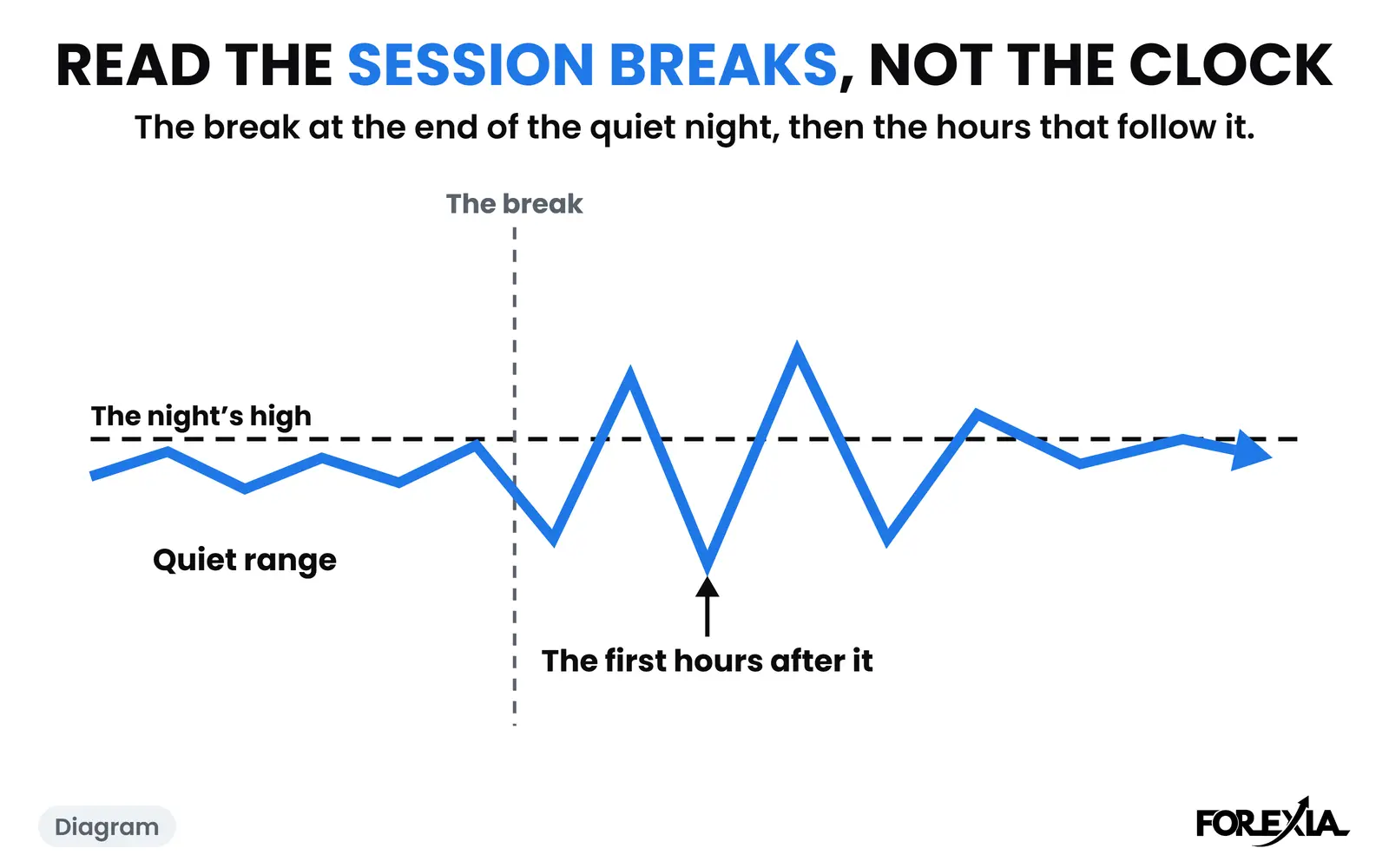
What is our read: that market makers build the chart. A quiet range gives the crowd its levels, and the hunt collects the stops behind them. We call that the stop hunt, which most traders call a liquidity sweep. We cannot show that any named firm did it on any given day, and neither can anyone looking at a chart.
What does a market maker's day look like on a chart?
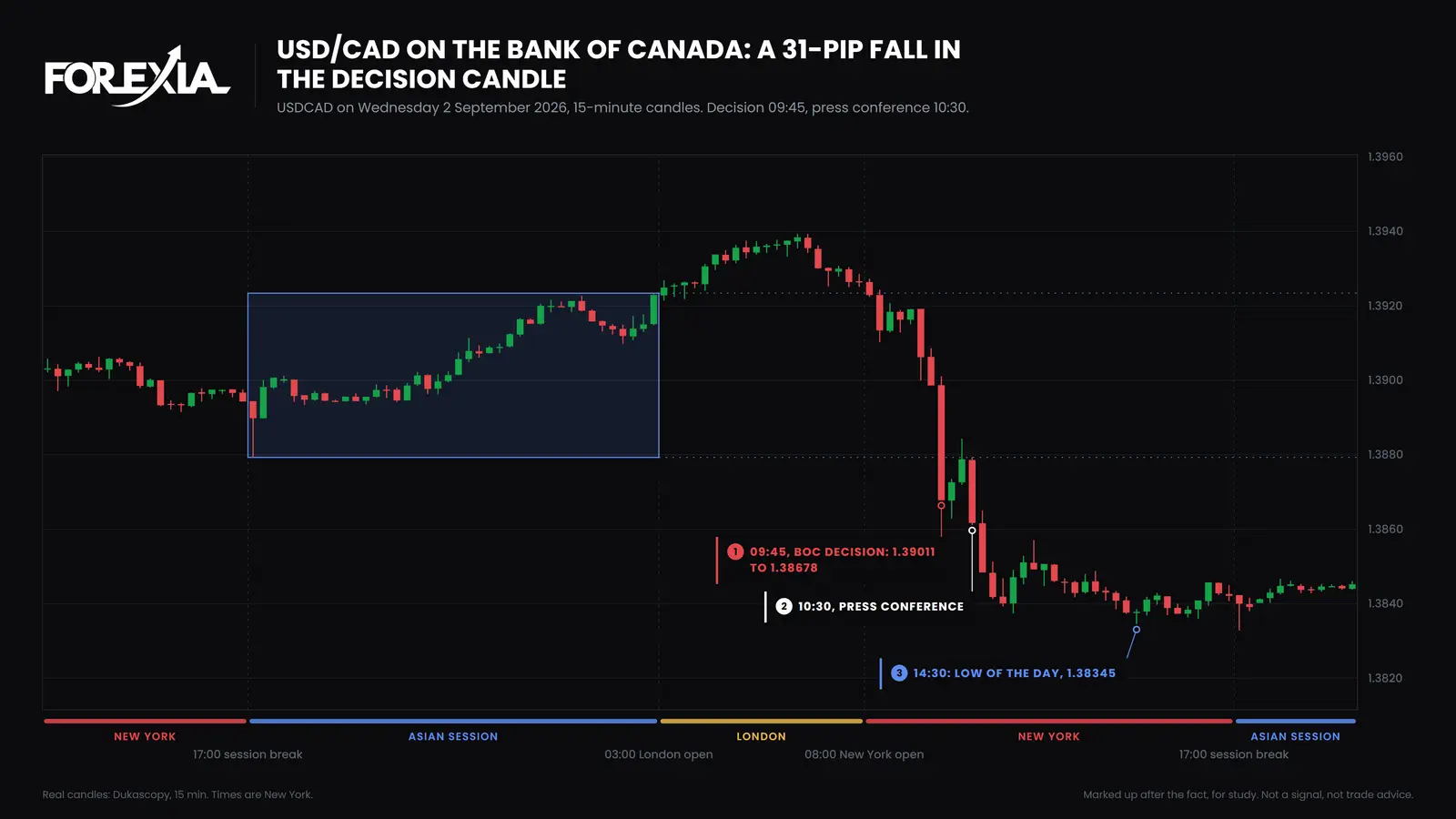
Here is one dated day, read from the three seats: retail, the market maker and the observer. Candles are 15-minute Dukascopy, in New York time.
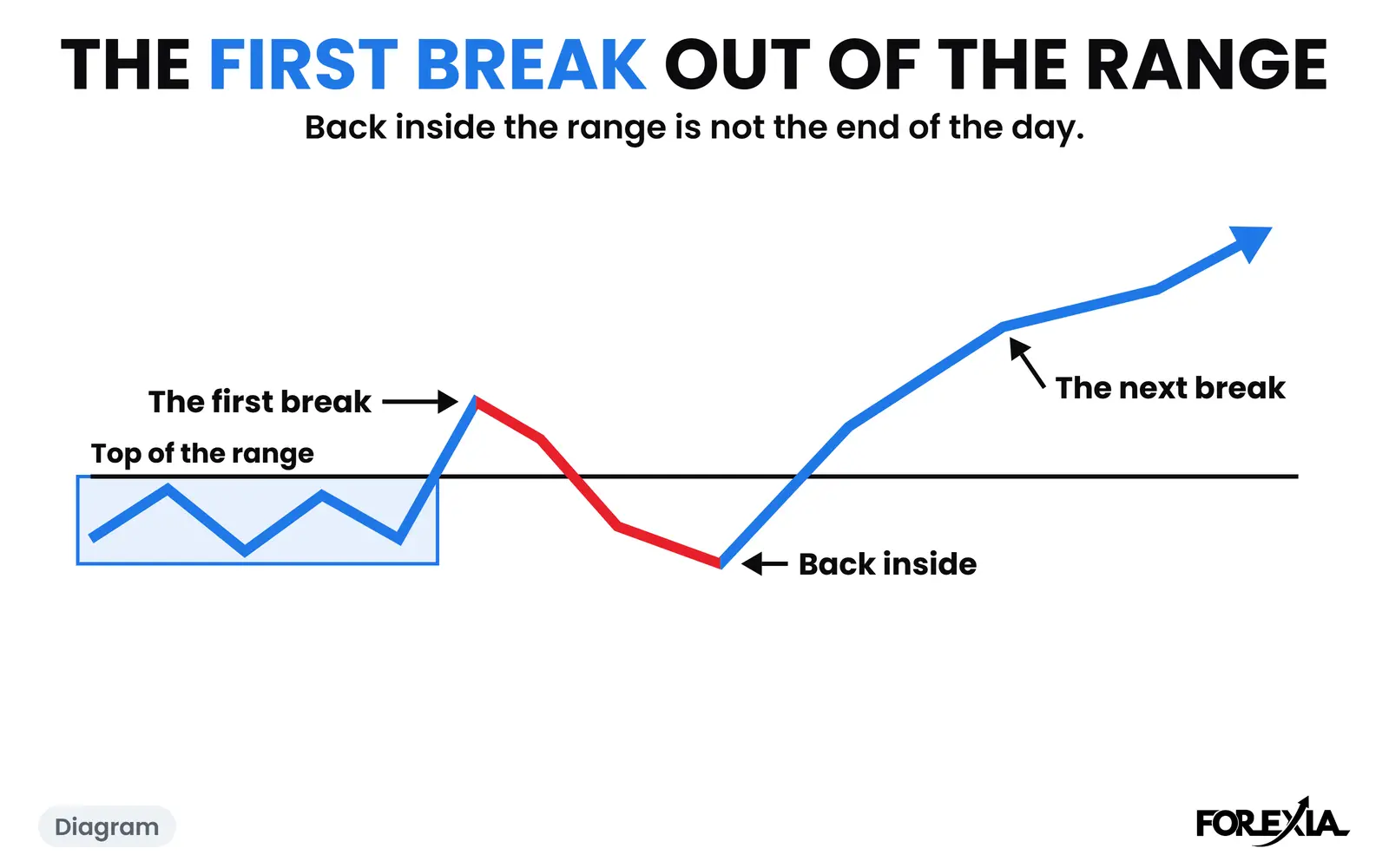
EUR/USD on Thursday 23 April 2026 spent Asia in a 21-pip range, 1.16922 to 1.17136. At 10:45 New York price pushed 3 pips above the top, to 1.17164, the high of the day. The first 15-minute close back under the range top came at 11:00, at 1.17106. From the high price fell 47 pips, to 1.16691 by 13:45, through the whole Asian range. The only release on our calendar was a speech by the ECB's Nagel at 11:00, rated medium.
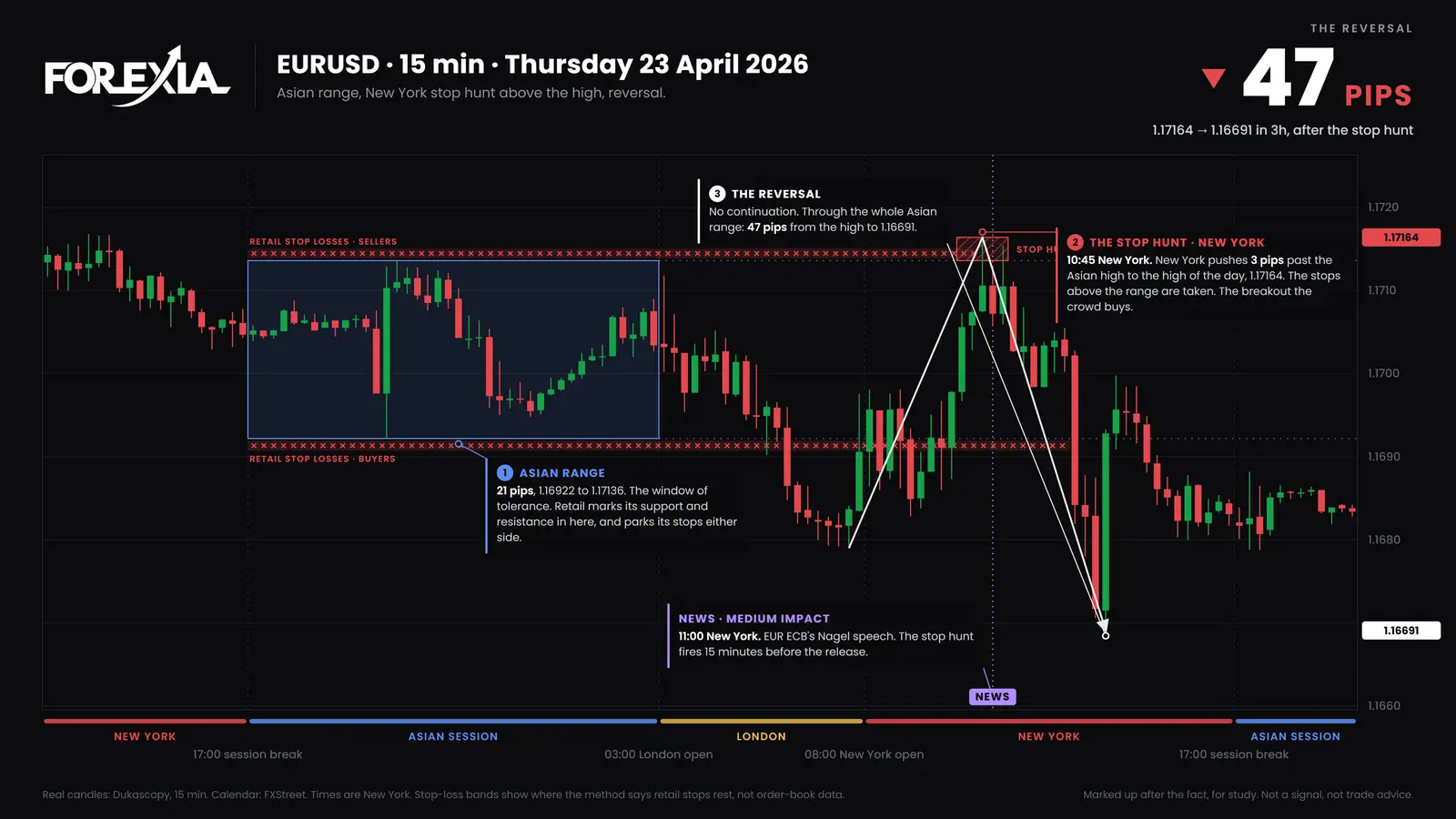
- Retail sees a breakout above a quiet range and buys it, or has a sell stopped out.
- The market maker, as we read it, sees orders. Whoever must sell size needs buyers, and those breakout buyers and the stops of earlier sellers are buyers.
- The observer waits to see whether price closes back under the range, and learns only afterwards.
Be careful with the middle line. It is a reading. Nobody outside saw who sold at 1.17164, and the day was chosen because it reversed. A reversal seen afterwards is not a setup, and when we ran the idea as a fixed rule it did not make money. The stop hunt page has the sample and the limits.
What do traders get wrong about market makers?
Three mistakes recur.
- Thinking the role needs a view. A dealer is paid by flow. Whether it wants price up or down on a given candle is not something the role says.
- Taking a broker's dealing desk for the wholesale market. One quotes you a private price. The other trades with banks and funds.
- Reading every stop-out as aimed at you. Many stops are simply too tight, and a dealer fills orders for a living. Liquidity Mapping is how we mark where other people's orders probably rest, before the session.
The next question is what a chart can and cannot show of all this, which forex order flow explained answers. For the other side of your own trade, see who is on the other side of your trade.
Course 1 of ForexiaPRO, Reading the Map, teaches this read step by step, starting from lesson 1.1.2, Retail, Market Maker, Observer.
Frequently asked questions
What does a market maker do in forex?
A market maker quotes two prices at once, one at which it will buy and one at which it will sell, and takes whichever side a customer wants. It earns the gap between the two, called the spread, and tries to pass on the risk it is left holding. Nothing in that role requires a view on where price goes next.
Is a market maker the same as my broker?
Not necessarily. A broker that fills your order itself is sometimes called a market maker broker or dealing desk, and it quotes you a private price. The market makers we write about are the large dealers in the wholesale market, where your broker is at most a small customer. The two jobs sound alike and are not the same.
Do market makers move price on purpose?
That is our read, and nobody outside a dealer can prove it from a chart. What can be shown is narrower: large orders move price, a dealer's hedging can trigger a stop, and the market's own code lists moving price to a stop level as unacceptable. Whether a given candle was aimed at stops is not something a chart can tell you.
How do market makers make money?
Mainly from the spread and from the volume of flow. A dealer that buys at one price and sells at a slightly higher one, thousands of times, keeps the difference. Holding a position is the cost of doing that, so it passes the risk on or hedges.
Can a retail trader tell what a market maker is doing?
No. Spot forex has no public order book and no consolidated tape, so a market maker's orders are private. A chart shows where price went. Our reading of why is labelled as a reading each time.