Who Takes the Other Side of Your Forex Trade? It Depends on Your Broker's Model
Dylan Forexia8 min read
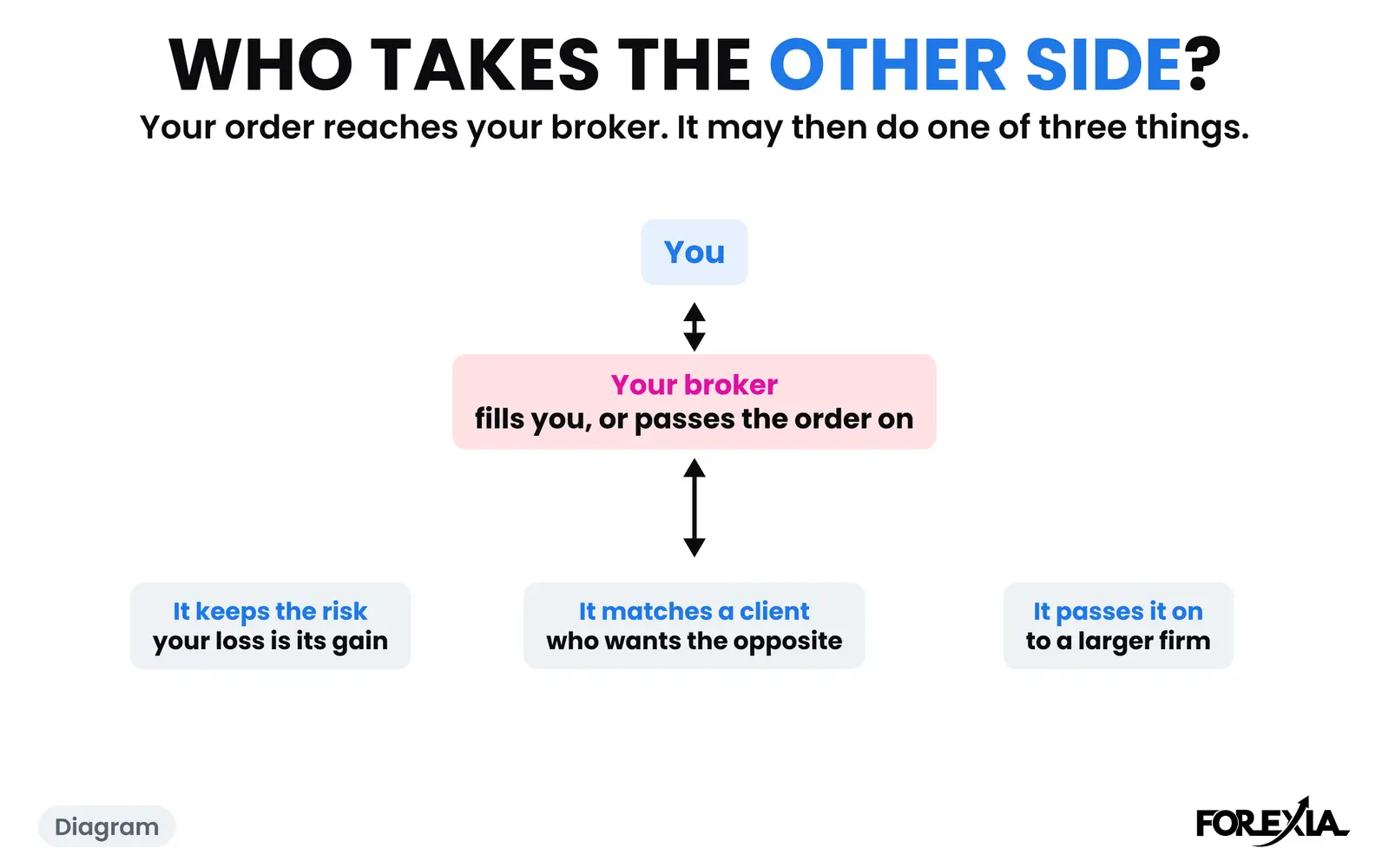
Who takes the other side of your forex trade depends on your broker's model and the rules over it. US rules make a retail forex dealer your counterparty. A broker may then keep the risk, match it against another client or pass it to a larger firm, and you often cannot see which. We know of no count of how many do each.
So the question has two answers. One is legal: who your contract is with. The other is about the market: who, in the end, wanted the opposite of what you wanted. The second can only be read, and this page keeps the two apart. The bigger picture is on our guide to institutional trading.
Who takes the other side of your forex trade, legally?
Whoever your contract is with. Retail forex is over the counter, so there is no exchange between you and the firm, and US rules are blunt about what that means. 17 CFR 5.5 makes retail forex dealers there print this in capitals: "WHEN YOU SELL, THE DEALER IS THE BUYER. WHEN YOU BUY, THE DEALER IS THE SELLER." Other countries word it differently, so read your own broker's agreement.
| How the firm handles it | Who you trade with | What can happen next | How you check |
|---|---|---|---|
| Dealing desk, or market maker broker | The broker | It keeps the risk, nets it against other clients, or offsets it | Customer agreement: look for "principal" |
| STP | Larger firms, through the broker | It passes the order on, often with a mark-up in the spread | Agreement and execution policy |
| ECN | Others on a network, by description | Matched on the network, usually for a commission | Agreement and the commission line |
| Currency futures | The clearing organisation | It becomes the buyer to each seller and the seller to each buyer, for clearing members | The exchange's rules |
These labels are marketing as much as description, and one broker can run more than one. We have no count of how many retail brokers run each model. Market maker vs ECN broker goes through them.
Does your broker want you to lose?
If it holds your risk, then on that trade your loss is its gain. The same US rule says so: "when you lose money trading, your dealer is making money on such trades". It adds "YOUR DEALER IS YOUR TRADING PARTNER WHICH IS A DIRECT CONFLICT OF INTEREST", and "YOUR DEALER MAY SET ITS OWN PRICES". That describes a business model. It is not a finding against any firm.
A broker also earns the spread and any commission whether you win or lose, and it may prefer to offset the risk. You usually cannot tell which it did with one trade. What you can do is check these:
- The agreement. Does it act as principal or as agent?
- The execution policy. How does it say it fills orders, and who are its liquidity providers?
- The figures. That US rule also makes dealers disclose, for each of the last four quarters, the percentage of accounts that were profitable. Ask for it.
- Your fills. Compare a fill you doubt with a second feed at the same minute, and ask for the record. Do brokers hunt stops shows how.
Who is behind your broker?
Dealers, and their other customers. The Bank for International Settlements put foreign exchange at $9.6 trillion a day in April 2025. Dealers traded 46% of that with other dealers, 50% with other financial institutions, and 5% with non-financial customers, mainly companies. Those are rounded.
Retail is not a row in that table. The final tables carry it as a memo line, "retail-driven": $242 billion a day, 2.5% of the total, and $109 billion of spot, 3.7%. The survey only sees retail trades that reached a dealer, so read that as the closest official figure and no more.
Then the figure that changes the picture. The BIS says dealers match more than 80% of customer trades within their own internal liquidity pools. One customer's buy often meets another's sell on the dealer's own book, and no outside venue shows it. So your order, once offset, may end up against someone who never looked at a chart at all. How banks trade forex goes into the desks.
Does the other side need you to be wrong?
No, and this is the part most pages skip. FX swaps were the largest instrument in that survey at $4 trillion a day, and the BIS says they are widely used to manage funding and hedge currency risk. Spot was $3 trillion.
A company selling euros to pay a dollar invoice wants the exchange done. A pension fund hedging its dollars wants the exposure gone. If price goes against them on the day, that may be a fair cost of the thing they came for. They are on the other side of someone's trade with no view of the next candle.
So "someone took my money" can be the wrong picture. You may have lost to the spread, to a stop in the wrong place, or to a move that nobody on the far side was trying to make.
Retail vs market maker: who is on the other side of the candle?
That is the second answer, and it can only be read. First, keep two things apart. A broker that makes a market for you quotes you a private price. The market maker in our second seat means the dealers in the wholesale market, where your broker is at most a small customer.
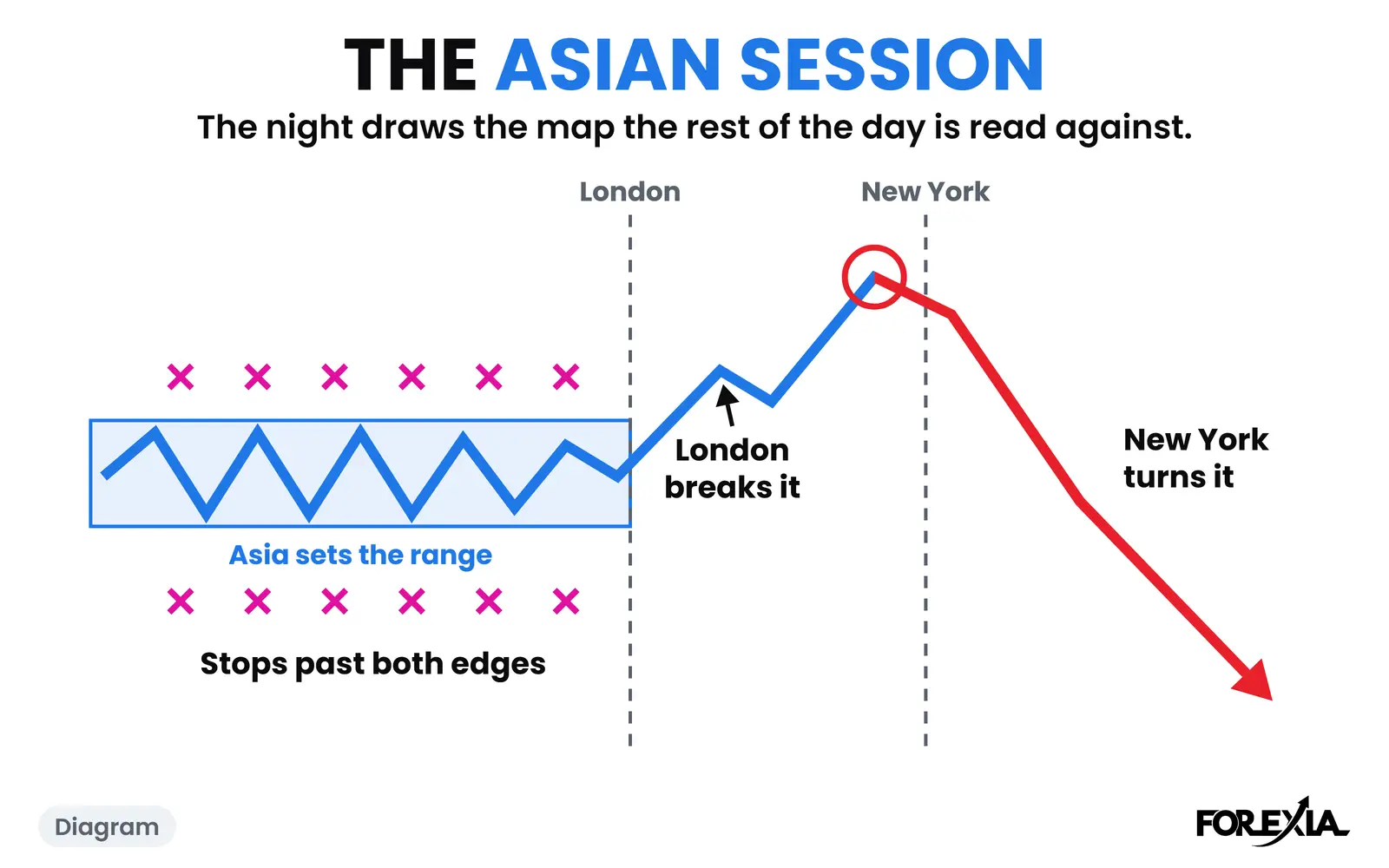
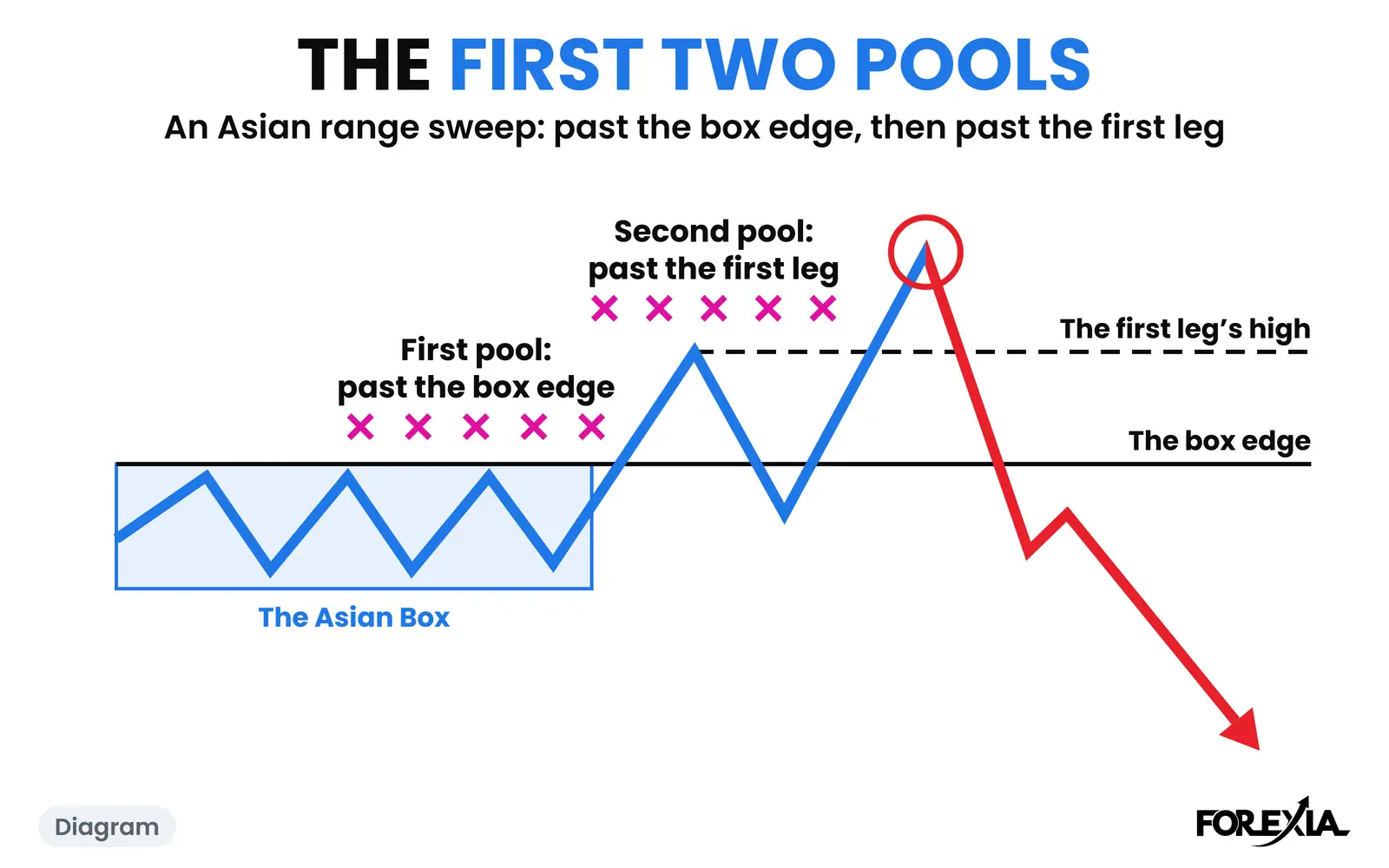
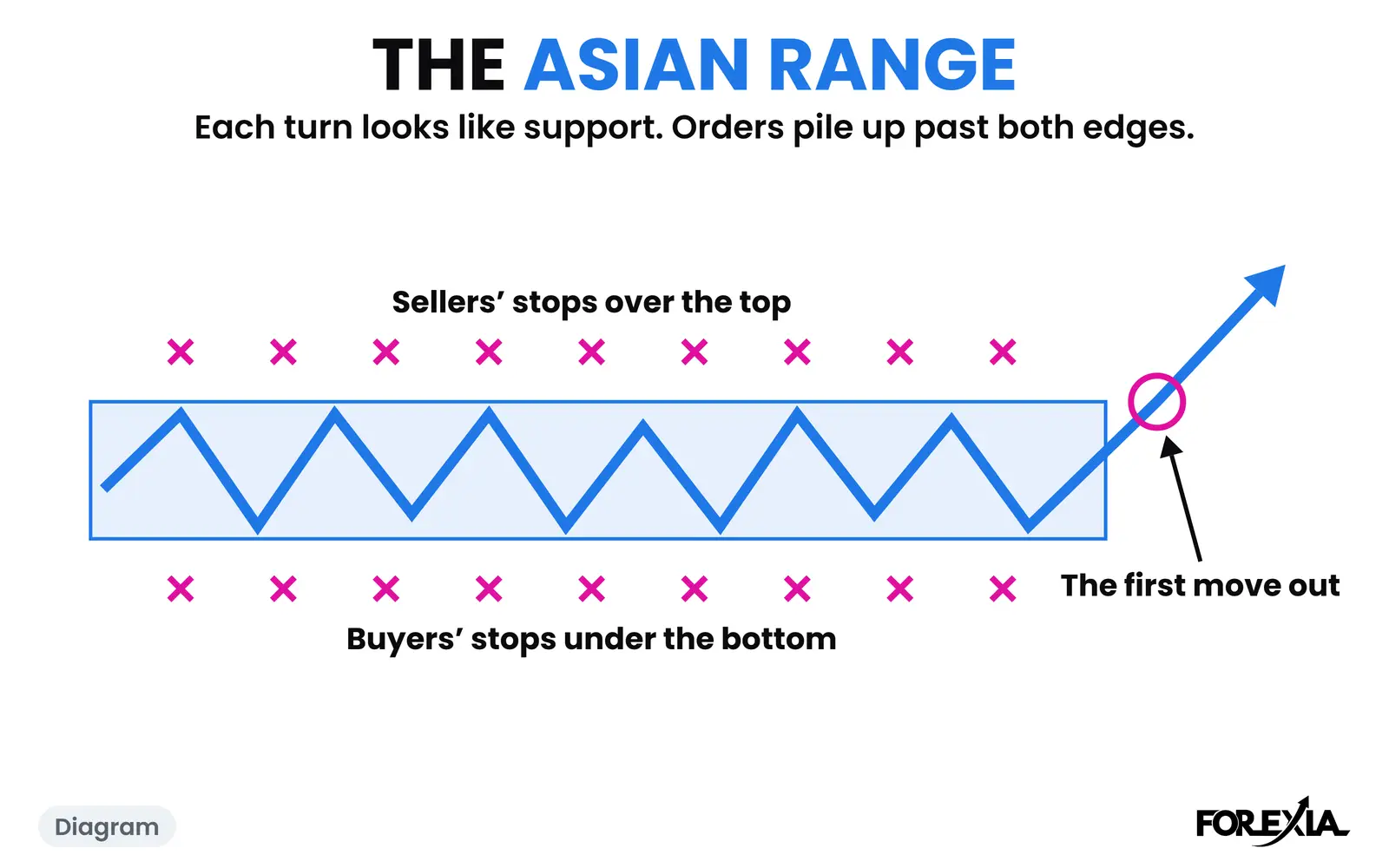
EUR/USD on Monday 13 July 2026 shows what we mean, on 15-minute Dukascopy candles in New York time, named by when they open. Asia ran 25 pips, 1.13843 to 1.14089. London went through the top: the 03:00 candle traded over it, the 03:30 candle reached 1.14219, and the 04:15 candle printed 1.14457, 37 pips past the range, and closed at 1.14384. Our calendar has nothing for the euro or the dollar before 05:25.
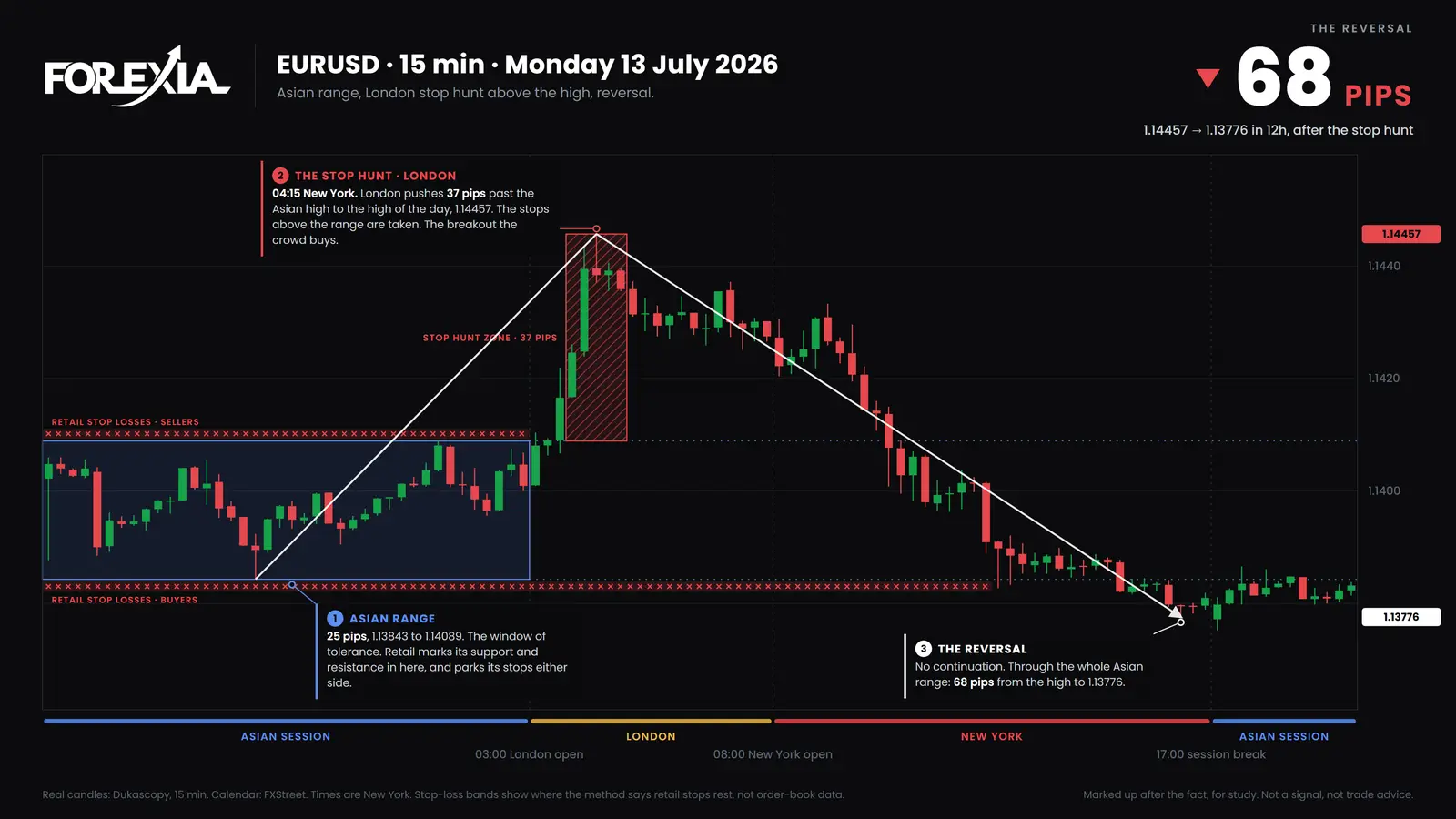
The first close back inside the range came at 10:15, at 1.14077. By 16:15 price was at 1.13776, 68 pips from the high. The day ended at 1.13810.
Everyone who bought at the top that morning bought from someone. Here is that morning from the three seats.
- Retail sees a breakout with momentum and buys, or watches a stop go above the range. That predictable behaviour is what we mean by Dumb Money.
- The market maker, on our read, sees orders: anyone needing to sell in size needs buyers, and stops and breakout entries above a range are buyers.
- The observer sees a run and no proof of anything until a close comes back. Here it took six hours.
The middle bullet is a read. Nobody outside saw who sold at 1.14457, and that seller, if there was one, may have had a hedge to place and no interest in your stop. The 80% figure above presses against our read as well: a dealer matching most of its flow internally does not need your stop for most of it. We hold the read and label it. Another day mapped in advance is on institutional level trading on gold, 17 July 2026.
Is the other side always right?
No. GBP/USD on Wednesday 23 September 2026 went the other way round, and the buyers were the ones in trouble. Asia ran 38 pips, 1.33083 to 1.33466. The 03:45 candle closed under the range at 1.33016. UK PMIs came at 04:30, and that candle got back to 1.33089, under a pip inside the range, and closed at 1.33039. No candle closed back inside the range all day.
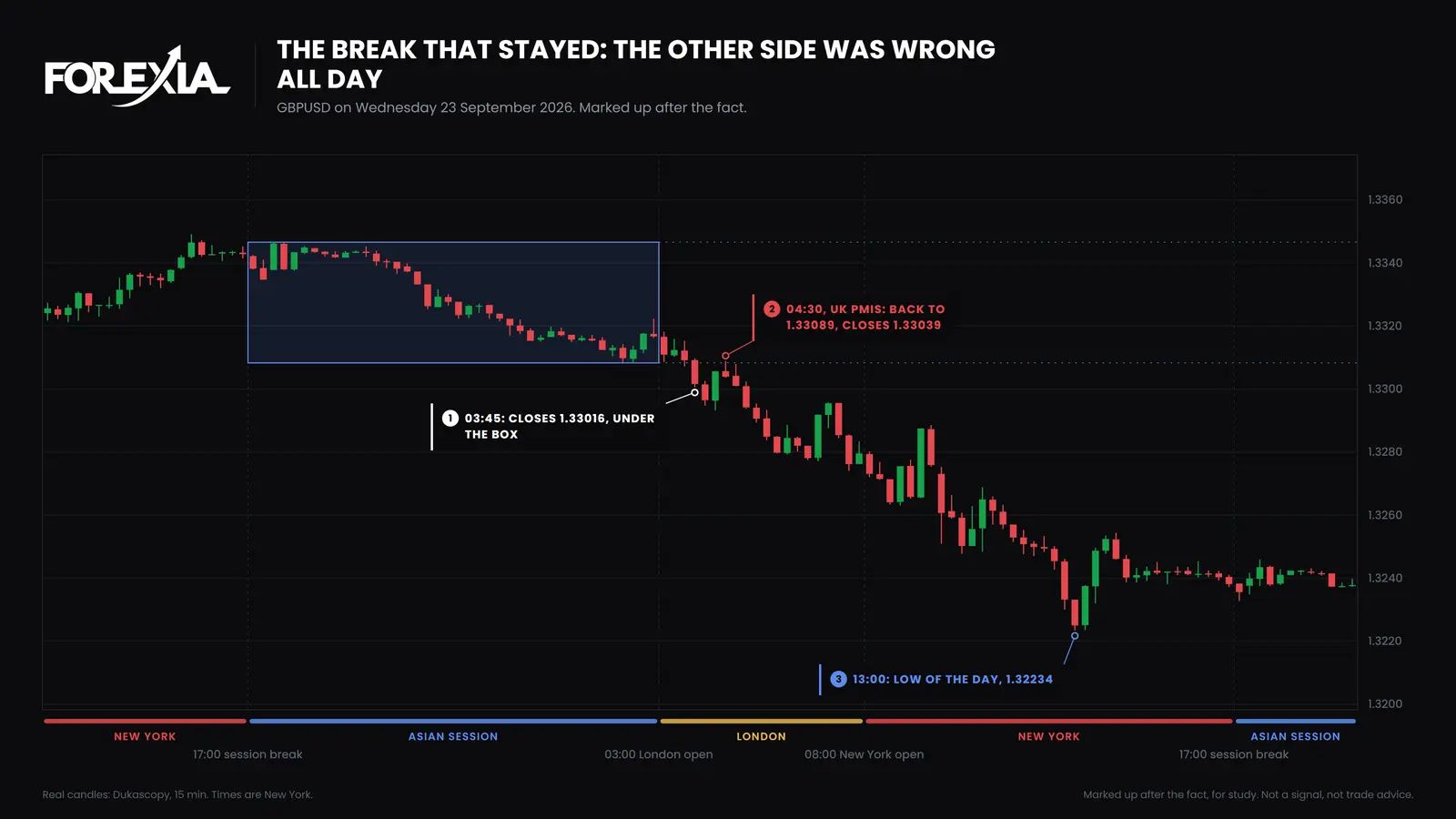
The low of the day came at 13:00, at 1.32234, 85 pips under the range, and the day ended at 1.32381. Anyone who sold that break was right, and every one of those sales was bought by somebody. Was that buyer wrong? On a chart, yes. A company buying pounds for a payment would not call it wrong at all. A retail buyer fading the break might have.
This is why we write "we read this as" and not "they did this". The same candle can hold a hedger who is content, a speculator who is losing and a dealer who has passed the risk on by lunchtime.
What can you know, and what can you not?
You can know who your contract is with, and you cannot know who was on any candle.
| What it covers | Where it comes from | |
|---|---|---|
| Known | Who your contract is with | Your customer agreement, and US rule 17 CFR 5.5 for dealers there |
| Known | Retail's share of turnover, as far as dealers report it | BIS survey, April 2025 |
| Known | Most customer trades are matched inside dealers | BIS Quarterly Review, December 2025 |
| Often unknown | Whether your broker kept this trade's risk | You may not be told, trade by trade |
| Our read | Stops and breakout orders are where a large order finds the other side | Us, from the structure of the chart |
| Unknown | Who sold at any one high | Nobody outside can say, and a dealer sees only its own book |
Both days here were picked afterwards, and a reversal seen afterwards is not a setup. Knowing who is across from you has not been shown to make a trader money either. When we ran our read as a fixed rule, it did not make money.
Course 1 of ForexiaPRO, Reading the Map, teaches this read step by step, starting from lesson 1.1.2, Retail, Market Maker, Observer.
Frequently asked questions
Is my forex broker betting against me?
It may hold the other side of your trade, and US rules make retail dealers there say so in capitals. Holding that risk is a conflict of interest, and it is not proof of misconduct. Brokers also earn spread and commission and may offset the risk. You often cannot see what your broker did with one trade.
Does an ECN broker take the other side of my trade?
By description, no: it matches your order on a network of other participants, usually for a commission. The labels are marketing as much as description, though, and a broker can run more than one model. Read the customer agreement for whether it acts as principal or as agent.
Who is the counterparty in currency futures?
The clearing organisation. The CFTC's glossary describes it as becoming the buyer to each seller and the seller to each buyer, for clearing members. That differs from retail spot forex, which is over the counter with no central clearing house between you and your broker.
When I lose money in forex, does someone else make it?
Not in any simple way. If your broker holds the risk, your loss on that trade is its gain. Further along, the far side may be a company buying currency for an invoice or a fund hedging a position. It wanted the exchange, and it may not care what the next candle does.
How much of the forex market is retail?
The closest official figure is the BIS's. Its final tables for April 2025 put retail-driven trading at $242 billion a day, 2.5% of total turnover, and $109 billion of spot, 3.7%. The survey sees only retail trades that reached a dealer, so treat any more precise figure with no named source with caution.