Forex Myths: 8 Things Beginners Believe That Cost Them
Dylan Forexia6 min read
Forex myths are popular because each one has a chart that seems to prove it. A breakout that ran, an account that doubled, a strategy that "always works": every one comes from a real day, picked after the fact. This page takes eight beliefs beginners hold, says what is true in each and sets them against what our own counts and tests show. Nothing here is a promise of results.
In brief
- A myth is not a lie. It is a true thing seen on the best day and applied to all of them.
- The check is the same each time. How many days, what costs, and who chose the example?
- Our own tests lost. The setup we teach, run as a fixed rule with real costs, did not make money, and we say so first.
1. "Forex is a shortcut to a big account"
What is true in it. Prices move fast and leverage makes results bigger, so some accounts do change quickly.
What it leaves out. Leverage makes losses quicker as well, and costs are paid on every trade. We hold no figure that shows how a typical beginner fares, so we do not quote one. We can say what our own tests found: the setup we teach, run as a fixed rule, lost after costs in every period from 2015 to 2026. That is a program and not a person. It does mean we cannot honestly say the work is easy or fast. The detail is on our mechanical setup backtest.
2. "You need a lot of money to start"
What is true in it. A small account can carry fewer stops.
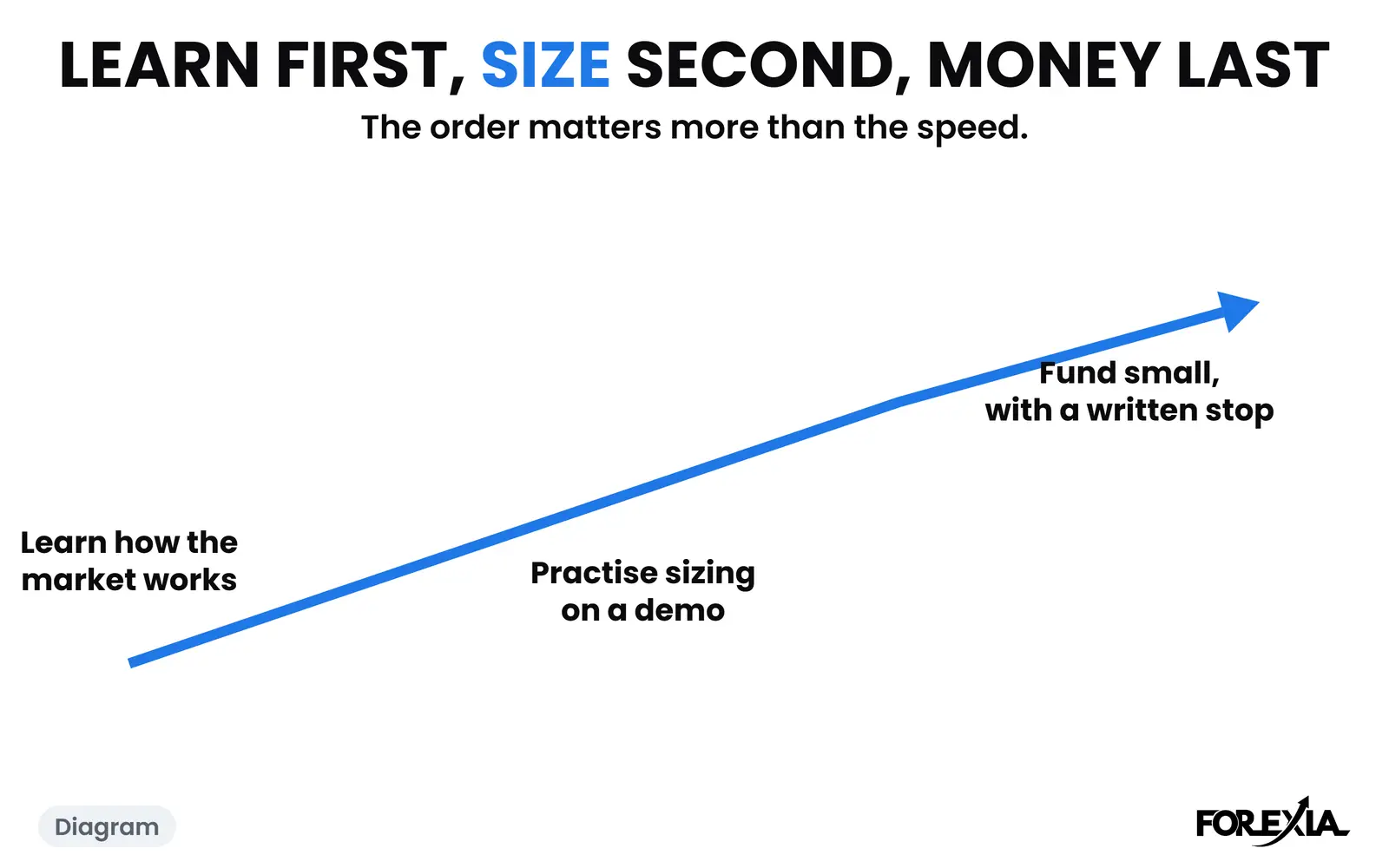
What it leaves out. A broker may let you open an account with very little, so the deposit is not the barrier. The barrier is whether the balance can carry your stop at a size whose loss you can afford. The belief that you need thousands is wrong in one direction, and the belief that $100 is plenty is wrong in the other. How much money you need to start forex works it through on a real 84-pip stop.
3. "Leverage adds profit"
What is true in it. Leverage lets a broker hold a bigger position than the balance would otherwise allow.
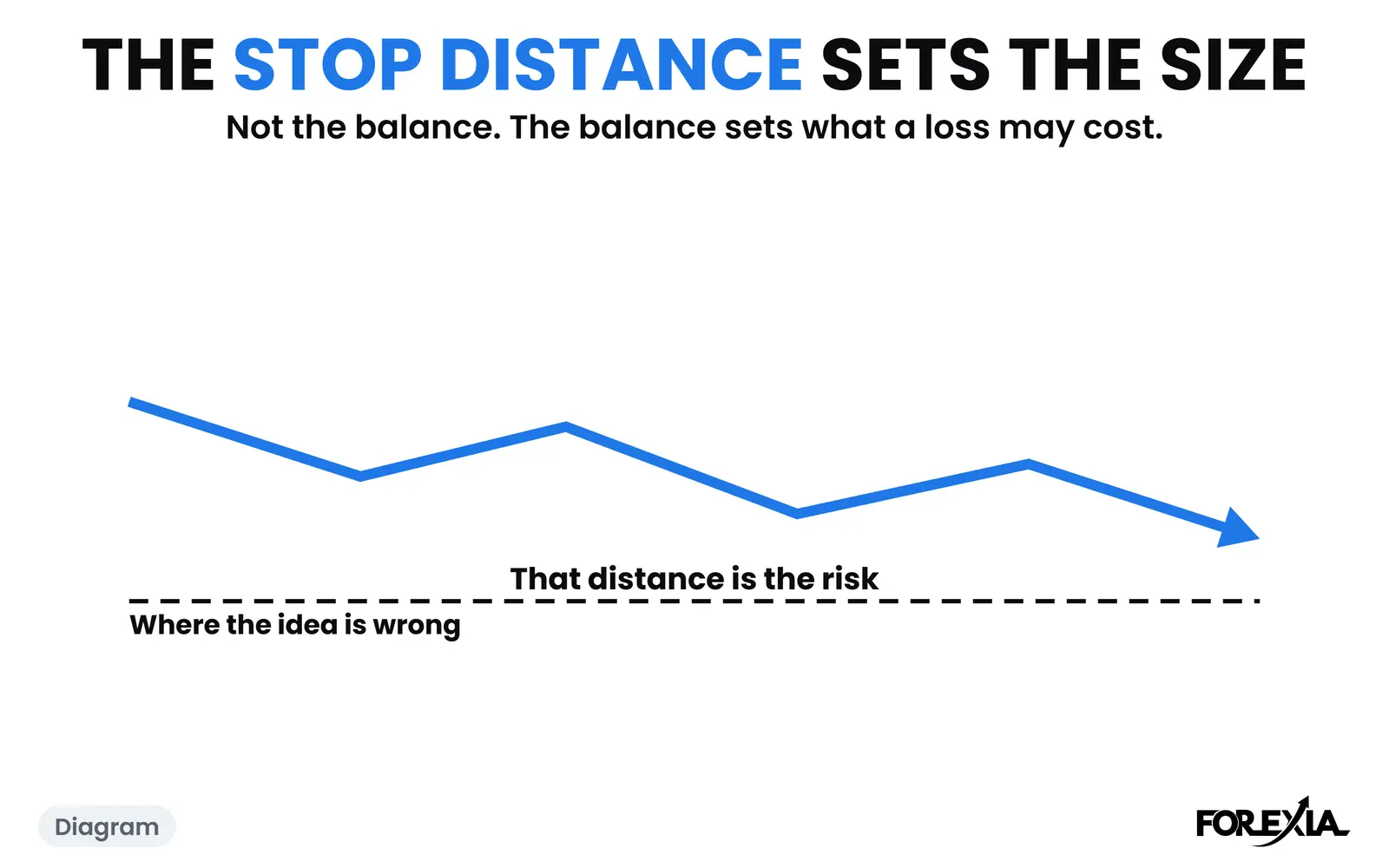
What it leaves out. It does not change where the idea is wrong, and a bigger position loses faster by the same ratio it gains. The loss on a trade is the stop distance times the size, whatever leverage sits behind it. Regulators cap it for retail clients for that reason.
4. "More indicators make a better strategy"
What is true in it. More confirmations do make a setup right more often.
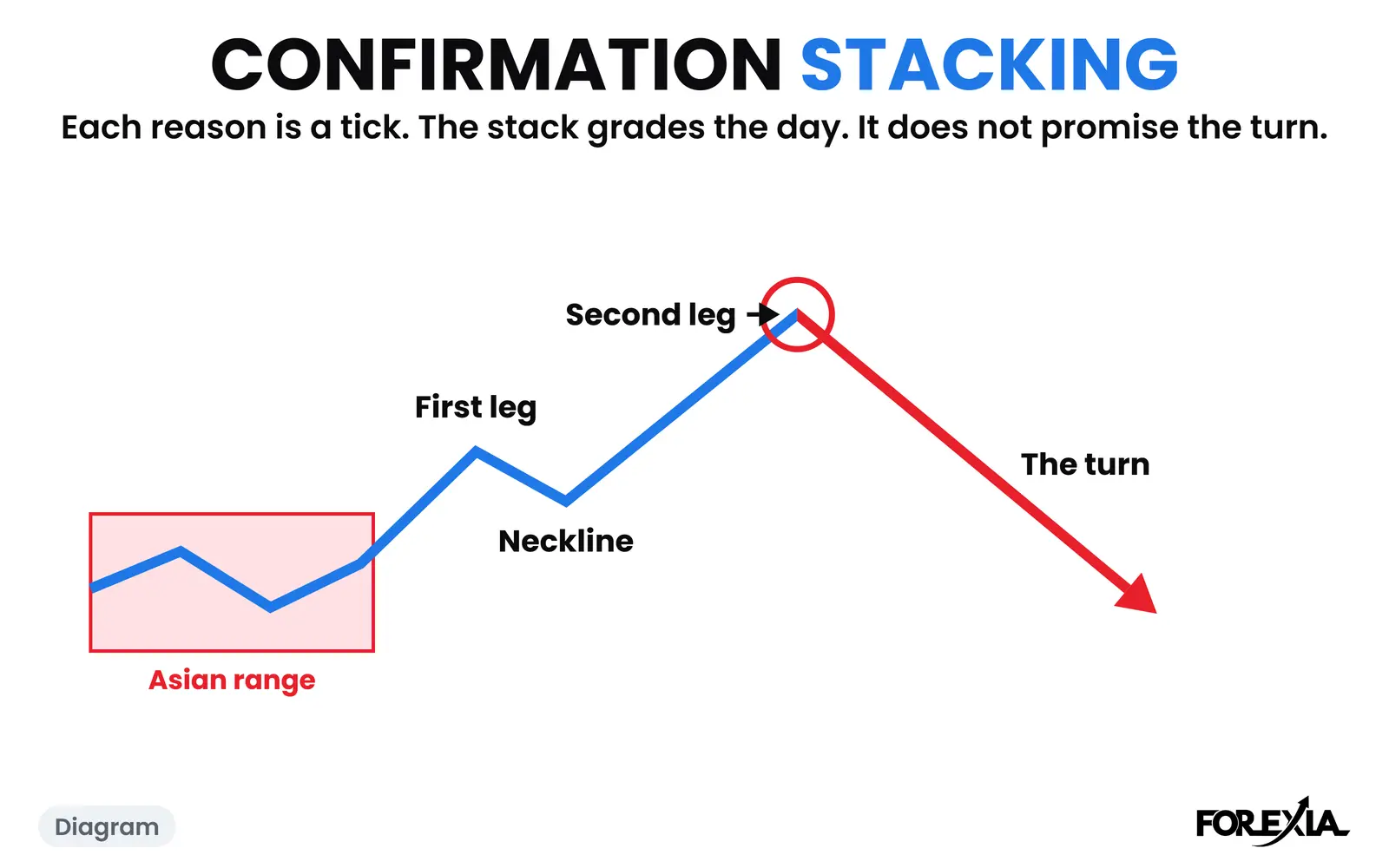
What it leaves out. They also make it later. In our test of the setup as a rule, setups with six of the method's confirmations lost -0.04R a trade against -0.18R with two, in the fitting years, after costs. A trade that waits for more agreement enters later in the move, so a right one makes less and a wrong one costs more. Neither version made money. The more you stack, the more the setup becomes a story told after the day.
5. "A clean chart is a good trade"
What is true in it. The chart is real.
What it leaves out. Every marked-up day on our site was picked once price had reversed, which is close to the definition of a good trade. A program that spotted most of the marked-up days also fired on about five times as many days that never became a markup, and those lost. A finished chart shows what happened. It does not show what the rule earns. The same caution is on the reading of a stop hunt: a hunt seen afterwards is not a trade you could have taken at the time.
6. "The London breakout always works"
What is true in it. London does move price out of the night's range.
What it leaves out. On a count of 1,030 market-days across seven dollar majors and gold, from 6 April to 1 October 2026, a London candle closed outside the Asian range on 745 days, and the break stood all day on 194 of them. The rest were undone in London or closed back in New York. That counts candles, with no stop, target or cost, so it cannot tell you how often a trade pays. It is enough to show "always" is wrong. Does the London breakout work has the count and three real days.
7. "A strategy that works can be found, and a backtest shows it"
What is true in it. Patterns are real. Gold made its whole rise outside the hours between the two London auctions, and EUR/USD fell in Europe's hours and rose in America's.
What it leaves out. Costs. We ran twenty tests of published strategies with real retail costs against a pass mark written before the first run, and none passed: one was kept as a candidate and nineteen failed. A trade every day pays the spread every day, and that was larger than the effect. A backtest that shows a profit has to say how it counted costs, how many things it tried and whether it held on days it had not seen. Why forex strategies fail backtests puts the cost figures together, and our test of published strategies has the twenty.
8. "A good demo result means you are ready"
What is true in it. A demo account is the right place to practise placing orders and sizing a stop, with no money at risk.
What it leaves out. It does not test how you behave when your own money is on the line. Many of the commonest mistakes, moving a stop, adding to a loser, trading to win a loss back, are about feeling, and a demo does not produce the feeling. Treat a demo as practice for the mechanics only. The common beginner mistakes lists the others.
How do you check forex myths and any other claim?
Ask the same four questions of every myth, including ours.
- How many days? One chart is a story. A count over many days is a start.
- Were costs counted on every bar? A flat guess understates them around the rollover and a release.
- Who picked the examples, and when? Examples chosen afterwards are the best ones.
- What does it say it does not prove? A claim with no stated limit is advertising.
A trade journal makes the check personal. If you record each trade in the same columns and read it weekly, you will find which of these beliefs you hold. What to write after each trade has a template.
Is anything in this page a myth about us?
It could be, and we would rather you checked. The research pages we link print the sample, the dates, the costs and the limit of each study, and the failures are listed with the rest. Our reading that market makers use the crowd's stops is a reading, not a proof, and the three seats shows where it sits among the other views. That is the standard we ask you to hold any forex page to.
Trading leveraged products carries a high risk of loss, and you can lose all the money you deposit. This page is for study, not advice or a signal. The Learn Forex hub lists the rest of the beginner pages.
Course 3 of ForexiaPRO, Reverse Price Action, teaches how to read what the chart did, step by step. See ForexiaPRO.
Frequently asked questions
What are the biggest forex myths?
That forex is a shortcut to a big account, that you need a large deposit or that a small one is enough, that leverage adds profit, that more indicators are better, that a clean chart is a good trade, that a strategy that works can be found, that the London breakout always works, and that a good demo result means you are ready.
Is forex trading a scam?
Three different things share that word: the market, which is real and very large, the sellers around it, some of whom are honest and some not, and the odds, which are poor for most retail accounts. A real market can still be a poor bet. We say what can be shown and what cannot on our page about whether forex is a scam.
Does leverage make you more money?
It makes every result bigger, in both directions. Leverage lets a broker hold a larger position than your balance would otherwise allow. It does not change the stop distance or what a loss costs per unit of size, and a larger position loses faster.
Do more indicators make a better strategy?
Not in our test. Setups with six of the method's confirmations lost less per trade than setups with two, but they came later in the move, so a right one made less and a wrong one cost more, and none turned the rule into a profit after costs.
Can you trust a backtest that shows a profit?
Only if it counted costs on every bar, fixed its split before testing, said how many things were tried and held in a period it had not seen. We ran twenty tests of published strategies with retail costs against a pass mark written first, and none passed.