Why Do I Lose Money in Forex With a Good Strategy? Where the Leak Is
Dylan Forexia6 min read
You lose in forex with a good strategy for one of two reasons, and the first is the one nobody wants. Either the strategy is run differently from how it was written, in exits, size or extra trades, or it is not as good as it looked, because costs were left out or the sample was small. Our own setup, run as a fixed rule with no emotion, did not make money.
This page starts with the question that has to come first, shows where a sound rule leaks, follows one real morning, and gives a way to find your own leak in your own records.
Is the strategy actually good?
Not necessarily, and "good" is the word to check first. A strategy is good if, run exactly as written, it makes money after spread, commission and slippage, over enough trades that luck is a poor explanation. Most people who say their strategy is good mean one of three weaker things: it looks right on a chart, it won a few times, or a seller told them so.
We learnt this from our own test. We ran our setup as a mechanical rule, a program with no fear and no greed and nothing to leak, and it did not make money. A trader following it with perfect discipline would have got the same result. That does not say the way we read a chart is worthless, and it does not say yours is. It says the first question is the rule.
So test the rule before you work on yourself. Write down exactly what it says to enter, exit and skip, and run it on trades you did not take, with costs. If it loses on paper, you do not have a leak. You have a rule that loses.
Why do I lose money in forex with a good strategy? Five places it leaks
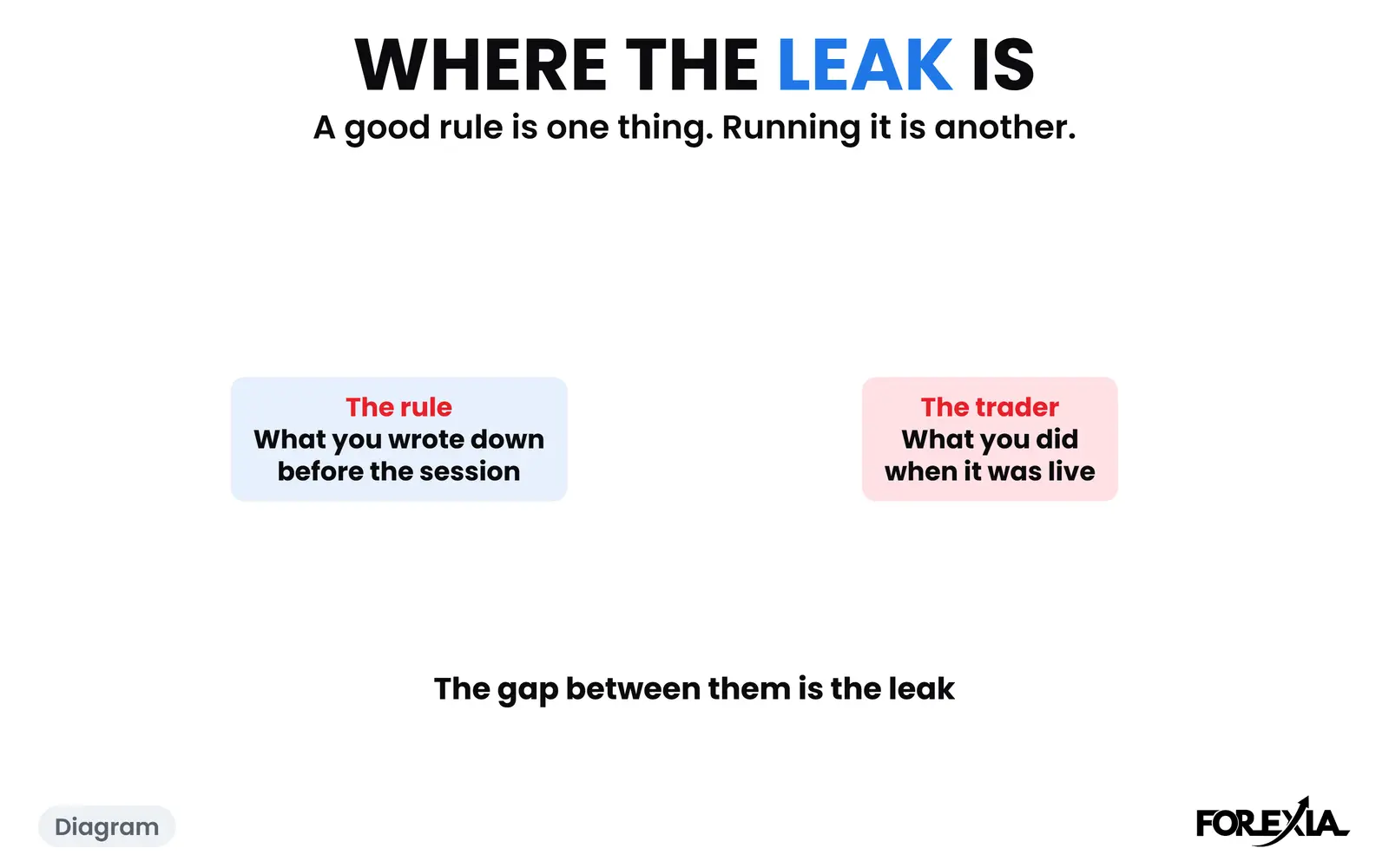
Suppose the rule does make money on paper. Then the gap between it and your account is the leak, and it usually sits in one of five places.
- The exit. The rule says one thing and a winner that turns into a loser makes you do another. Holding a loser in hope and cutting a winner in relief are the two best-documented habits in the studies below.
- The size. The rule risks the same on every trade, and a run of losses makes you raise it to win back what you lost. That turns one bad week into a bad month.
- The skipped trade. You skip the one after a loss, and it was the winner. A rule only works as a whole.
- The extra trade. The rule gave you three a week and you took ten, because the chart was moving. Why you take trades you know you shouldn't is about what drives that.
- The cost. Spread, commission and slippage were small in the backtest and are not in your account. Is forex rigged has a check for your own fills.
None of these is a flaw in the rule. Each is a gap between the rule and the person running it, which is why a record of what the rule said and a record of what you did have to sit side by side.
A morning that can be run two ways: GBP/USD, 13 July 2026
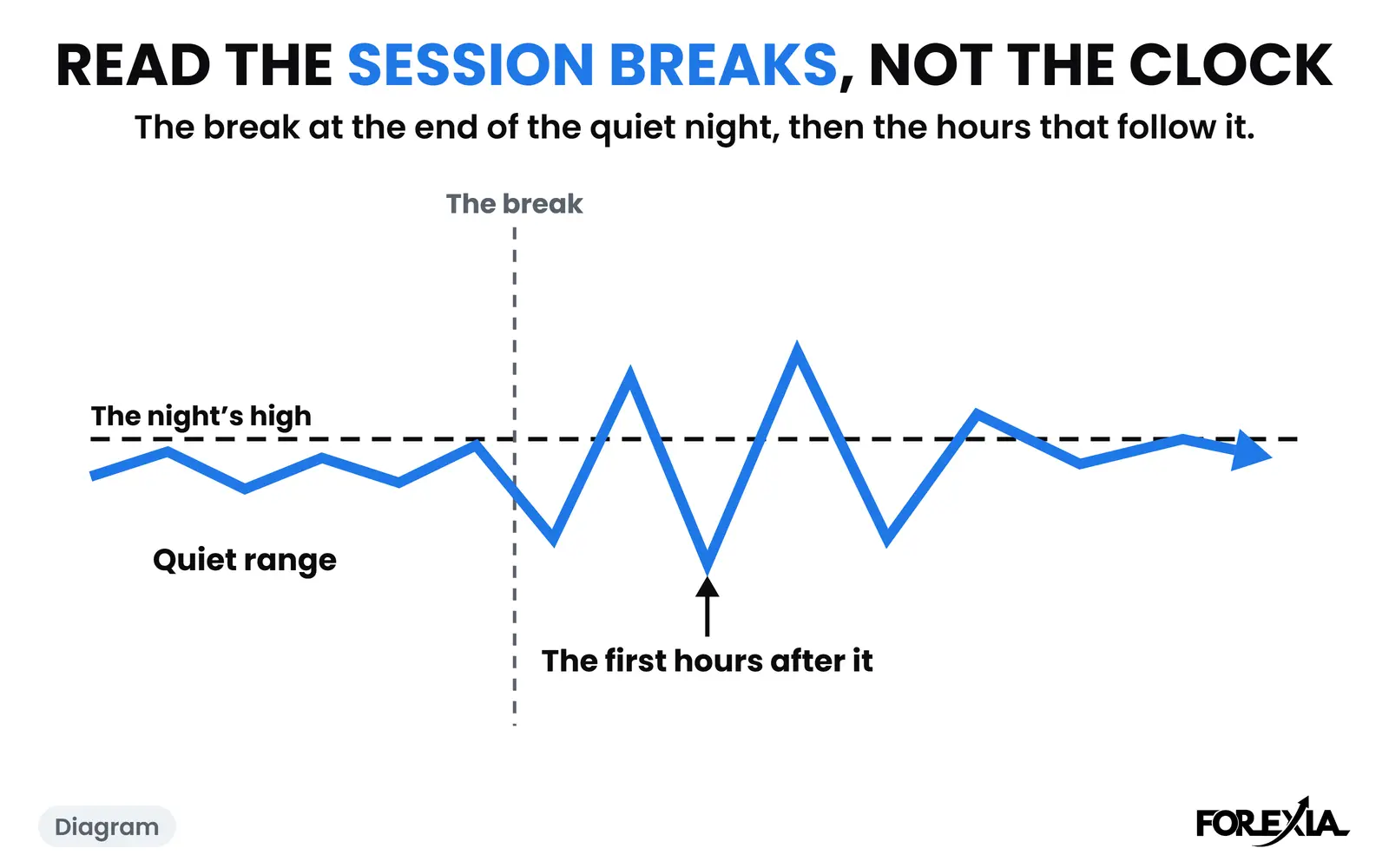
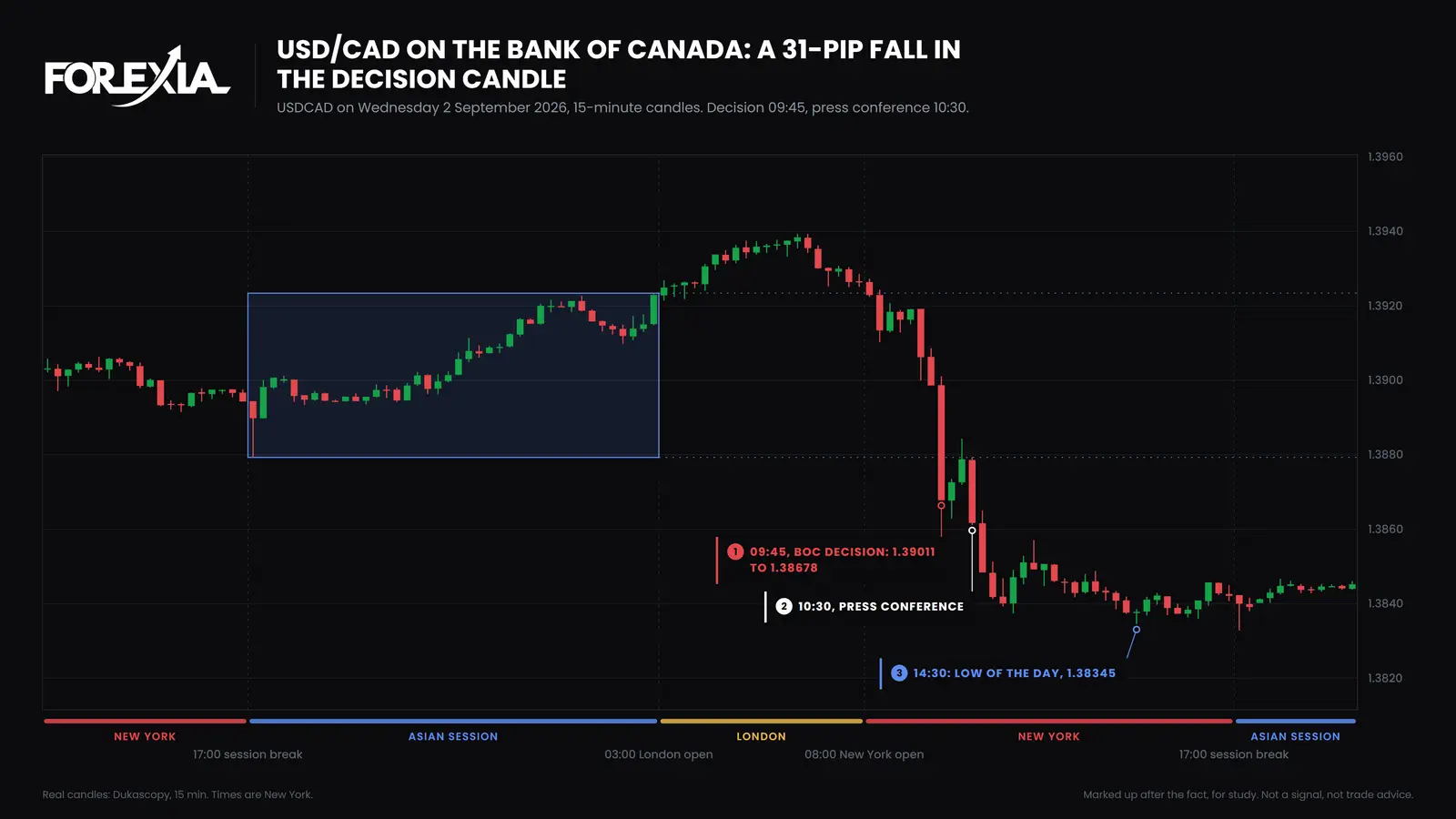
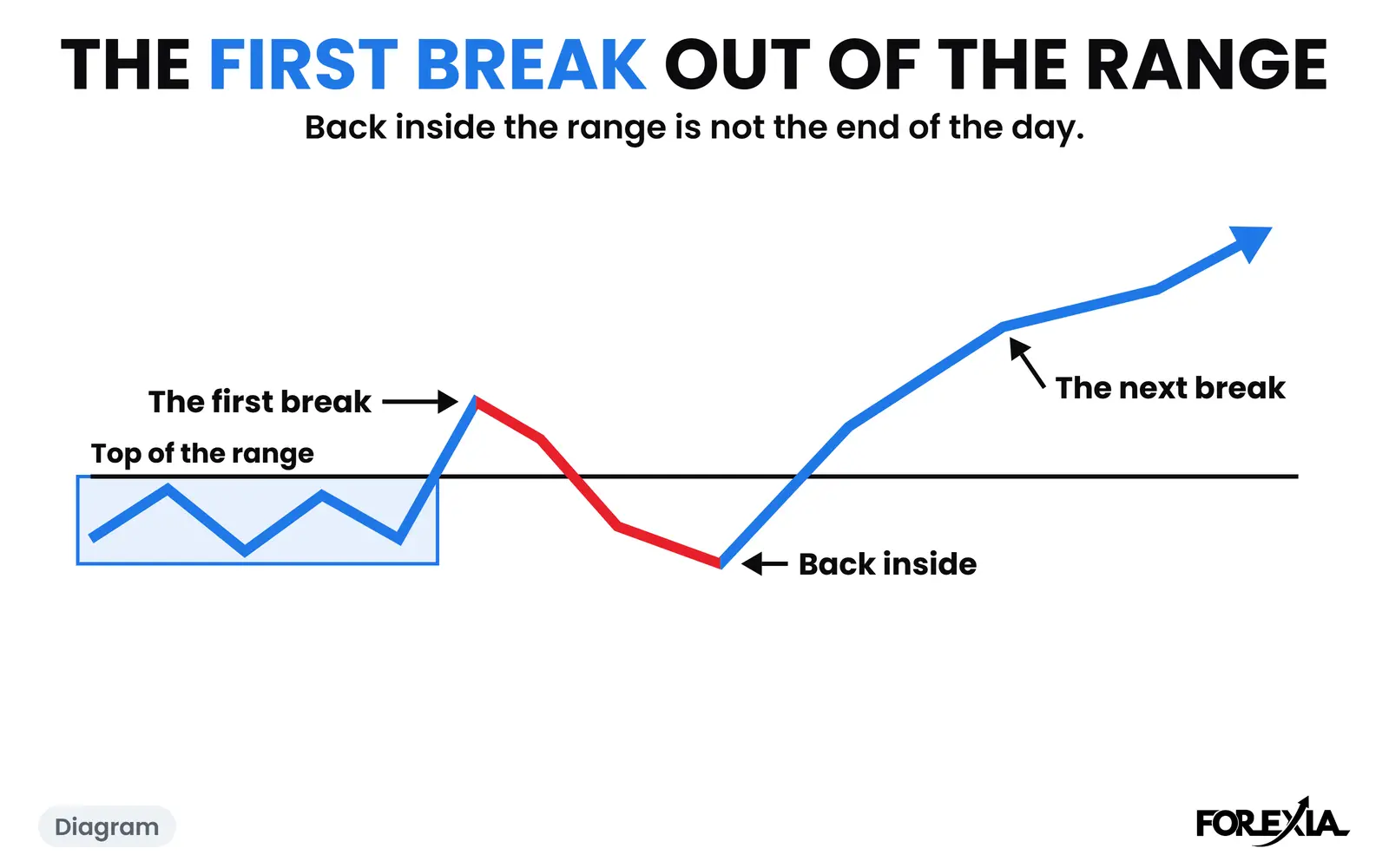
On Monday 13 July the Asian box ran 26 pips, from 1.33664 to 1.33921. The 03:45 New York candle closed at 1.33928, the first close over the box and seven tenths of a pip over its high. The 04:00 candle closed at 1.34033, and the 04:15 candle reached 1.34114, the day's high. The 05:00 candle closed at 1.33914, back under the box's high, and price reached 1.33422 at 16:15, 69 pips under the day's high. Our calendar had no medium or high-impact release for sterling or the dollar near any of those candles.
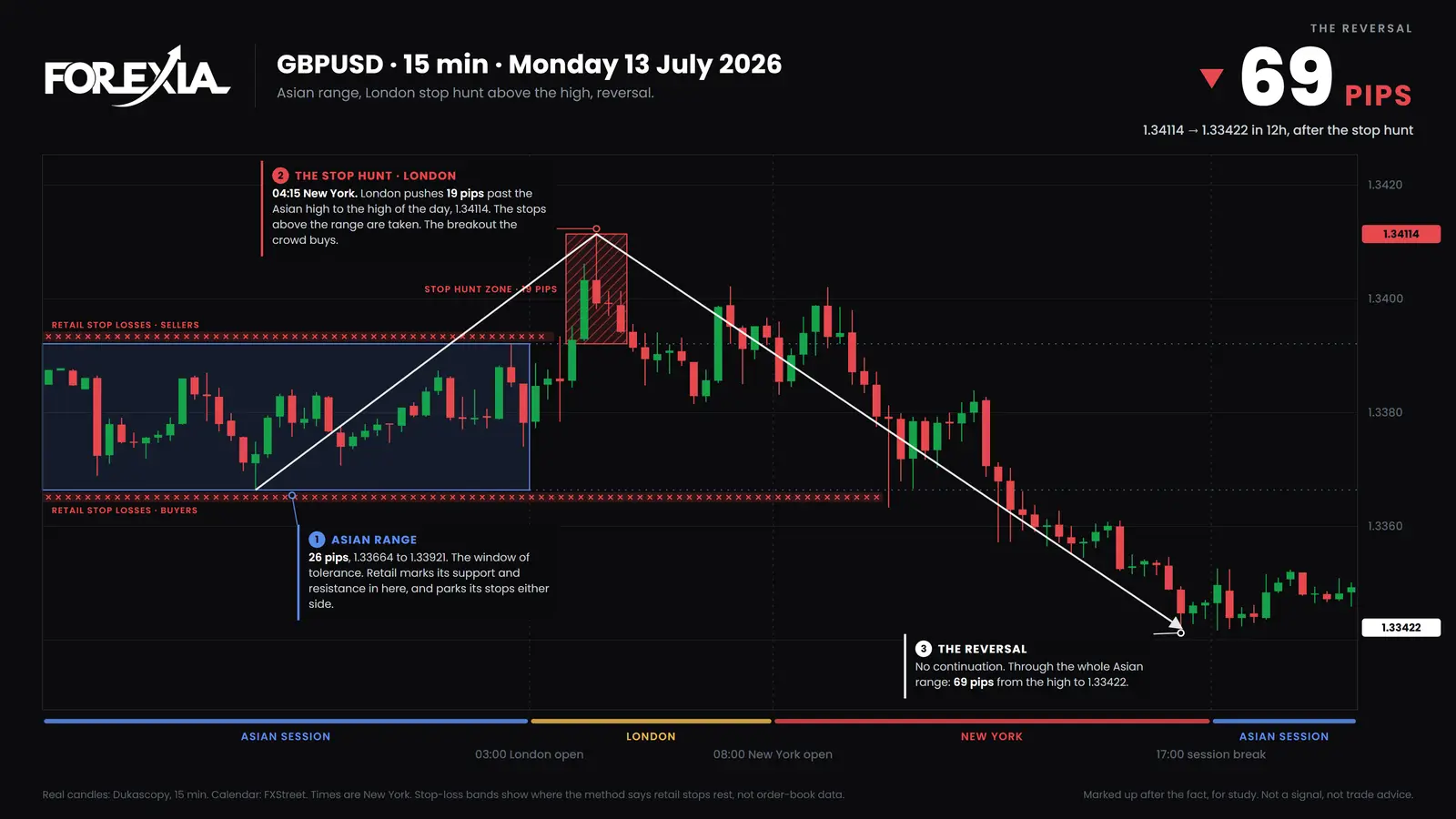
Whoever bought the 03:45 close was about 19 pips ahead at 04:15, and level with their entry by 05:00. What they did at 04:15 is exactly where a rule and a trader part. A trader who wrote down what they would do and did it was running the rule. A trader who had no line, and reacted to 19 pips of profit with relief or to 19 pips of retreat with hope, was running a mood. The candle cannot say which was right. It can say only that this is the place the choice is made.
The three seats read the same morning differently. Retail sees momentum and then a pullback. The market maker's seat is the one we cannot see, and we do not claim to know what it did at 04:15. The observer sees a close over a level, then a close back, then a day. The Three Seats explains how we use them.
How do you find your own leak?
Use your own records, not your memory.
- Write the rule in full. Entry, exit, size and what you skip, in sentences that a stranger could follow.
- Mark every trade you took, skipped and added. The skipped ones are the ones nobody records.
- Put the rule's result and your result side by side, after costs, trade by trade. The difference is the leak, and the trade where it opens up most will tell you which of the five it is.
- Change one thing, and keep records for long enough to tell a change from noise.
Whether you can then sit through the rule is a separate question, and is forex trading hard takes it on.
What does the research say?
Mostly on stock and futures traders, so it is the nearest evidence and not proof about forex. Odean (1998), on 10,000 accounts at a US discount broker, found that people bank gains fast and let losses run. Barber and Odean (2000), on 66,465 US households from 1991 to 1996, found that those who traded most earned 11.4% a year when the market made 17.9%, which the authors read as overconfidence. That is an inference from the trading, because nobody measured confidence directly. Both are about the second and fourth leaks above.
What does this not tell you?
It does not tell you which leak is yours, or whether your rule is sound. It does not say psychology is the whole answer, and our own result says it is not: first the rule has to work. One morning on a chart shows what one morning did, and a reversal seen afterwards is not a setup.
Common mistakes
Four mistakes keep the leak open.
- Working on your mindset before you have tested the rule. A calm person can run a losing rule for years.
- Changing the rule after every loss. You never get enough trades to know.
- Keeping a journal of feelings and not of trades. The record that finds a leak has the rule's result next to yours.
- Judging a day by its ending. The 13 July morning looks obvious now. At 04:15 it was not. Dumb Money vs smart money is our way of asking who stood where on a candle, and perceptual positioning is the habit of reading from all three seats. For whether the people selling fixes can be trusted, see is forex a scam, and the wider subject is on the trading psychology hub.
Course 1 of ForexiaPRO, Reading the Map, teaches reading a chart from three seats, starting with lesson 1.1.
Frequently asked questions
Why do I lose money in forex even with a good strategy?
Two reasons cover most cases. The strategy is run differently from how it was written, in exits, size or extra trades. Or the strategy is not as good as it looked, because costs were left out or the sample was small. Our own setup, run as a fixed mechanical rule with no emotion at all, did not make money, so a sound-looking rule can lose without anyone leaking.
How do I know if the strategy or I am the problem?
Compare two records of the same trades: what the written rule would have done, and what you did. If they match and both lose after costs, the rule is the problem. If the rule makes money on paper and you do not, the gap between them is your leak. It needs every trade in the record, including the ones you skipped.
Is it a mindset problem?
Sometimes. Studies of real traders have found people holding losers, trading more than their results justify and taking more risk after a loss. None of that makes a losing rule win, so test the rule before you work on yourself, and keep in mind that research on traders is mostly of stock and futures accounts and not forex.
How many trades do I need before I can trust my results?
We do not have a number we could stand behind. A handful of trades says very little, because one trade can go either way on a day like any other. The honest answer is to keep a record after costs and to treat a short run as noise, in the direction of both gains and losses.