Retail Traders vs Institutional Traders: One Candle, Three Seats
Dylan Forexia7 min read
Retail traders vs institutional traders comes down to the problem each one has. A retail trader is paid only if the direction is right after costs, and a small order fills at once. An institution may be hedging, serving a client or funding itself, and a large order needs someone on the other side. Here is what that looks like on one real candle.
Most comparisons stop at bigger accounts and better tools. Those are true, and they do not help you read a chart. This page sets the two side by side, then reads a candle and a whole day. The wider picture of institutional trading, with who trades what and in what volume, is on the hub.
Retail traders vs institutional traders: what is the difference?
The main difference is purpose, and size follows from it. "Institution" also covers many actors who do not want the same thing. A company paying for imports, a pension fund hedging and a central bank do not share a view on the next candle.
| Retail trader | Institutional trader | |
|---|---|---|
| Who | A person with their own account | A bank, fund, company or central bank, acting for an organisation |
| Why it trades | A view on direction | Sometimes a view, often a hedge, a client order or funding |
| How it gets in | Through a broker, a step or more from the wholesale market | Through dealers, directly or on platforms |
| Its size problem | None: the order fills at once | A real one: a large order needs someone to take the other side |
| What it can see | Its broker's price and its own chart | Its own orders and, at a dealer, its clients' flow. Never the whole market |
| How it is paid | Direction, after spread and costs | It varies. A dealer by the flow, a fund by results, and a company may not be trying to make money on the trade |
| Leverage | Set by the broker within rules: 30:1 on major pairs in ESMA's 2018 measures for EU retail CFD clients | Set by its own credit lines and risk limits. We found no public figure worth quoting |
| Does it have to trade today? | No | Often yes |
The last row is the one retail traders forget, and we come back to it below.
What are market makers in forex, and who are they?
Market makers are firms that quote both a buying and a selling price and take whichever side a customer wants. Mostly they are large dealer banks, along with electronic firms that are not banks. They are one kind of institution, paid by the flow more than by calling direction. What do market makers do in forex goes through the job step by step, and market maker vs ECN broker deals with your own broker, which is a separate question.
Our read goes a step past the job description. Where a large order needs the other side, we read the chart as going to find it, and the crowd's stops are the most obvious place. That is a reading, not order-book data. The hub sets out the evidence for it and against it.
One candle: EUR/USD on Friday 11 September 2026
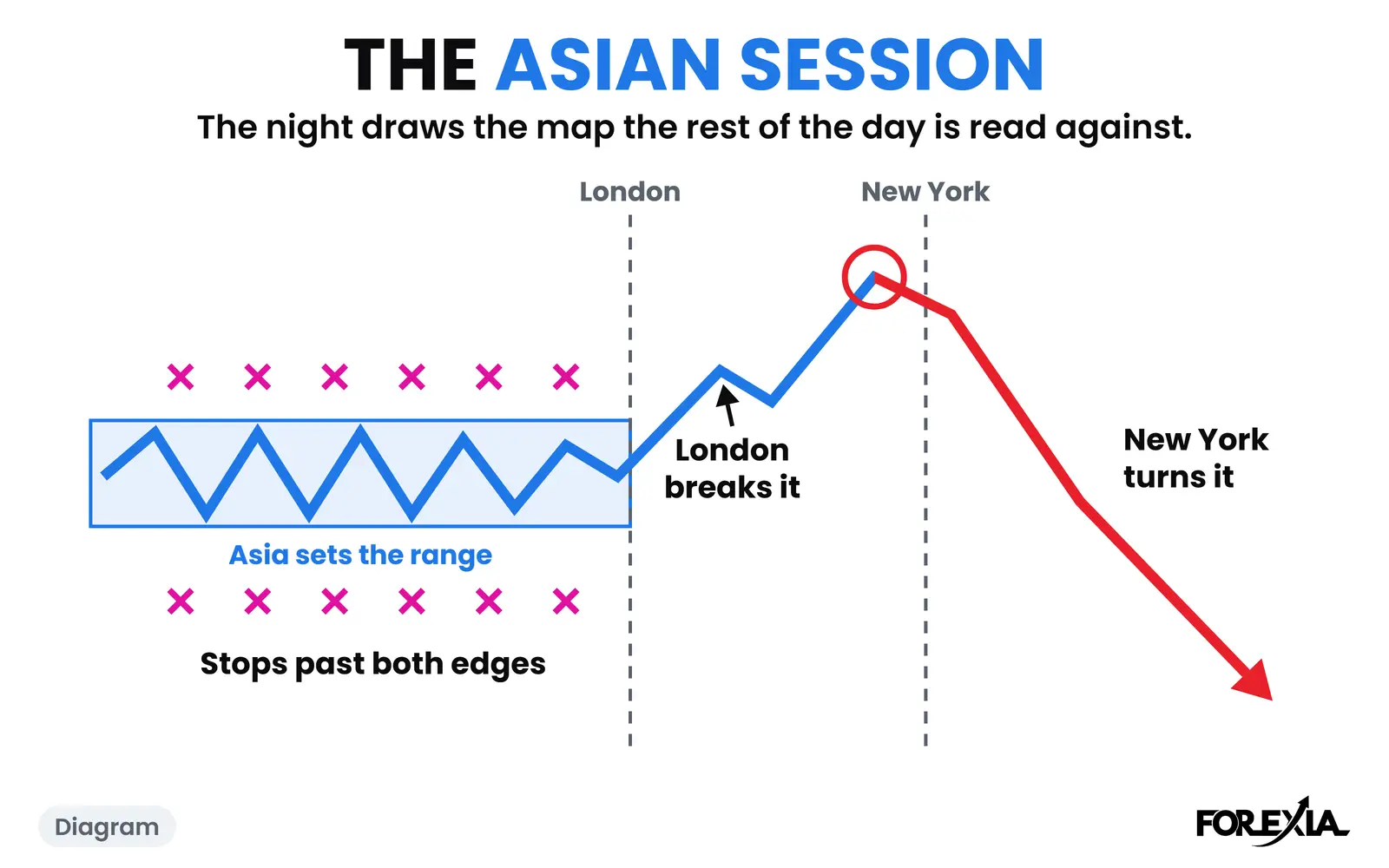
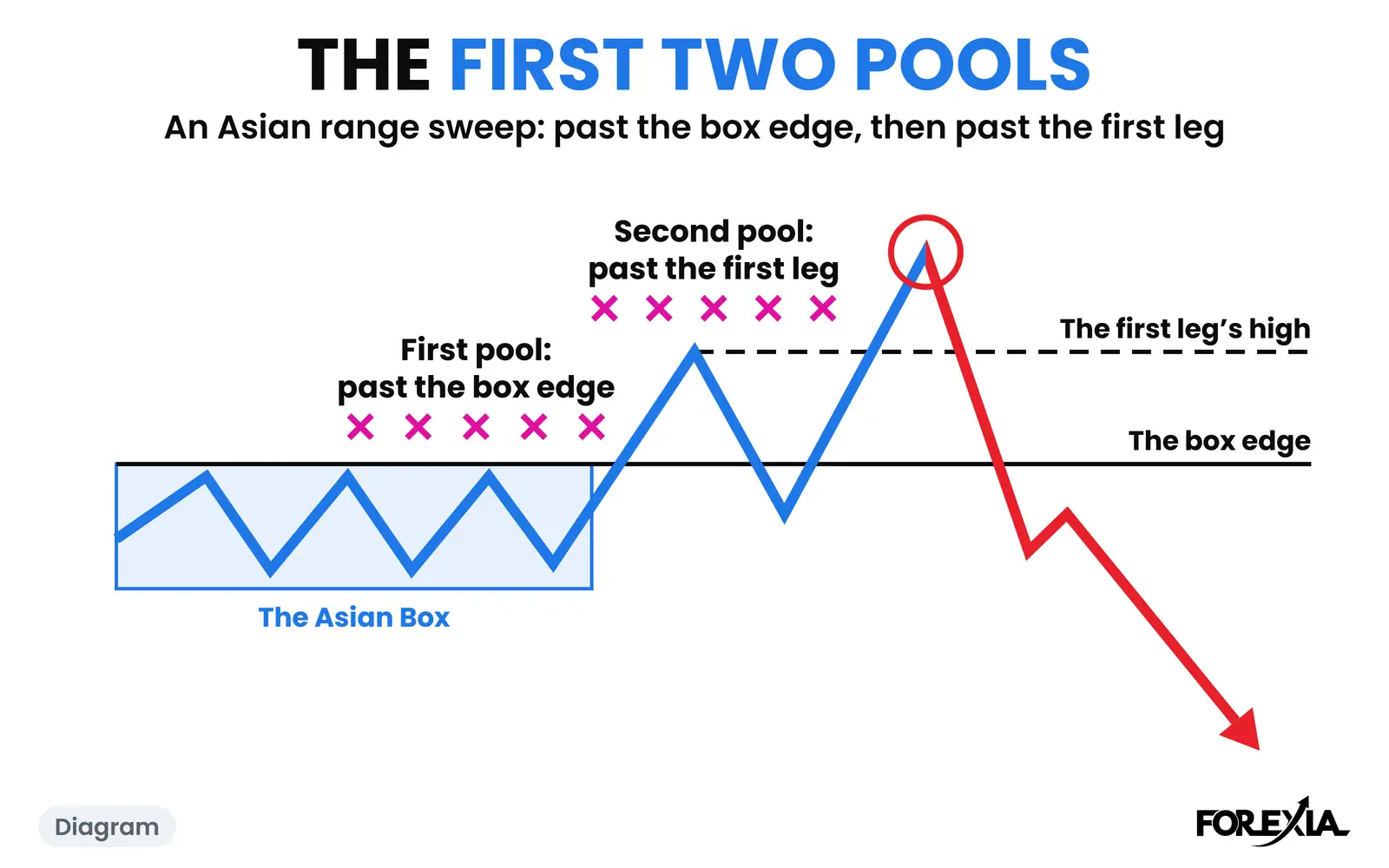
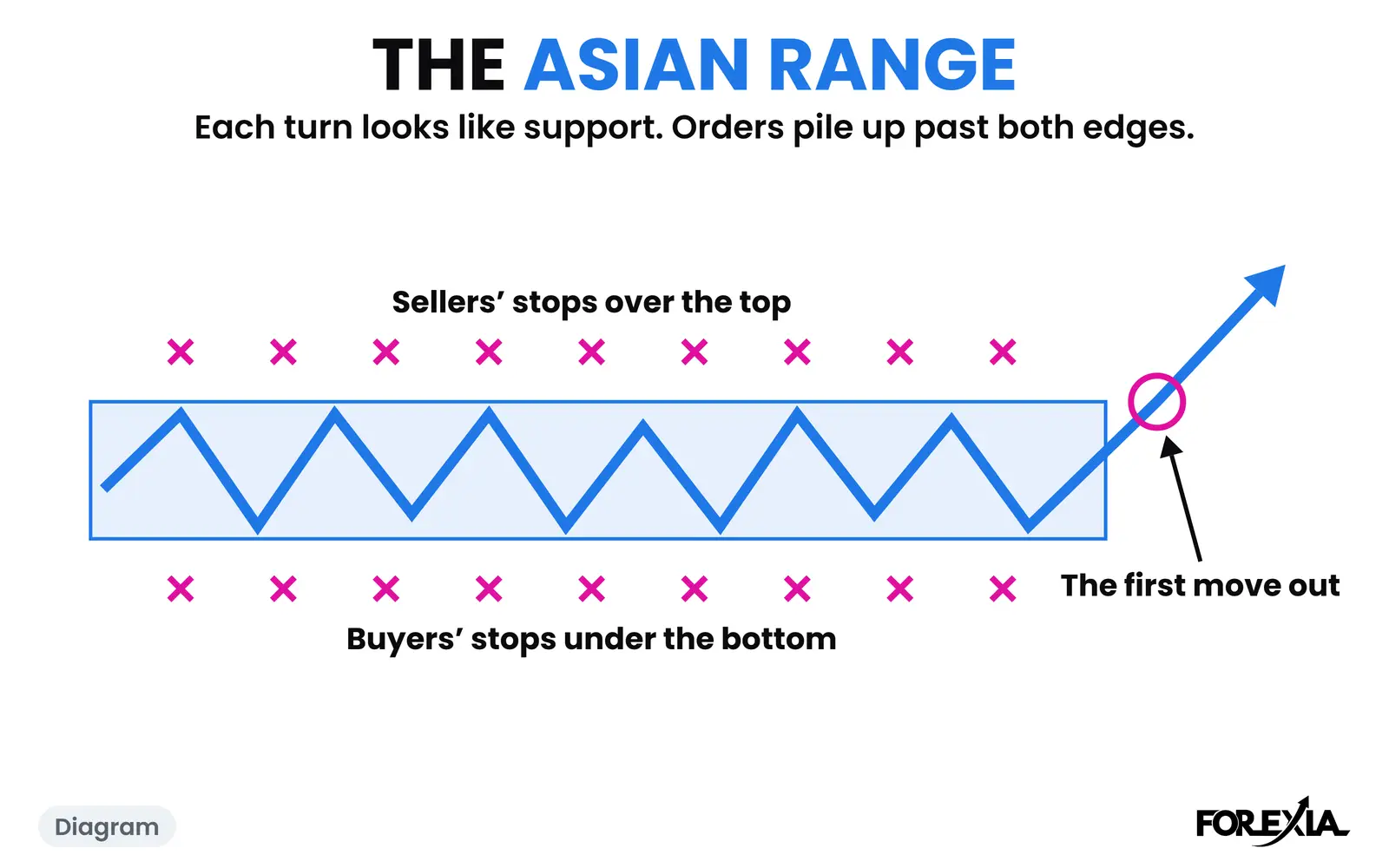
Here is the idea on one candle. Asia's range ran from 1.15997 to 1.16174, 18 pips. Drawn on the chart, that is the Asian Box. London broke its low and reached 1.15899 at 06:45 New York, taking Thursday's low of 1.15921 on the way. That was the low of the morning, and the book calls it support.
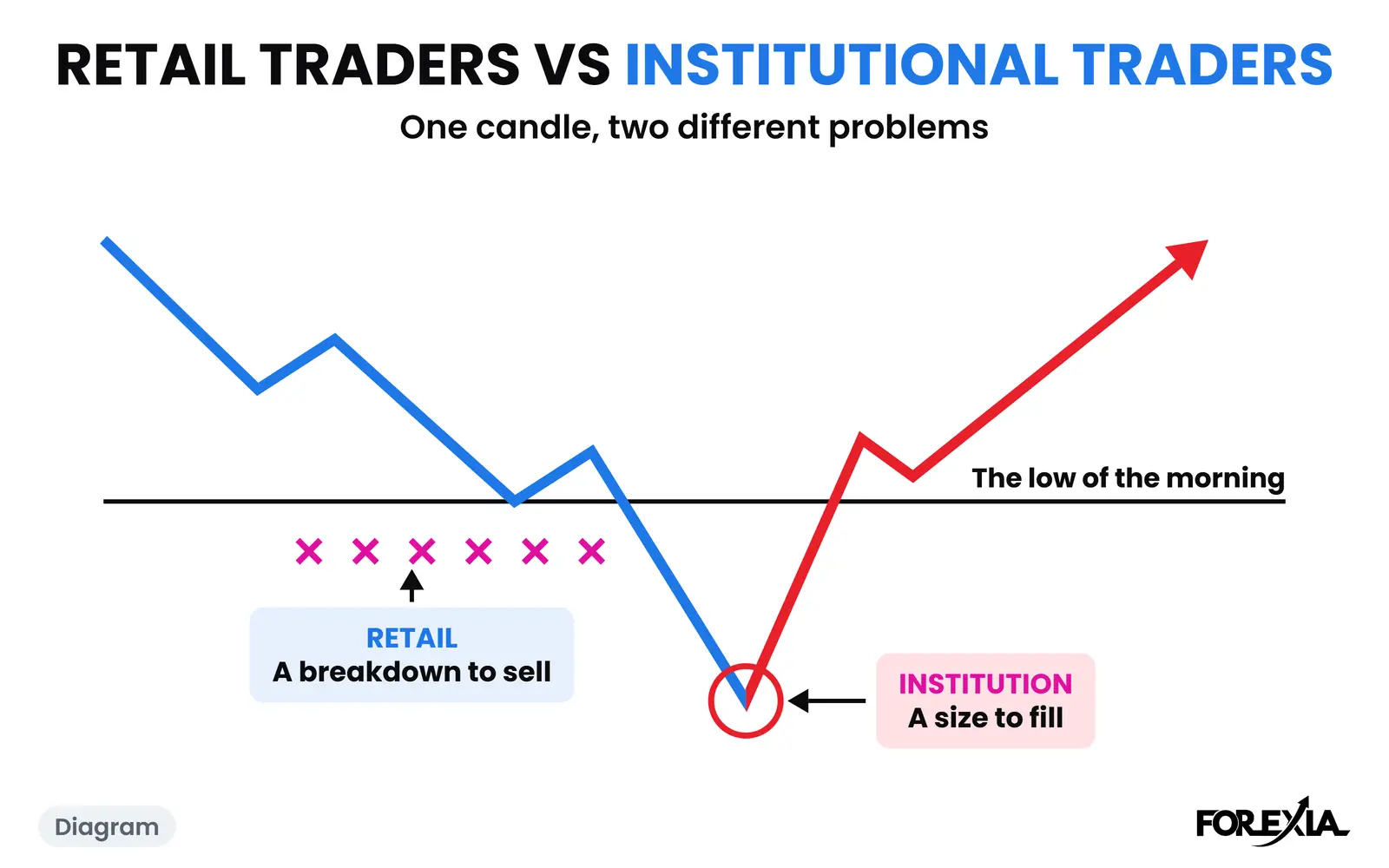
At 08:30 US inflation came out. That candle opened at 1.15966, fell to 1.15693 and closed at 1.15943. Its low was 21 pips under the morning's low, and its close was 4 pips back above it. Now read it from the Three Seats.
- The retail trader sees support fail. It sells the breakdown, or has its buy stopped out. It wants the direction to be right, and it fears missing the move. That is the trade every book gives, which makes it Dumb Money in our word: predictable, not stupid.
- The market maker, as we read it, sees a fill. Those stops and breakdown orders are all sellers, and anyone needing to buy in size needs sellers. This is what we call the Stop Hunt, which most traders know as a liquidity sweep. Nobody outside saw who bought at 1.15693, and a data release moved every dollar pair at once, so the data may be all it was.
- The observer waits for the close. It came back above the low, so anyone who sold the low was on the wrong side when the candle ended.
By 11:00 price was at 1.16153, 46 pips off the low. It did not stay there. The day ended at 1.15971, 18 pips lower. A speech by the ECB's president and US consumer sentiment had come at 10:00, before that high.
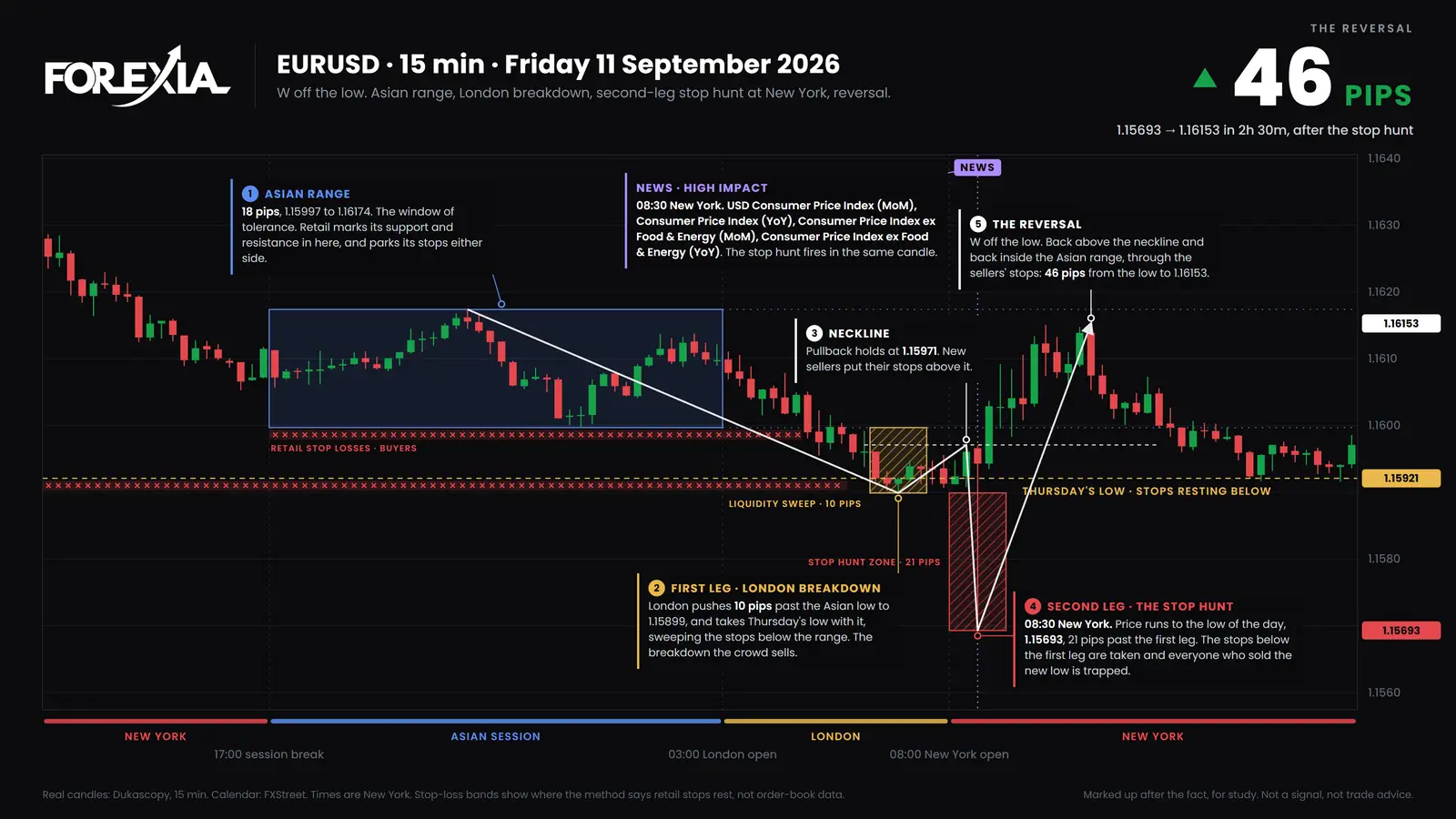
Retail needed one thing from that candle, a direction. The other two seats did not need the answer in advance. That is the difference in one line.
What does a day that goes both ways do to each side?
It can cost a retail trader twice, while someone paid by the flow needs no view on either move. GBP/USD on Wednesday 22 July 2026 is that kind of day.
The box ran from 1.33659 to 1.33908, 25 pips, after UK inflation at 02:00. At 03:30 New York a candle pushed to 1.33950, 4 pips over the top, and closed at 1.33789, back inside. The breakout buyer got in, and so did the stop of anyone short from the top of the box. By 08:45 price was at 1.33543, 12 pips under the bottom and 5 pips under Tuesday's low. Now the breakdown seller got in, and the buyer's stop went. By 10:15 price was back at 1.33905, 36 pips up.
No medium or high-impact release for either currency sat near any of those turns. A trader who bought the first break and sold the second lost on both.
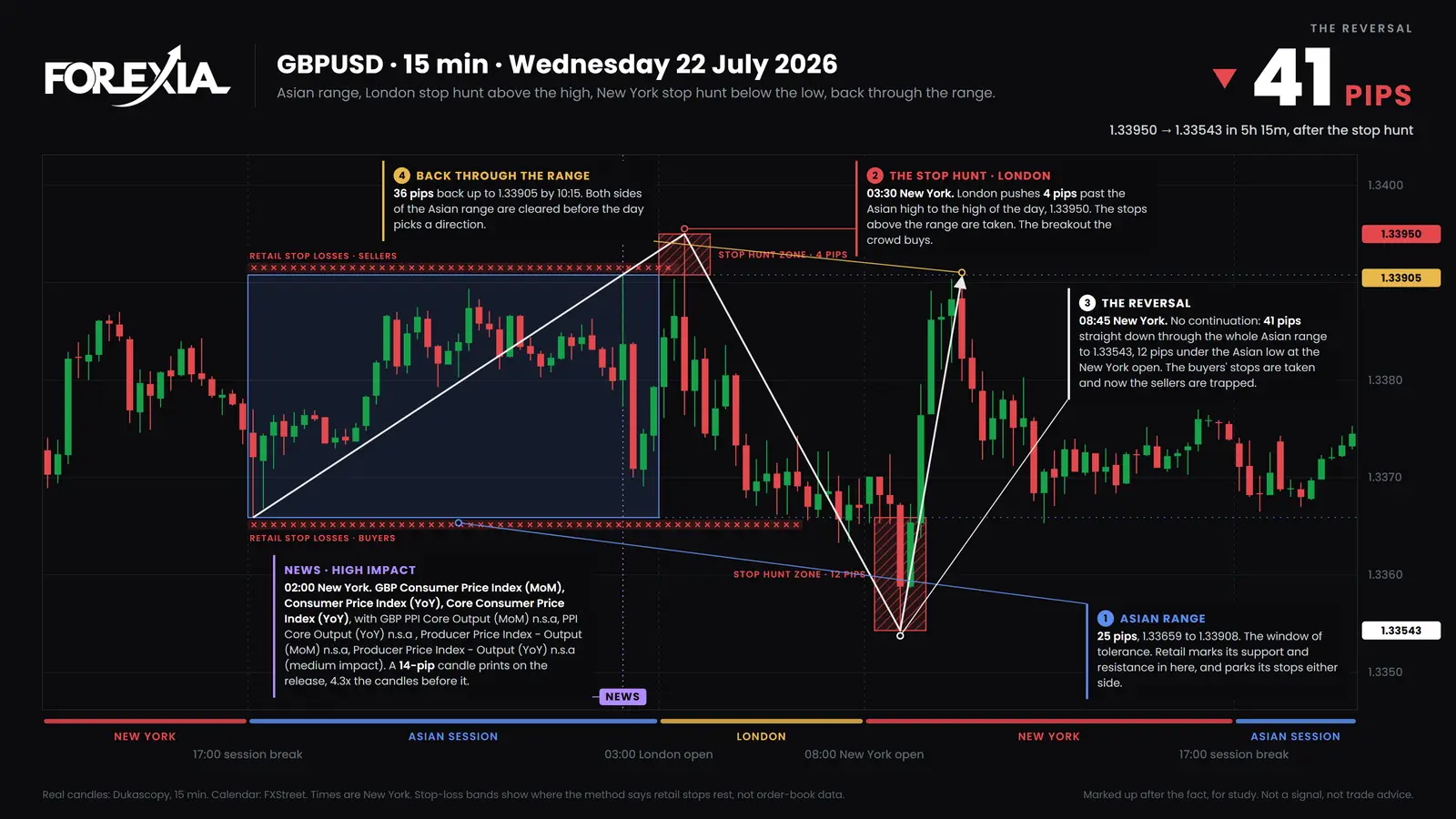
Now the market maker's seat. A firm quoting both prices would have seen buying at one end of the day and selling at the other, and neither order required it to know which way the pound was going. We read that as why two-way days can suit one side and punish the other. We cannot show that any dealer earned anything on this date, and we picked it because it went both ways. Days like it are not the norm.
What does a retail trader have that an institution does not?
You have no size to fill, no client to serve, and no need to be in the market today. A desk with a large client order has to get it done. You can look at GBP/USD at 08:45 and do nothing, and it costs you nothing.
That freedom is small, and it is not an edge in itself. Plenty of traders never use it, which is part of what trading psychology is about. We also ran our own read as a fixed rule and it did not make money, so a turn seen afterwards, like the two here, is not a setup. For more dated examples, the EUR/USD chart markup for the week of 28 September 2026 reads a similar week.
Common mistakes
These come from reading the comparison as a contest.
- Treating the market maker as a person to hate. It is a process: it fills orders where the orders are. You can read a process. You cannot read anger, and no chart shows that a candle was aimed at you.
- Treating institutions as one team. The hedger, the fund and the central bank can be on opposite sides of the same candle. "They" is rarely one thing.
- Thinking the observer predicts. On 11 September the close said that the sellers were on the wrong side at that moment. It said nothing about the afternoon, when price gave back 18 pips.
Course 1 of ForexiaPRO, Reading the Map, teaches this read step by step in lesson 1.1.2, Retail, Market Maker, Observer.
Frequently asked questions
What is the main difference between retail and institutional traders?
The problem each one has. A retail trader is paid only if the direction is right after costs, and a small order fills at once. An institution may be hedging, serving a client or funding itself, and a large order needs someone on the other side. Size and purpose separate them more than skill does.
Who are the market makers in forex?
They are firms that quote both a buying and a selling price and take whichever side a customer wants: mostly large dealer banks, along with electronic firms that are not banks. A retail broker can also make a market for its own clients, which is a separate thing and a question about your broker.
Do institutional traders always win against retail traders?
No survey shows that. Public data does not say who made money, and many institutions are not trying to call direction at all. What can be shown is that most retail accounts lose in regulators' samples, which does not say that any institution took the money.
Do retail traders have any advantage over institutions?
A small one, and it is not an edge in itself. A retail trader has no client to serve, no size to fill and no need to be in the market today. Standing aside costs nothing. Whether that freedom becomes a result depends on the rule being used, and many traders never use it.