The Forexia Playbook: 58 Real Forex Plays, Scored and Graded
Dylan Forexia6 min read
The Forexia Playbook is 58 real plays in six volumes, built from our weekly chart markups between 6 April and 28 September 2026. Each play is a day or a week that has already happened, drawn from the candles, read from three seats and scored by how many of eight confirmations held. It is a set of examples to study. It is not a course, and it holds no signal and no promise.
In brief
- What it is: 58 plays in six volumes, one volume for each kind of play.
- What a play is: one real chart, shown three times, then the read.
- What it is not: a signal list, a course or a record of trades.
- The catch: every play was found after price reversed, so it shows what the setup looked like, not what it earns.
What is in the Forexia Playbook?
Six volumes, one for each play, with the number of plays in each.
| Volume | The play | Plays |
|---|---|---|
| I | The Stop Hunt | 10 days |
| II | The M and the W | 12 days |
| III | Both Sides Hunted | 8 days |
| IV | The Weekly Cycle | 10 weeks |
| V | News on the Clock | 10 days |
| VI | Confluence | 8 days |
Ten, twelve, eight, ten, ten and eight make 58. Volume IV is weeks and the others are days. Every volume opens with the play, the lens and the notation, and closes with a page of tendencies counted from all 26 weeks of markups. That page carries its own caveat: the charts were found and graded after the fact, so it describes what the textbook examples looked like and not how often a setup works.
How is a play laid out?
Every play uses the same pages, so the plays can be compared.
- The chart at the moment of the trap, seen from the crowd's seat: what a retail trader reading the textbook sees, and the trade it says to take.
- The same chart from the market maker's seat: where the orders are resting, and who is positioned where.
- The finished markup, from the observer's seat: every level marked and the whole day in view.
- The read: the trap in order, where the stops were and what took them, what the structure offered and what the week did with the level.
The three seats are our way of reading a day: the crowd, the market maker and the observer. The market maker's view is our reading, not a proof of who did what. Everything else is measured from the candles, and the numbers on each page come from the same candles as its charts.
What does a real play look like?
Three from Volume I, The Stop Hunt, show the range. Each is a day picked afterwards.
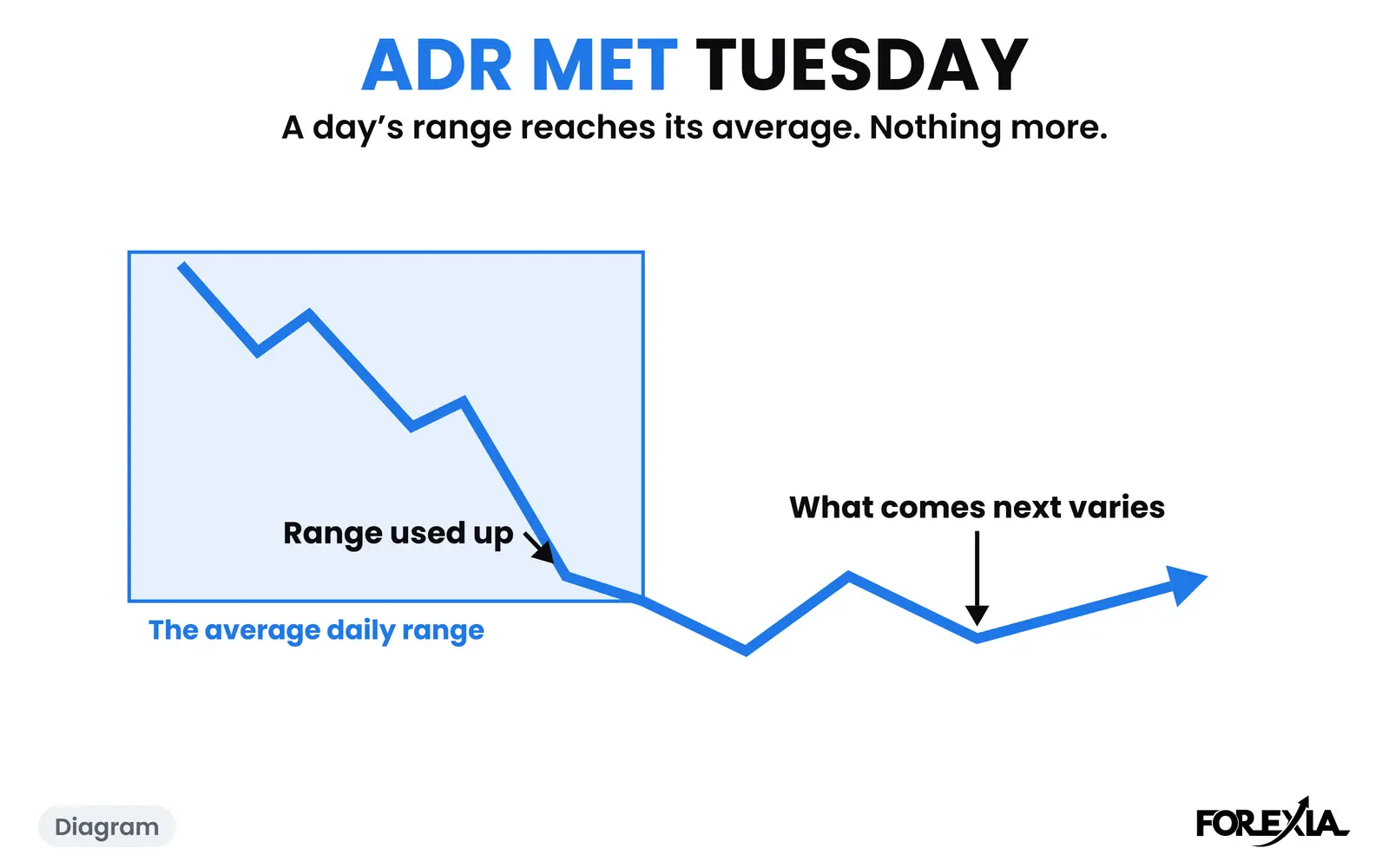
EUR/USD, 16 September 2026, "Five pips over Tuesday". Asia built a 20-pip range under the previous day's high. At 03:30 London took both in a single candle, five pips over. To the textbook it was a clean breakout. Price closed back inside the range within half an hour and fell 96 pips, more than twice the pair's average day.
Gold, 4 September 2026, "Set in London, paid by payrolls". Gold sat in a 27-pip Asian range and London ticked four pips over it at 03:45, almost five hours before the payrolls release. When the release came, one 15-minute candle ran 97 pips through the Asian low and the stops under it. From the hunt to the low was 125 pips in five and a quarter hours.
USD/CAD, 30 July 2026, "Two of eight". London lifted a 29-pip range by eight pips. Only two of the eight confirmations held, and the structure was still complete: back inside the range by 04:30, then 77 pips down. The playbook's note on it is that a low score did not make this less of a stop hunt. It made it less of a turning point, because the high of the week was already in.
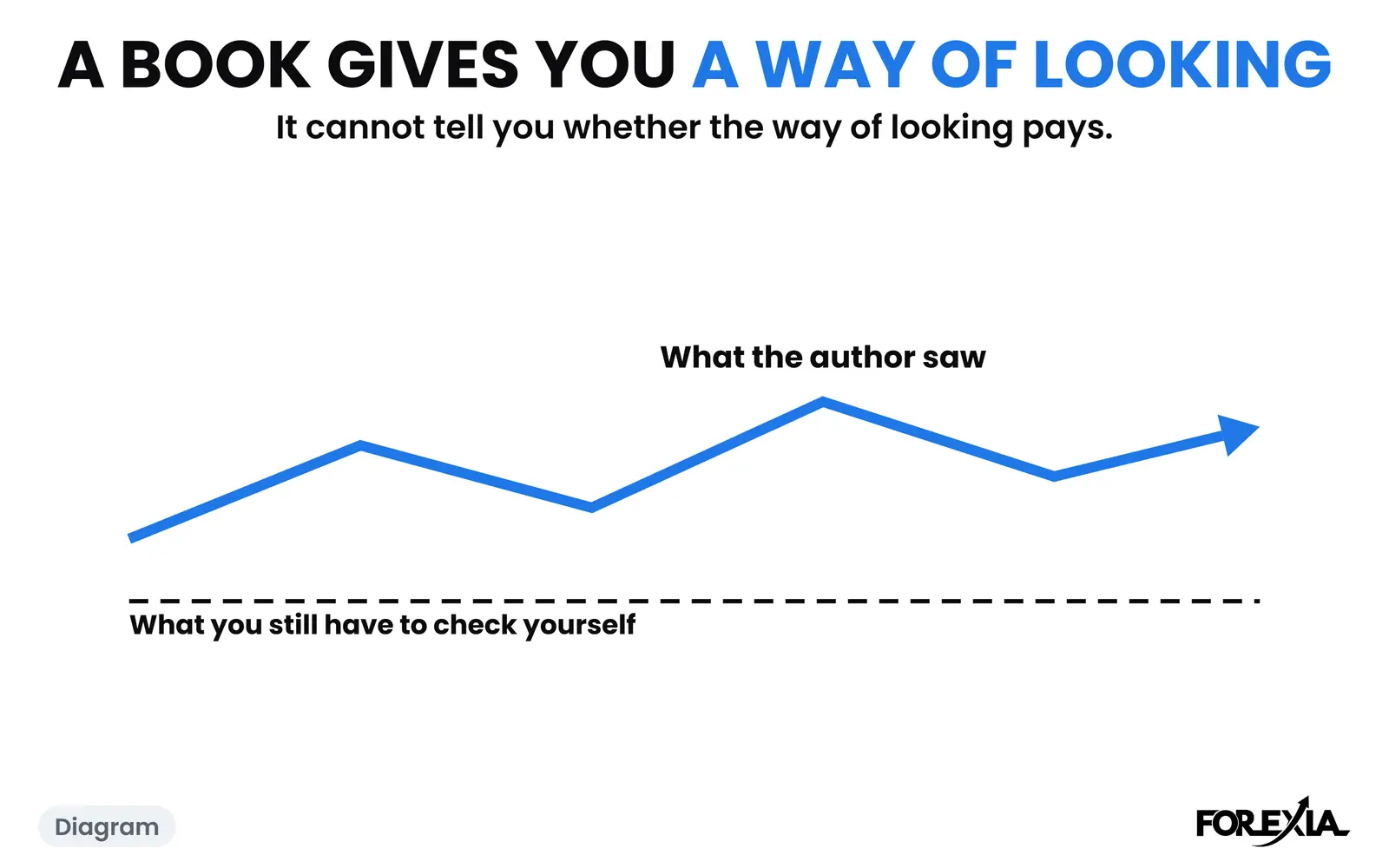
These are examples of what a play looks like when it has finished. They are not trades. A reversal seen afterwards is not a trade you could have taken at the time, and our own test of the setup as a fixed rule with real costs did not make money.
What do the scores and grades mean?
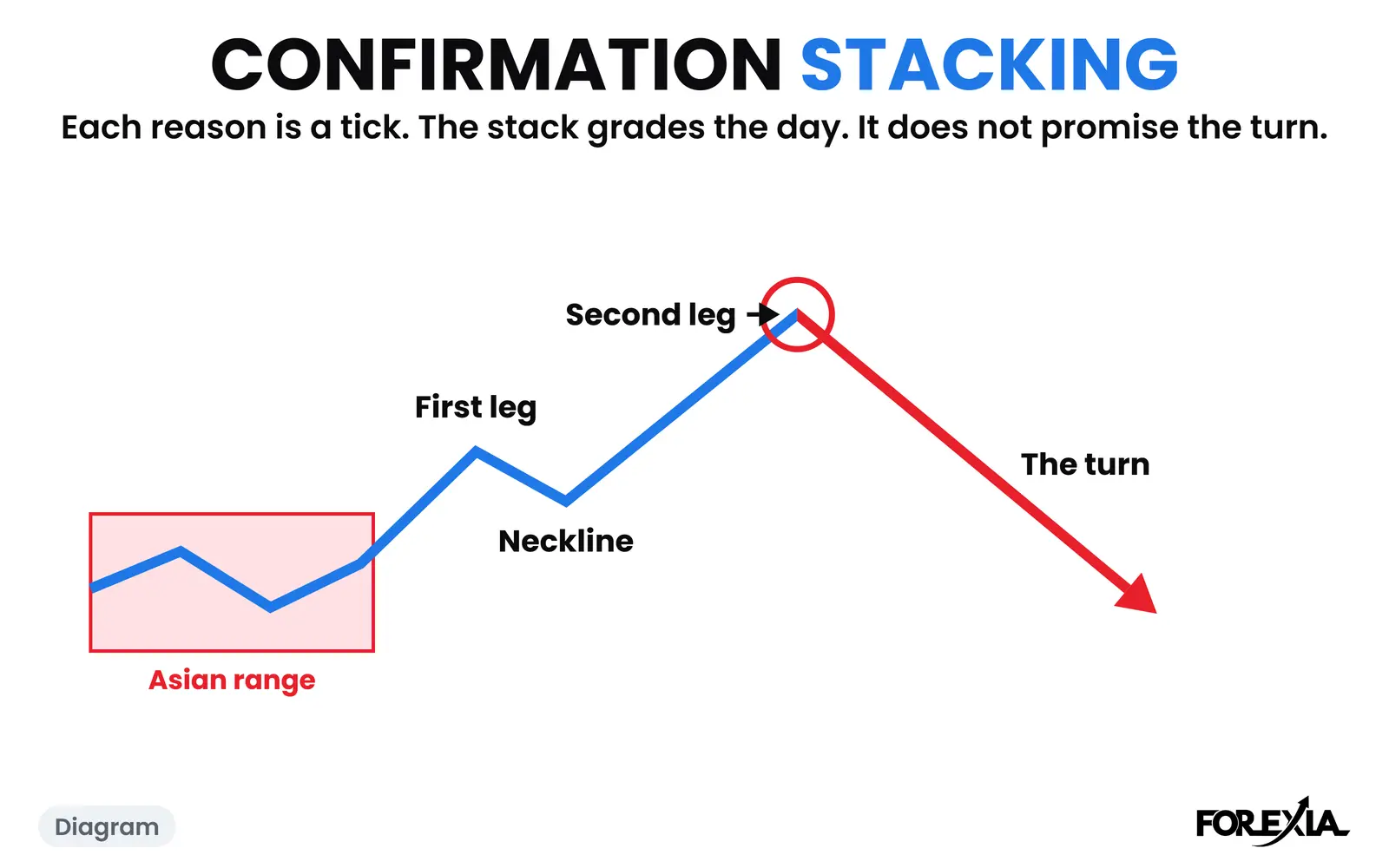
Each play counts how many of eight confirmations held on that day, shown as a score out of eight. Confirmation stacking owns that count and what it does and does not tell you.
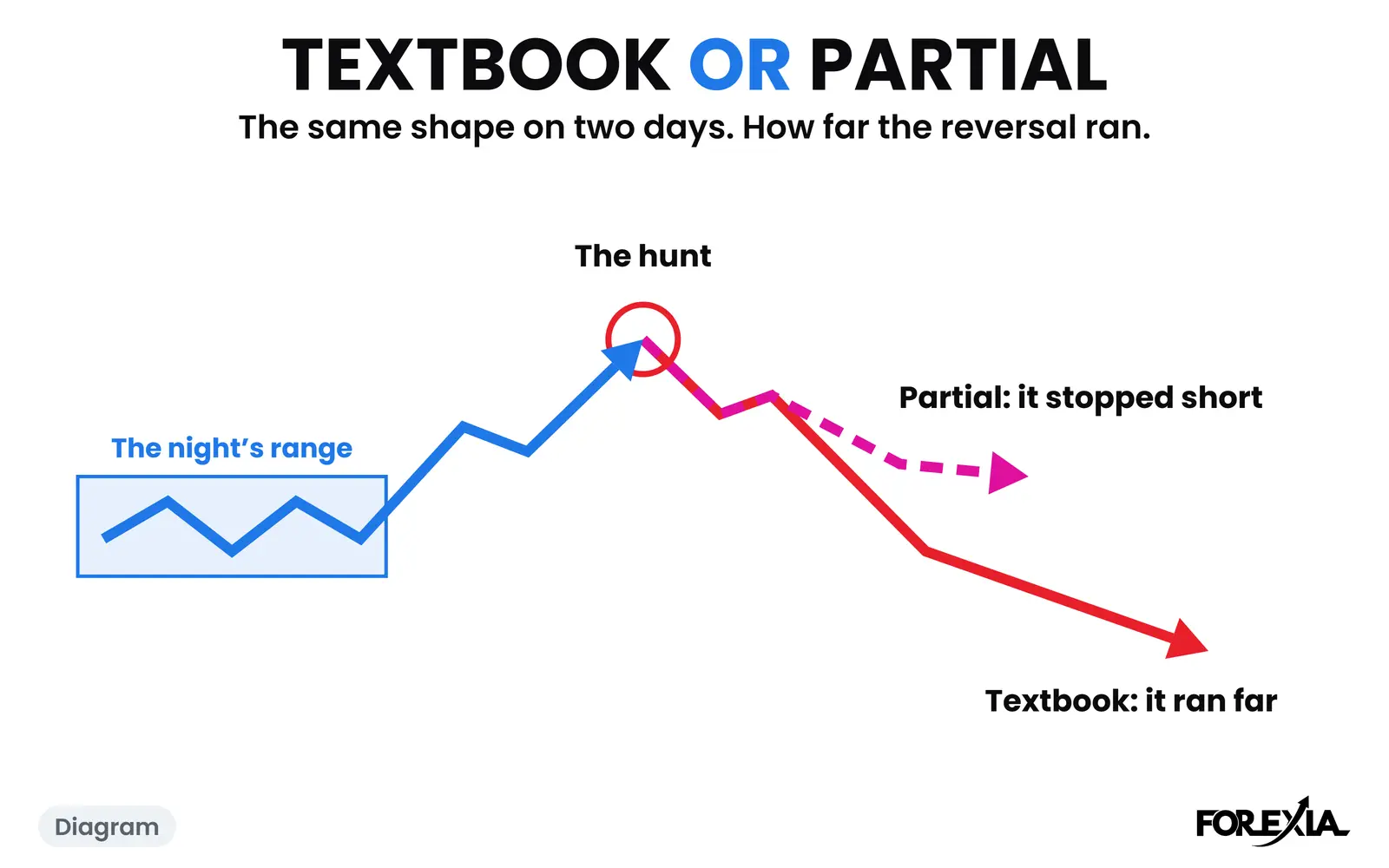
The other mark is Textbook or Partial: how cleanly the day played the setup, filed once the day is over. The two are separate facts. A day can score low and be a clean hunt, as the third play above shows, and a day can score high and still stop short. The playbook prints both so the two do not get mixed.
How should you use a playbook of examples?
As a way of training what you see, not as a list to trade from.
- Cover the answer. Read the crowd's view first and say what you would do. Then read the market maker's view and see whether the same chart looks different.
- Look for the level, not the shape. In nearly every play the move turned at a level many people could see: an Asian high, a previous day's high, a round number.
- Notice the plays that scored low. They show the part of the book that textbook examples tend to hide.
- Keep your own record. Mark your own days the same way and see how many look like these. A journal makes that routine.
What does the Forexia Playbook not claim?
Four limits, stated plainly, because a set of good-looking days is easy to misread.
- It does not say how often the setup works. The plays are the days that reversed. A set of reversals is not a sample of ordinary days.
- It does not say the plays are tradeable. They were found after the fact, and a fixed rule that fired on the same pattern lost after costs.
- It does not teach the course. There is no list of entries, stops or targets. It is a reading of days that happened.
- It does not say who did it. Nobody outside the market can prove who ran a level. The market maker's seat is how we read it.
Where does the Playbook page come in?
The Playbook page replays ten of the days on a pinned chart, minute by minute, and ends on a form for the playbook itself. This page is the written explanation of what is in the set and how a play is read.
Where is it taught?
Course 5 of ForexiaPRO, The #SignatureTrade, in production, works through the plays by volume in lesson 5.5.1, The Playbook, one play at a time. The Signature Trade hub has the rest of the material, and the Learn Forex hub is the place to start if the vocabulary is new.
Trading leveraged products carries a high risk of loss, and you can lose all the money you deposit. This page is for study, not advice or a signal.
Why publish plays that were chosen after the fact?
Because the alternative is to publish nothing, and a reader still has to learn what the setup looks like. The honest way to do it is to say how the plays were chosen. We marked up days once price had reversed, filed them by how cleanly they played, and picked the playbook's plays from those. That is a teaching set, and its limits are printed in it.
What it adds is a common format. When every play has the same pages, the same seats and the same scale of eight, you can set one against another and see which parts repeat and which do not. You can also see the days where only two confirmations held and the structure was complete anyway. A single clean example cannot show you that. Fifty-eight of them can, and each one is a day you can check against the candles yourself.
Frequently asked questions
What is the Forexia Playbook?
It is six volumes built from our weekly chart markups between 6 April and 28 September 2026: 58 real plays, one volume to a kind of play. Each play is a real chart shown from the crowd's seat, the market maker's seat and then complete, with the read written beside it. It is not a course and it makes no promise of results.
How many plays are in the Forexia Playbook?
Fifty-eight, in six volumes: ten days of the stop hunt, twelve of the M and the W, eight where both sides were hunted, ten weeks of the weekly cycle, ten days of news on the clock and eight of confluence.
Are the plays trade signals?
No. Every play is a day or week that has already happened, found and graded after the fact. Nothing in the playbook was traded and nothing in it is a signal. A reversal read on a finished chart is not a trade you could have taken at the time.
What is a score of eight in the playbook?
Each play counts how many of eight confirmations held on that day, so a play can be a complete stop hunt and still score low. A low score does not make a play less of a hunt. It makes it less of a turning point. Our page on confirmation stacking owns the score.
How is the playbook different from the Playbook page on the site?
The Playbook page replays ten of the days as they happened, minute by minute, and ends on a form for the playbook itself. This page explains what the full set holds and how to read a play.