How to Avoid Stop Hunts in Forex: Where to Put the Stop, and Why Wider Is Not the Cure
Dylan Forexia8 min read
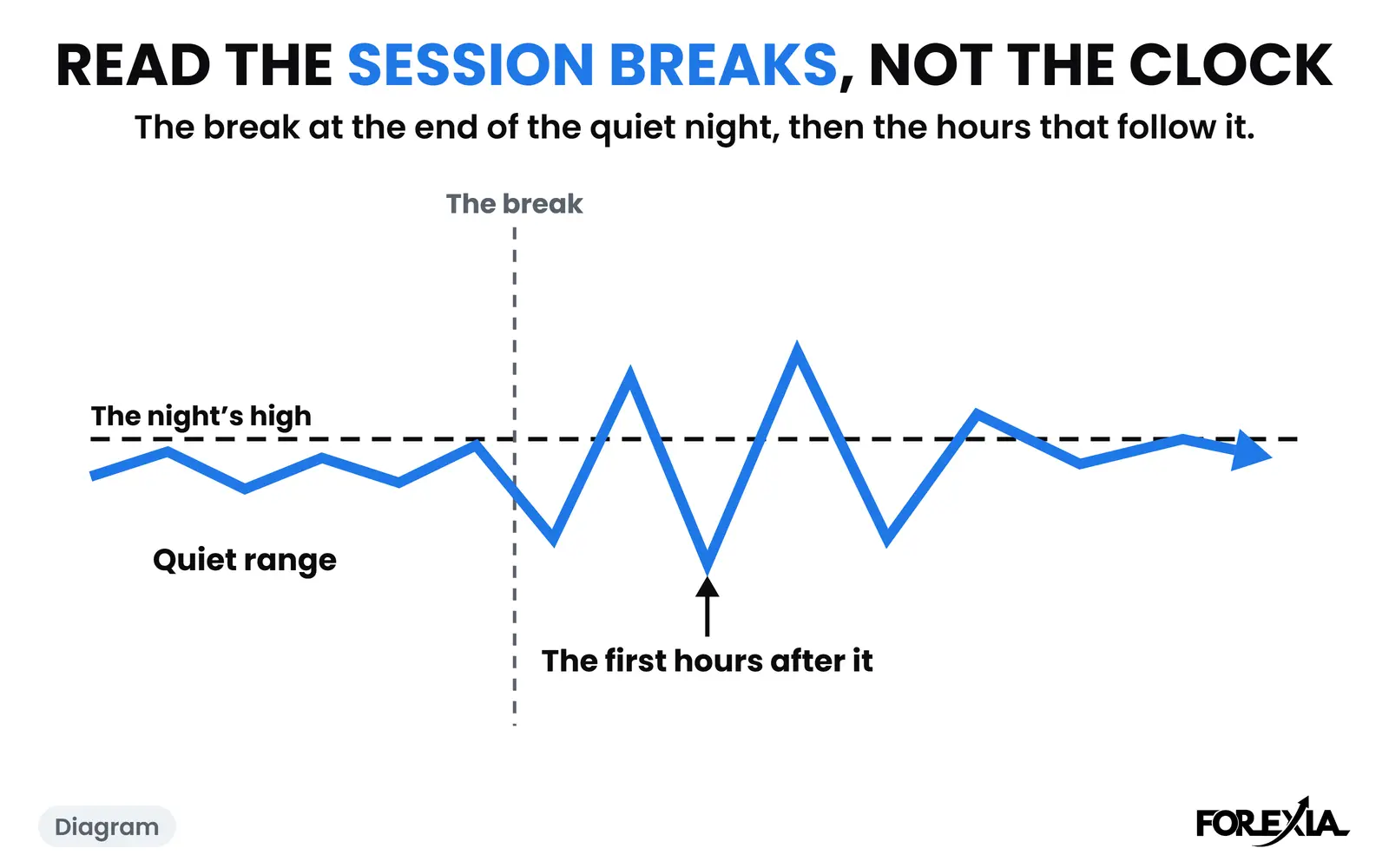
How to avoid stop hunts in forex? You cannot stop price from going to a level, but you can stop being the obvious order. That means not sitting exactly where a pattern puts everyone's stop, and sizing the trade so that a stop further away risks the same money. A wider stop on its own is not the cure, and the days below show why.
Most advice on this search is a list: avoid round numbers, use a volatility stop, keep the position small. Some of it is sound. This page puts a number on how far hunts really go, shows three real days at three depths, and says where the usual advice runs out. It also does not hand you a distance, because the data below shows why no single distance works.
How to avoid stop hunts in forex: why do stops get hit in the same places?
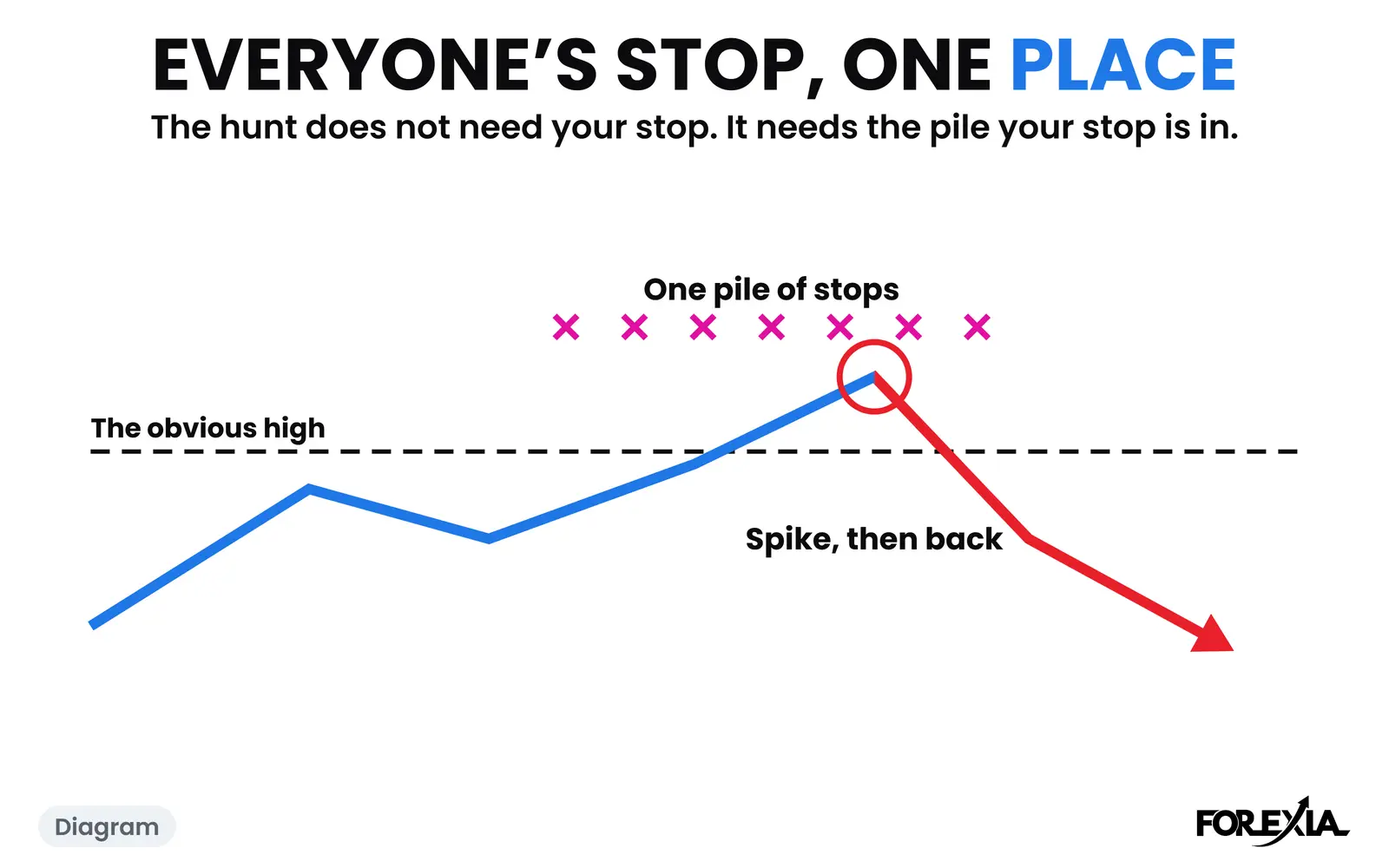
Because they are placed in the same places. A stop under a low is a sell order and a stop above a high is a buy order. The textbook tells everyone to put them just beyond the obvious level, so thousands of orders sit in one pile that price can reach in a single candle.
We read that pile from the market maker's seat: a large order needs the other side, and a pile of stops is a place to find it. Nobody needs to know your stop for this to work, because the pattern tells them where it is. Marking those places is Liquidity Mapping, and what counts as an obvious high or low shows which levels qualify. If your stop sits in the pile, the stop hunt is the move that collects it. For the long form of that question, see why your stop loss always gets hit.
How far past a level does a hunt actually go?
Further than a pip or two, and not very far. We counted every level that was traded through after the London open by at least 3% of the average daily range and then closed back the same day, on seven dollar majors and gold, from 6 April to 1 October 2026. Pips here are past the level, and on gold $1 counts as 1 pip.
| Market | Hunts counted | Median past the level, pips | A quarter ran less than | A quarter ran more than |
|---|---|---|---|---|
| EUR/USD | 182 | 6.5 | 3.3 | 11.4 |
| GBP/USD | 181 | 7.3 | 4.2 | 14.2 |
| USD/JPY | 149 | 7.4 | 5.2 | 13.2 |
| USD/CHF | 178 | 4.1 | 2.5 | 7.6 |
| AUD/USD | 140 | 4.6 | 2.9 | 7.7 |
| USD/CAD | 184 | 5.7 | 3.2 | 10.3 |
| NZD/USD | 145 | 4.3 | 2.6 | 7.1 |
| Gold | 151 | 10.1 | 5.3 | 15.4 |
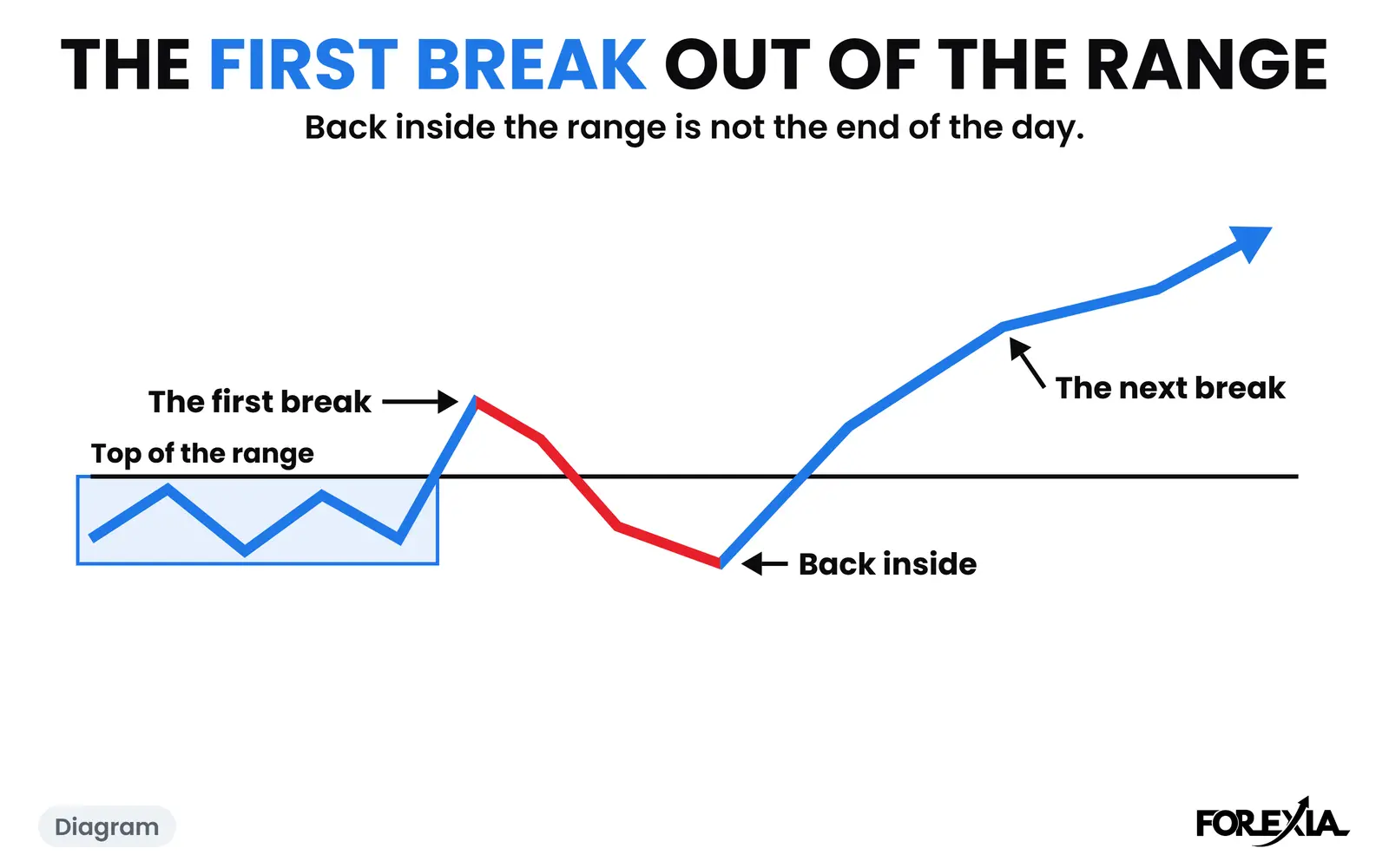
So a stop a pip or two past an obvious level was inside most hunts. But the table counts only the levels that closed back. The levels that did not are the other half of the picture. Of the 1,601 levels taken, 291 never closed back by 17:00 New York. The median trip past the line was about 9% of the day's average range when it closed back, and about 65% when it did not.
That gap is the whole problem with "just put it further away". A stop wide enough to sit beyond a break that stayed has to be very wide, and the loss when it is hit is very large. A stop wide enough to survive a typical hunt is still inside a break that stays.
What does a hunt look like at different depths? Three real days
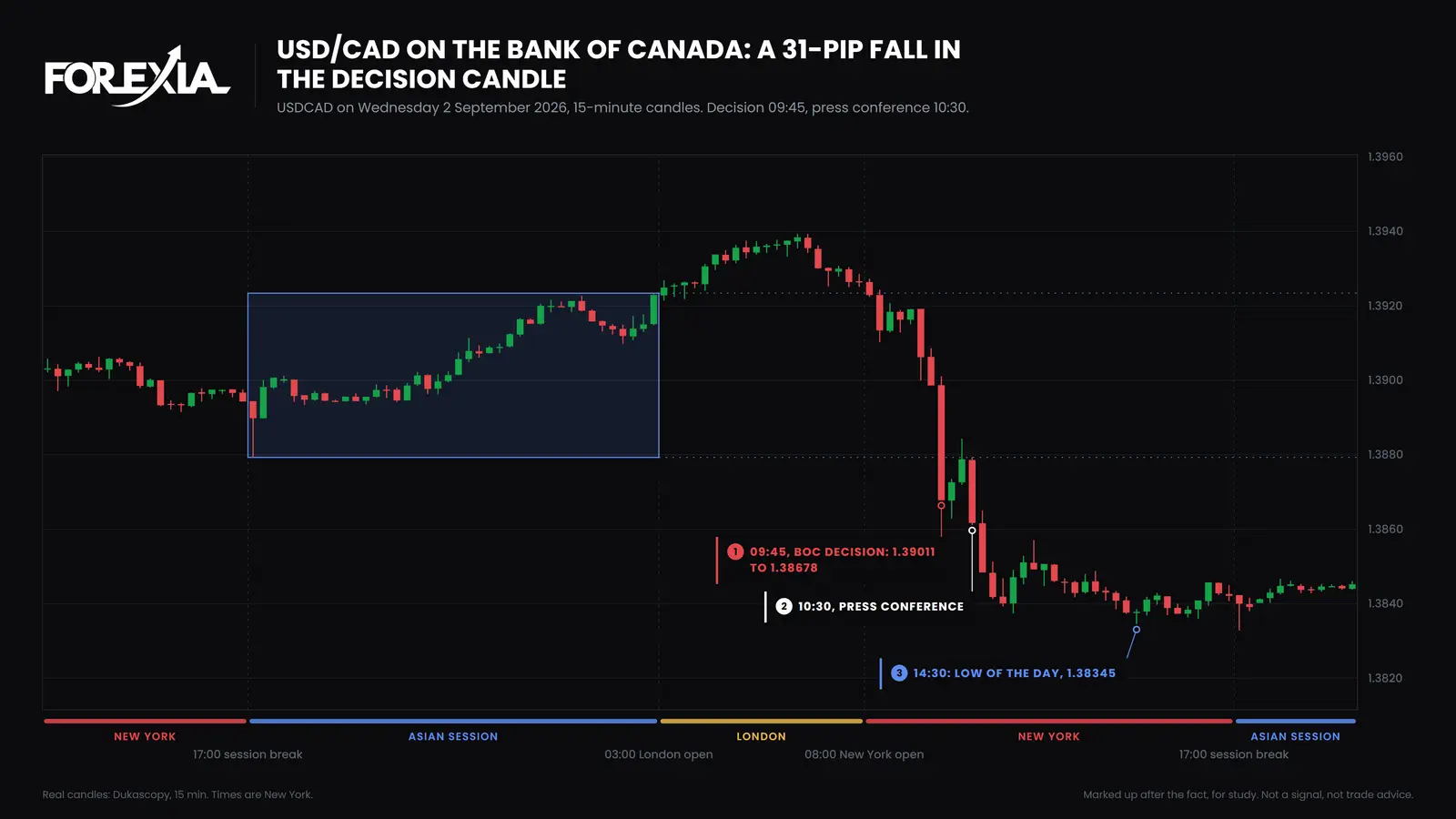
Times are New York, and the candles are 15-minute Dukascopy, so your broker's chart may differ by a pip or so. Each day was picked after the fact, for study.
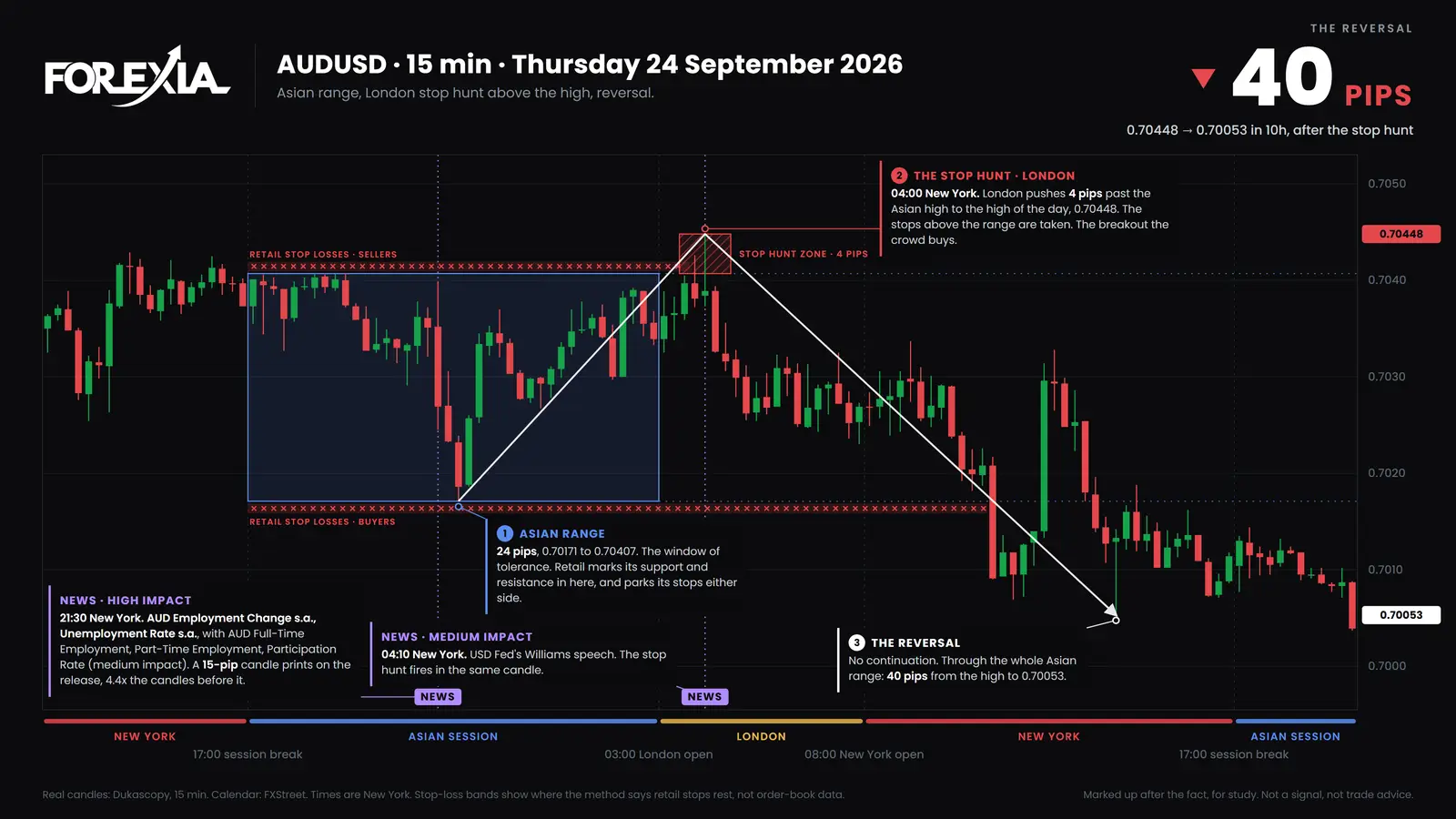
On Thursday 24 September 2026, AUD/USD left a 24-pip Asian range with a high of 0.70407. The 04:00 candle ran 4 pips past it, to 0.70448, and closed at 0.70389, back under the line on the same candle. Price then fell 40 pips to 0.70053 by 14:00. Sellers' stops over that high would have sat just past it, and a stop 4 pips past it was inside the hunt's reach.
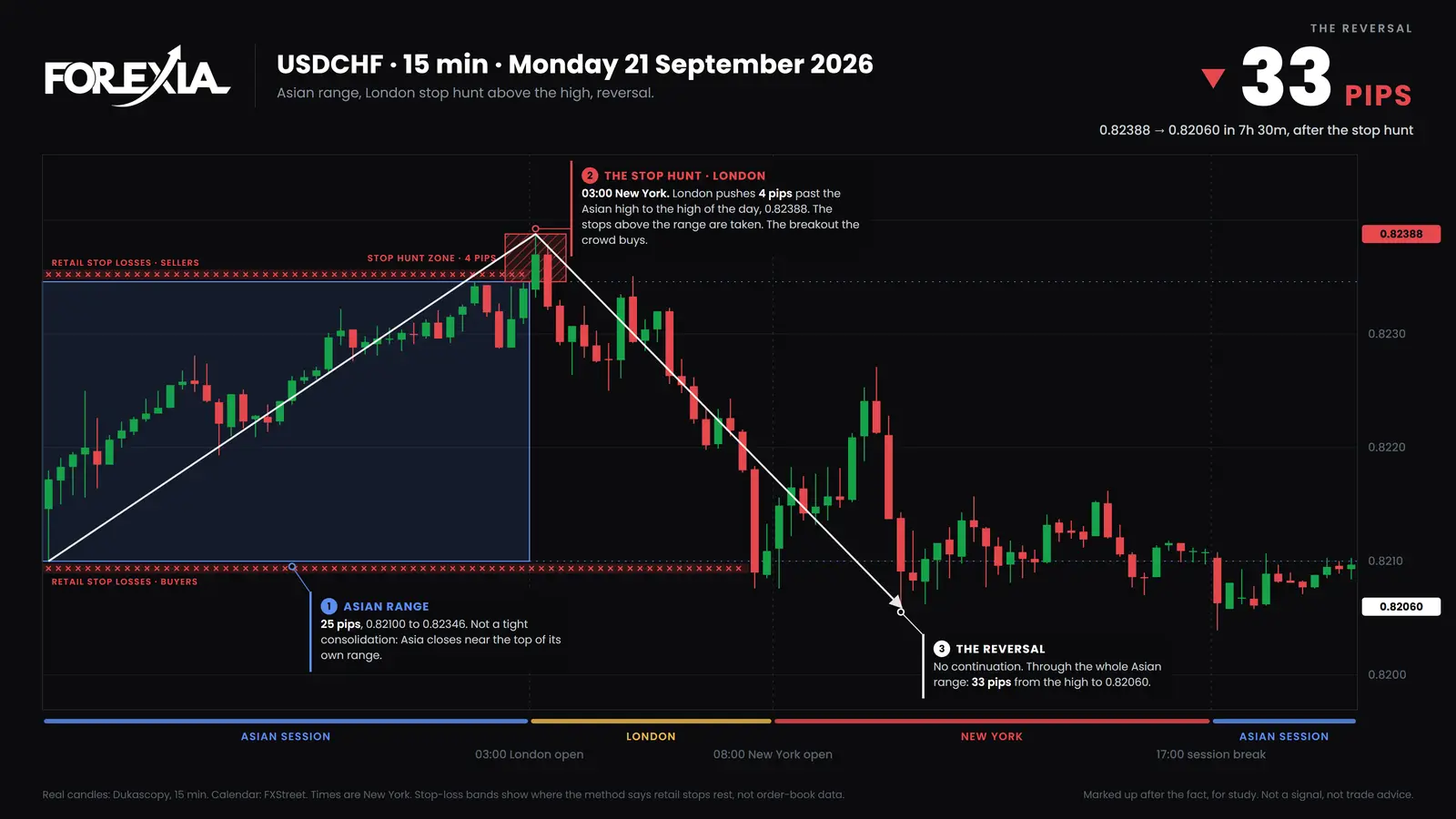
On Monday 21 September, USD/CHF did nearly the same. The Asian high was 0.82346. The 03:00 candle reached 0.82388, 4 pips past it, and closed at 0.82370, over the line. The 03:15 candle closed at 0.82324, back under. Price fell 33 pips to 0.82060 by 10:30. Our calendar shows no dollar or franc release near it.
Now the same kind of level on a day when it did not turn. On Thursday 20 August, GBP/USD had an Asian high of 1.36166. The 03:30 candle ran to 1.36308, 14 pips past it, and closed at 1.36272. No candle closed back under 1.36166 all day, and price reached 1.36593 at 06:00, 43 pips over the line. A stop at the hunt's typical depth would have been taken, and the move would not have come back.
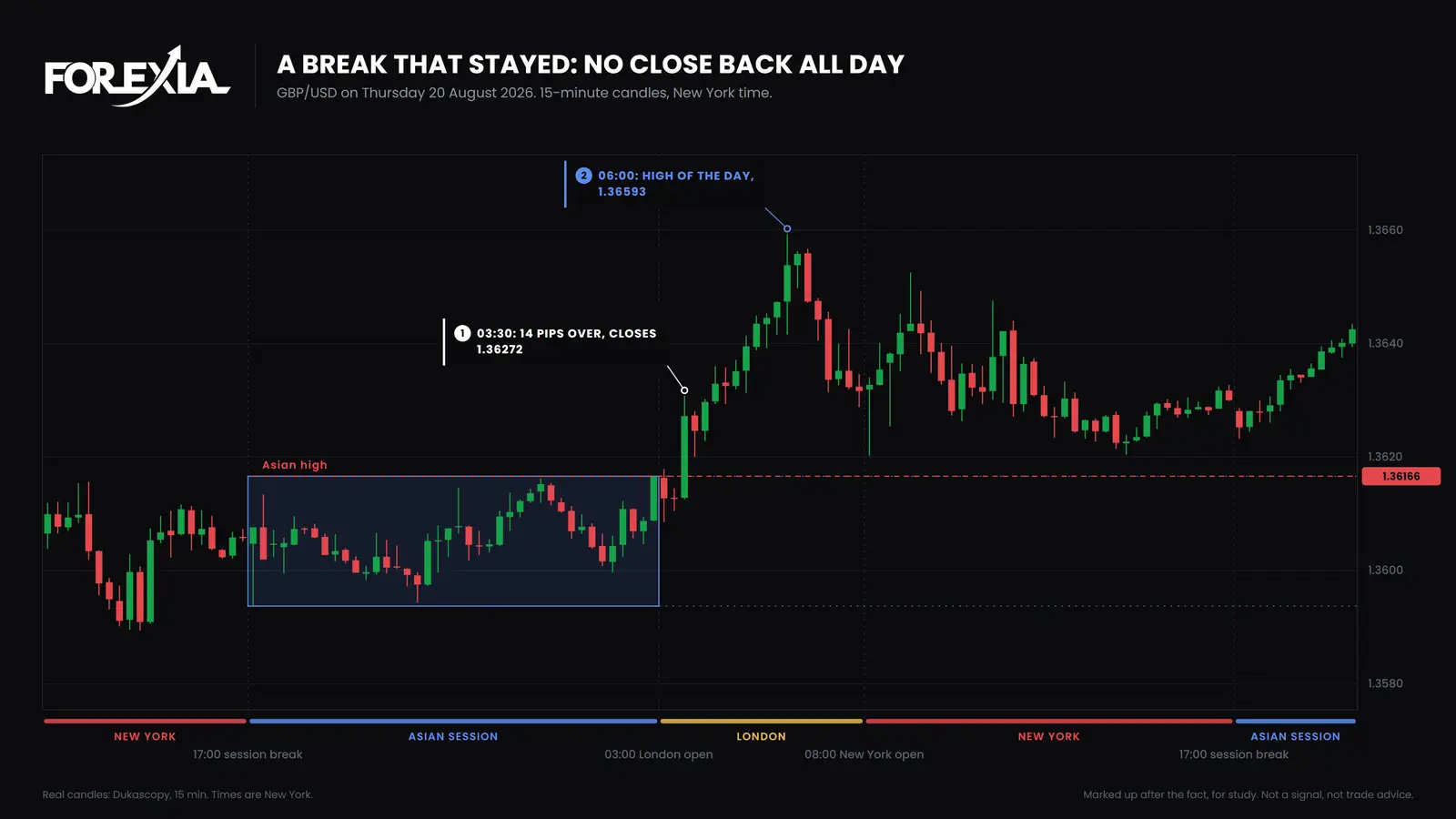
Depth did not tell the two kinds apart in advance. The AUD/USD hunt went 4 pips and turned, and the GBP/USD break went 14 and stayed. Only the close told them apart, and only afterwards.
Is a wider stop the answer?
It lowers how often you are hit and raises what it costs when you are, so it only helps if you shrink the position. We tested it as a fixed rule. In our test, widening the stop about eightfold took the rule's loss from -0.16R a trade to -0.08R, where R is the amount risked on one trade. It still lost money. It lost less mainly because the costs shrank against the larger risk, and not because the hunts stopped. Smaller stops made every version worse.
That is one rule on one data source, and it cannot see order flow. It says that moving a stop does not turn a losing rule into a winning one. It does not say how a trader reading the chart would do.
Position size is the part of the standard advice we would keep. If a stop has to sit further away, the same amount at risk means fewer units. That keeps a long way from the line from becoming a large loss.
What about mental stops and stop-limit orders?
Each fixes one problem and brings another. A mental stop keeps your order out of the pile and off your broker's books, which only matters if the broker is the worry, and it leaves you to act inside the fastest candle of the day. A stop-limit order can leave you unfilled in the same candle. Do brokers hunt stops covers what a broker can and cannot do with your order.
Trading with no stop removes the ceiling on the loss, and the hunt does not care. The break that stays is the one that makes it expensive.
What can you do, then?
You can make three smaller decisions that add up. Know where the obvious levels are before the session, so you know whether your stop is in the pile. Decide before you enter what would prove the idea wrong, and treat that as a read, not a number you nudge to avoid a sweep. Size the trade so that being wrong costs what you meant to risk.
A fourth is to learn the check after a loss. Stop too tight or stop hunt runs it in three questions, and the bull trap and its mirror shows who gets caught on the other side. The hub's page on stop hunting in forex has the whole picture.
What this does not tell you
The median depths are for closed-back levels over six months on eight markets, and they describe the past. We cannot say where yours will go, or whether your broker's price differs. The three days above were chosen because they showed three depths, and three days are examples and not a sample.
Nothing here makes the next trade pay. Traded against each flagged hunt on seven dollar majors and gold, our own fixed rule lost money after costs in every year from 2021 to 2026, between -0.10R and -0.23R a trade. Spotting where the pile is and getting out of it is not the same as profiting from the hunt.
Course 3 of ForexiaPRO, Reverse Price Action, teaches what proves a trade wrong, step by step, from lesson 3.3.
Frequently asked questions
How do you avoid stop hunts in forex?
You cannot stop price going to a level, but you can stop sitting exactly where the pattern puts everyone's stop. Know where the obvious levels are, and size the trade so that a stop further away risks the same money. A wider stop on its own is not a cure, because the breaks that stay run far past any stop that is not very wide.
Where should I put my stop loss to avoid a stop hunt?
There is no fixed distance, and we do not give one. On the levels in our count that closed back, the median trip past the line was about 9% of the average daily range. On the levels that never closed back it was about 65%. A stop that survives the first often dies in the second, so the question is what the trade is worth risking, not how far to move the line.
Does a wider stop loss stop you being hunted?
It lowers how often, and it raises the cost when you are wrong. In our test, widening the stop about eightfold took a fixed rule's loss from -0.16R to -0.08R a trade, where R is the amount risked on one trade. The rule still lost money, and it lost less mainly because costs shrank against the larger risk. Smaller stops made every version worse.
Is a mental stop loss better than a hard stop?
A mental stop keeps your order off your broker's books, which only matters if your broker is the worry. It leaves you to act inside the fastest candle of the day, which is when most people do not. A stop-limit order has the opposite fault: in the same candle it can leave you unfilled.
Can you trade without a stop to avoid being hunted?
You can, and the loss then has no ceiling. The hunt does not go away because your order is gone, and the break that stays does not either. We would call that trading a bigger position with no plan, and nothing in our data supports it.