Do Forex Brokers Hunt Stop Losses? How to Check Yours
Dylan Forexia8 min read
Do forex brokers hunt stop losses? A retail broker cannot move the whole market, so it cannot hunt stops the way the word is used for large players. But it controls the price your stop fires on, and some brokers take the other side of your trade. That is a real conflict of interest and not proof that yours was targeted. Your fill record and a second feed will tell you more than any theory.
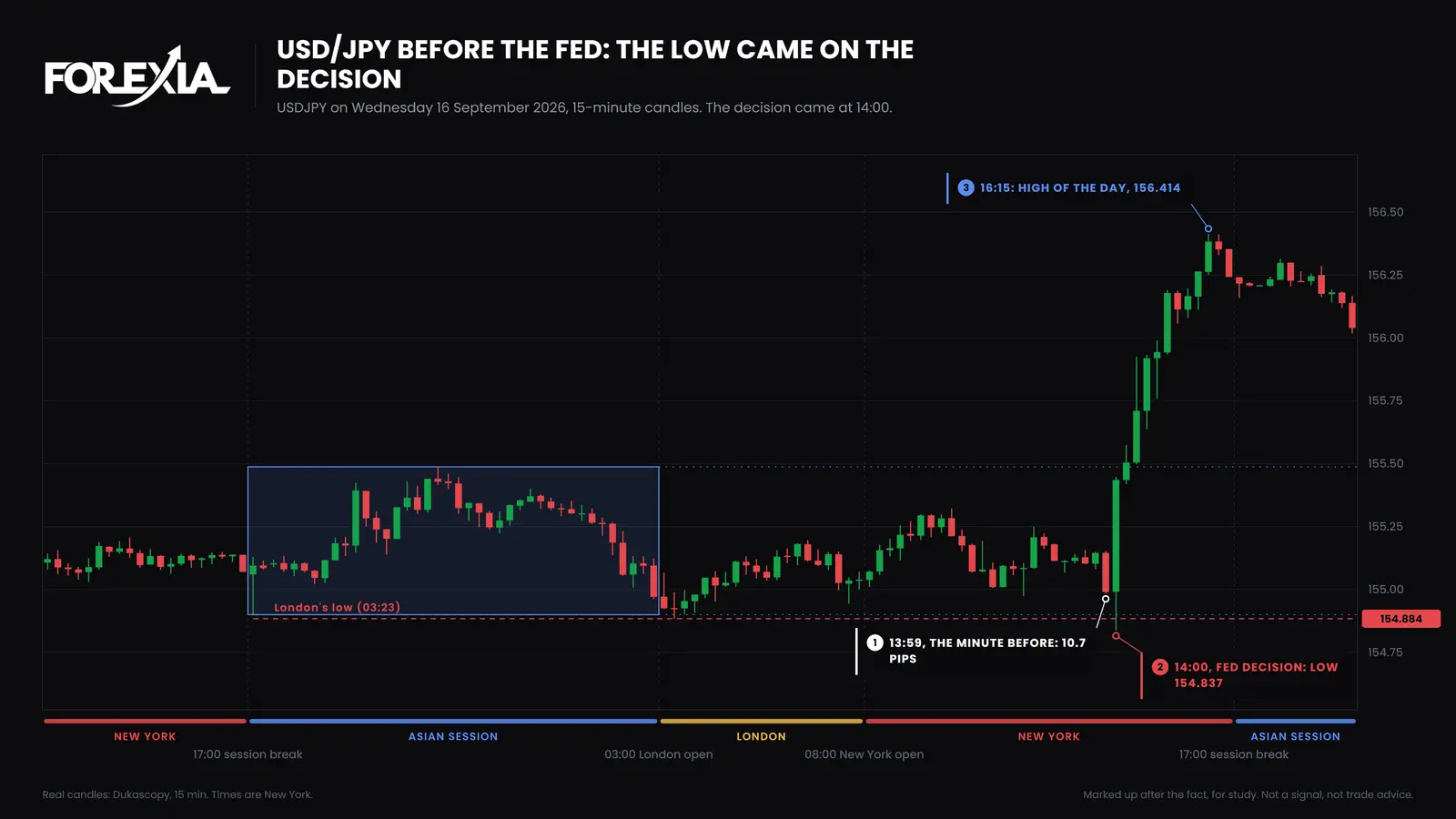
You are probably here because a stop went off by a pip, price then went your way, and it keeps happening. That feeling is worth taking seriously. This page gives the check in order, shows one real release candle where the two prices came apart, and says plainly what cannot be known. For the regulators' record on banks and brokers, start with is forex rigged.
Do forex brokers hunt stop losses? Two different questions
The word covers two things that need different answers. One is what your broker does with your order and its price. The other is what the wider market does to a level, and the broker has nothing to do with that.
The wider move is the one we call The Stop Hunt: price run into a pool of stops past an obvious high or low. A broker's feed shows that move, and a second broker's feed shows the same one. We read it from the market maker's seat, and we write "we read this as" because no chart shows who moved a candle.
The broker question is narrower and can be tested. Three things are in its hands: the price it shows you, the spread it charges, and whether it passes your order on or keeps it. Nobody can show from outside what a broker intended, and we do not say any broker cheated anyone. We say what each setup can do, and how you check.
What can each kind of broker do to your stop?
The answer depends on whether the broker takes the other side of your trade. Brokers use different names for the same models, so ask yours which one your account is.
| Takes the other side (dealing desk, B-book) | Passes the order on (A-book, STP, ECN) | |
|---|---|---|
| Who is on the other side of your trade | The broker | An outside liquidity provider |
| Does the broker gain when you lose | Yes, on trades it keeps | No, it earns the spread or a commission |
| Can it see your stop | Yes, on its own server | Yes, to route it |
| What it controls | The price it shows, its spread, how it fills | Its spread or markup, and how quickly it routes |
| Where to look | Fills against a second feed, slippage direction | The same, plus the routing disclosure |
| What it cannot do | Move the market's price | Move the market's price |
Many brokers do both, keeping some accounts and routing others. US rules for retail forex dealers say the dealer must warn clients that it is their trading partner, which is a direct conflict of interest. A conflict is a reason to check and it is not evidence of cheating. A broker that makes a market for you is also not the market maker of the second seat, who is our read of the large players moving the whole price.
How do you check whether your broker hunted your stop?
Check in this order, using your broker's history and not your memory. The steps are different from asking whether the candle looks like a hunt, because that question only tells you about the market.
- Write down the time of the fill, to the minute. Your platform's history shows it. Note your time zone and the server's.
- Pull a second feed for that minute. Another broker's chart will do, with the spread allowed for. If only your broker's candle went that far, it is an execution question. If both did, the market moved and the broker did not.
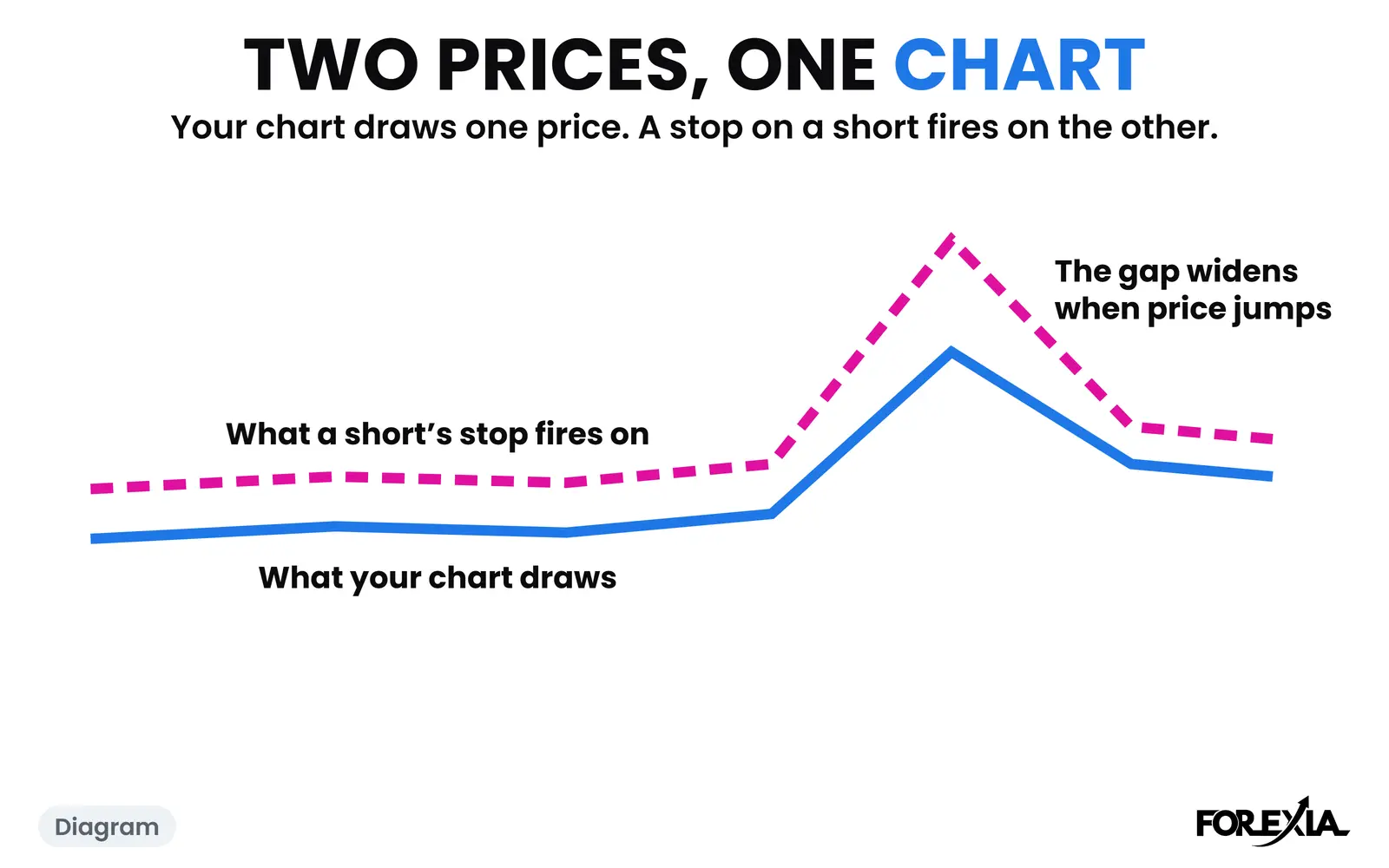
- Check the spread at the time. Near a release or the 17:00 New York rollover, spreads widen. A wide spread alone can fire a stop on a short, because the stop buys at the ask.
- Log your slippage across many fills. For each stop, note the price you set and the price filled. In a fair market the difference goes both ways. If it only ever goes against you, that is what to put in front of the broker. The US industry body's notice says a dealer must apply slippage settings "uniformly regardless of the direction in which the market has moved".
- Ask for the execution record in writing, and which model your account is. If the answer is vague or the numbers do not match, take the file to the regulator that licenses the broker, after checking that it does.
A fill is checkable and a motive is not, so keep to what the records show.
What does a widening spread look like on a real day? USD/CAD, 4 September 2026
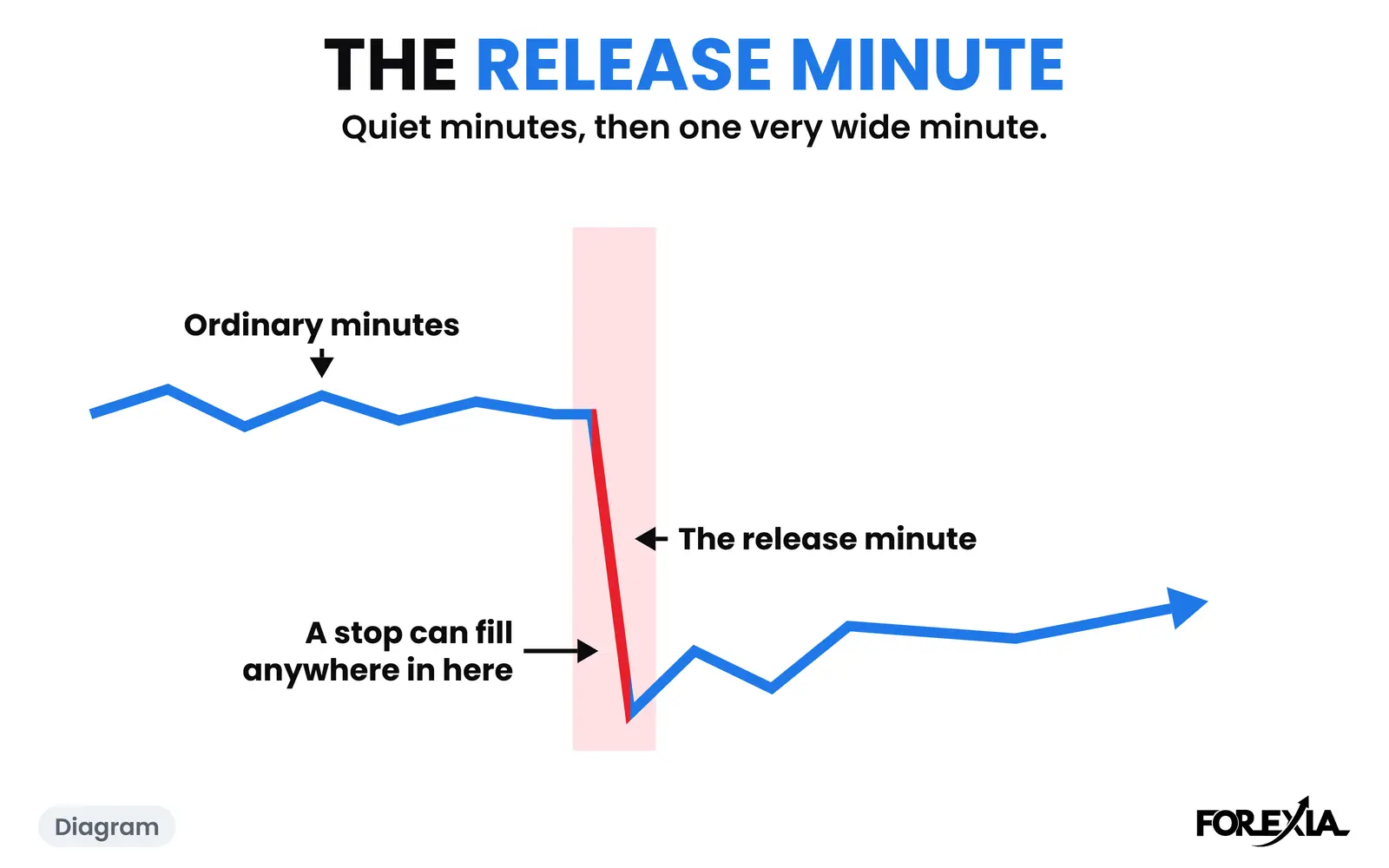
The Nonfarm Payrolls candle shows the two prices coming apart. On Friday 4 September 2026 the jobs report came out at 08:30 New York. The 08:15 candle closed at 1.37915, and the 08:30 candle opened at 1.37912 and reached 1.38716 before it closed at 1.38629. That is about 80 pips in one 15-minute candle. Times are New York, and the candles are bid prices from Dukascopy, so your broker's chart may differ by a pip or so.
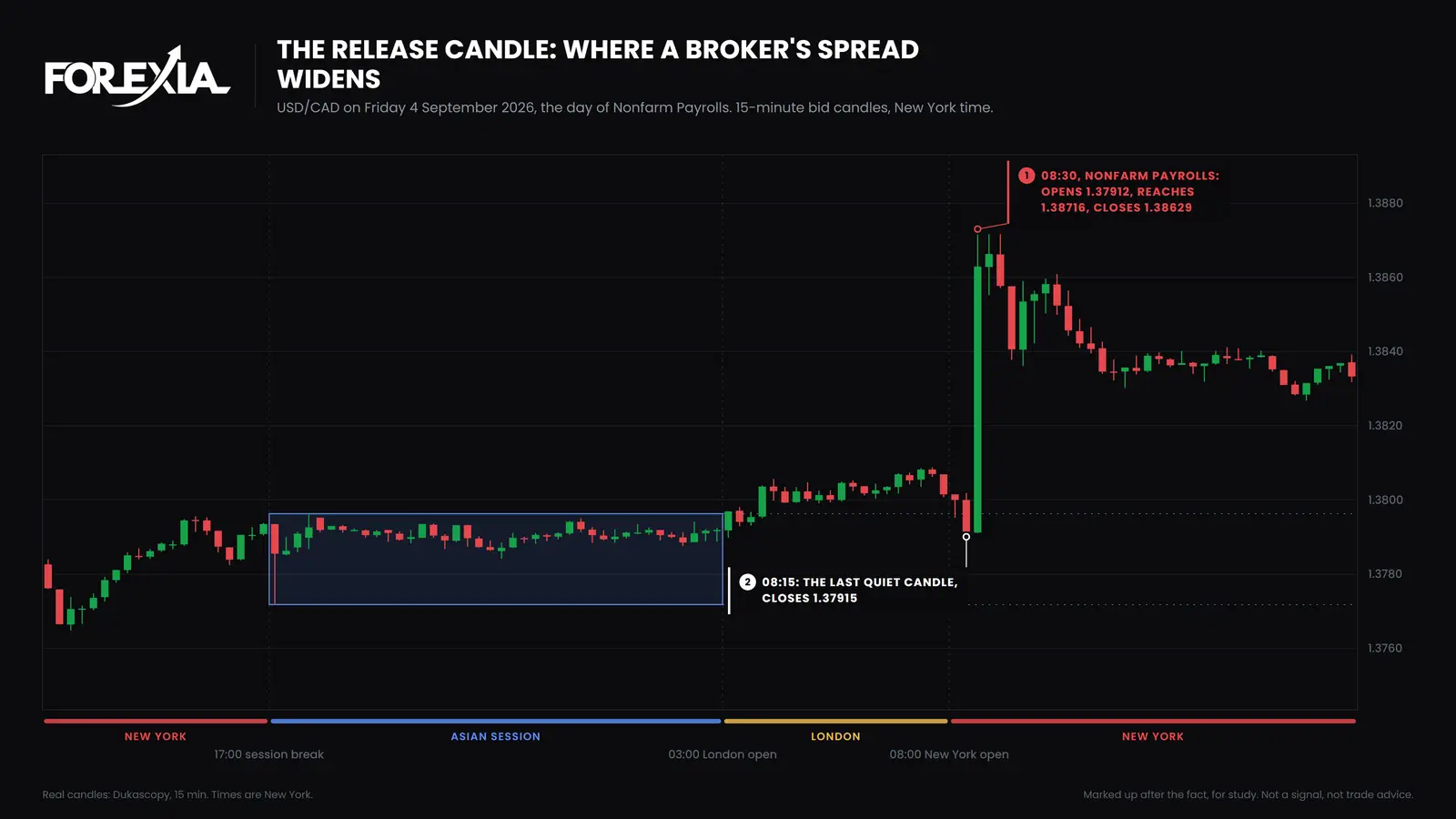
We fetched the ask for the same candles from the same feed. The ask's lowest price in the 08:30 candle was 1.37942, 3.2 pips above the bid's low of 1.37910. In the candle before it that gap was 1.7 pips, and in the candle after it 0.8. The ask's high was 1.38727, 1.1 pips over the bid's high of 1.38716. The two lows need not have come in the same instant, so the gap is not the spread itself. It does show that the price a buyer would have paid was further from the chart's price than usual on that candle.
What does that mean for a stop? A short's stop is a buy, and it fires on the ask. On a candle that runs 80 pips, an order does not fill at the number you typed. It fills where the market is when it fires. That is a cost of holding a stop through a release, and it needs no broker to be doing anything. Our read is that a scheduled release is also a minute when orders gather, and we call that News-Induced Liquidity. The candle cannot separate that from a wide spread, and you would need your own fill to see which one hit you.
This is one feed on one candle, and your broker's spread may do more or less. It is a day we picked, and it is an example and not a measure.
What do wicks that only your broker shows mean?
Usually a spread or a thin quote, and not a hunt of you. A wick on one feed that no other feed shows is most often the spread widening at a quiet minute, such as the rollover, or a quote that stood for a moment. Is forex rigged shows the rollover wick on USD/CHF, with the bid and ask side by side.
If the wick shows on every feed, the market printed it. Then it is the move the hub describes, and the useful question is whether a candle closed back inside the level. That test is covered in stop hunt vs fakeout and works whichever broker you use.
What can you do about it?
You cannot make a broker honest, but you can stop sitting where the pattern puts everyone. Know whether your account is dealt or routed, keep out of the minutes around a release and the rollover if your stop is tight, and keep the slippage log. Where to put a stop in the first place is its own page, how to avoid stop hunts.
Moving to an ECN or straight-through broker is the usual advice, and it removes the conflict of interest. It does not remove the spread, the slippage on a fast candle, or the market's own run through a level.
What this does not tell you
We cannot say whether your broker did anything. We have no sample of brokers and no way to see anyone's order book, and the one candle above is a single feed on a single day. Nothing here shows that retail brokers as a group hunt stops, and nothing shows that they do not.
Neither can our test settle it. Traded against each flagged hunt on seven dollar majors and gold, our own fixed rule lost money after costs in every year from 2021 to 2026, between -0.10R and -0.23R a trade, where R is the amount risked on one trade. That test used real bid and ask spreads and it cannot see order flow, so it says nothing about who moved a candle. The hub's full account of the stop hunt has the method and the limits. The glossary's three seats shows why a broker's seat and the market maker's are not the same.
Course 1 of ForexiaPRO, Reading the Map, teaches how to read a chart from the three seats, starting in lesson 1.1.
Frequently asked questions
Do forex brokers hunt stop losses?
A retail broker cannot move the whole market's price, so it cannot hunt stops in the sense the word is used for large players. It does control the price your stop fires on, and some brokers also take the other side of client trades, which is a real conflict of interest. Neither is proof that your stop was targeted. Your fill record and a second feed are how you check.
Can my broker see my stop loss?
A broker that holds your order on its own server can see it. Whether it acts on that is a question about the broker and its regulator, and no chart can answer it. A broker that routes your order to outside liquidity is in a different position. Ask which of the two your account is, and ask for the answer in writing.
How do I know if my broker is hunting my stop?
Compare the candle that stopped you with a second feed at the same minute, allowing for spread. If only your broker printed that price, it is an execution question for the broker. Then log your slippage over many fills: in a fair market it goes both ways, and if it only goes against you, take that to the broker's regulator.
Is a wick that only my broker shows a stop hunt?
Not by itself. A wick on one feed that no other feed shows is most often a spread widening or a thin quote at a quiet minute, such as the daily rollover or a release. It costs you the same stop, but the cause is the broker's price and not a move in the market. That is checkable, which is more than can be said for motive.
Do ECN brokers hunt stops?
An ECN or straight-through broker routes your order to outside liquidity, so it has less reason to want your trade to lose. That is the model's claim, and you can only confirm it through the broker's own disclosures and its regulator. Your stop can still fire on a wide spread or slip on a fast candle, because those come from the market.