Forex Market Hours Clock: Handles Daylight Saving Changes
Dylan Forexia6 min read
| Session | Opens | Closes |
|---|---|---|
| Sydney | 07:00 | 16:00 |
| Tokyo | 09:00 | 18:00 |
| London | 08:00 | 17:00 |
| New York | 08:00 | 17:00 |
Each session's hours are in its own city's time, Monday to Friday, so daylight saving moves them for you. The market closes from 17:00 New York on Friday to 17:00 New York on Sunday. Banks close for holidays that this clock does not know about.
This forex market hours clock shows the time in New York, London, Tokyo and Sydney beside your own, and marks each session open or closed right now. Each session is set in its own city's hours, so daylight saving moves it for you. The forex week runs from 17:00 New York on Sunday to 17:00 New York on Friday.
The clock runs in your browser and keeps nothing. It starts when the page has loaded, and without JavaScript you see the table of hours alone. For the hours worked out against UTC, the overlaps and what each session did on real days, see our guide to forex market hours and session times.
How do you read the forex market hours clock?
Read the top row for the time, and the table for what is trading.
- The top row gives the weekday and time in your zone, New York, London, Tokyo and Sydney. Your zone comes from your device. It moves on once a minute.
- The table gives each session's opening and closing time, in that session's own city, and a last column saying Open or Closed now.
- A line under the table appears from 17:00 New York on Friday until 17:00 New York on Sunday, to say the market is closed for the weekend. Every session reads Closed in those hours.
Here is one moment worked through. At 13:30 UTC on Thursday 15 January 2026, the top row reads Thu 08:30 in New York and Thu 13:30 in London. So London and New York read Open, because both are inside 08:00 to 17:00 in their own cities. Tokyo is at Thu 22:30, past its 18:00 close, and Sydney is at Fri 00:30, before its 07:00 open. Both read Closed.
The table stays in each city's time on purpose, because that part never changes. To place an open in your own day, take the gap between your clock and that city's clock. If you read 14:30 while London reads 13:30, London's 08:00 is 09:00 for you today.
How does the clock handle daylight saving?
It has no list of dates, so it cannot fall out of step with one. London is stored as 08:00 to 17:00 in London, and your browser's time zones say what London's clock reads at this moment. The same goes for the other three.
These are the hours it holds, with what they come to in UTC:
| Session | In its own city | UTC, northern summer | UTC, northern winter |
|---|---|---|---|
| Sydney | 07:00 to 16:00 | 21:00 to 06:00 | 20:00 to 05:00 |
| Tokyo | 09:00 to 18:00 | 00:00 to 09:00 | 00:00 to 09:00 |
| London | 08:00 to 17:00 | 07:00 to 16:00 | 08:00 to 17:00 |
| New York | 08:00 to 17:00 | 12:00 to 21:00 | 13:00 to 22:00 |
Tokyo never moves, because Japan does not change its clocks. The other three change on different dates: the US from the second Sunday in March to the first Sunday in November, the UK from the last Sunday in March to the last Sunday in October, and Sydney the other way round, from the first Sunday in October to the first Sunday in April.
| Year | New York forward | London forward | Sydney back | Sydney forward | London back | New York back |
|---|---|---|---|---|---|---|
| 2026 | 8 March | 29 March | 5 April | 4 October | 25 October | 1 November |
| 2027 | 14 March | 28 March | 4 April | 3 October | 31 October | 7 November |
| 2028 | 12 March | 26 March | 2 April | 1 October | 29 October | 5 November |
These dates follow today's rules, and a government can change its rules. If one does, the clock follows once your browser's time zone data is updated.
What does the clock do in the out-of-step weeks?
It keeps each city right, which is where a fixed table goes wrong. New York moves first in spring and last in autumn, so for two or three weeks in March and one in the autumn the two cities are four hours apart, not five. In those weeks London opens at 04:00 New York, not 03:00, and the overlap runs five hours, not four.
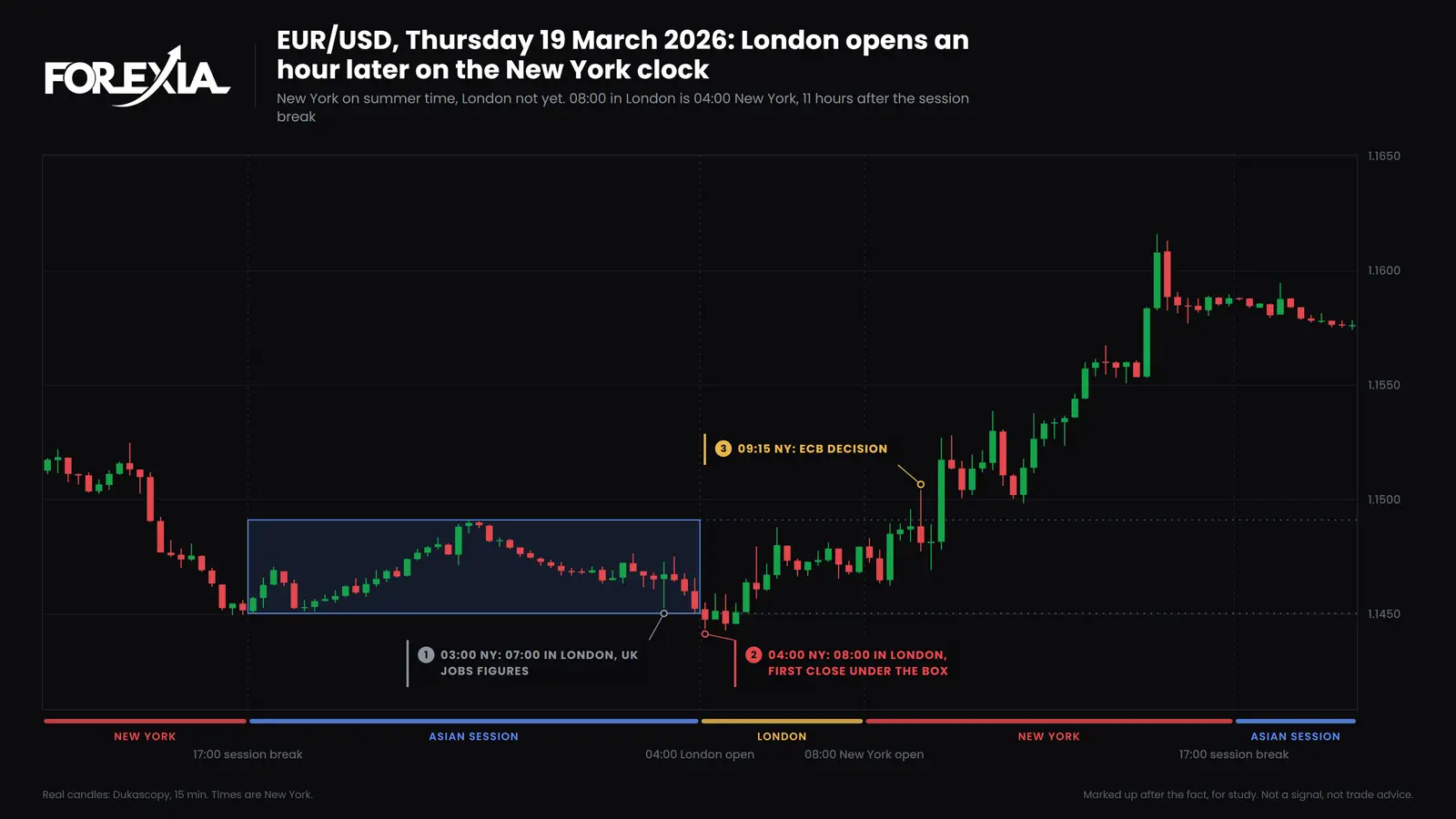
EUR/USD on Thursday 19 March 2026 fell in one of those weeks. A candle here is named by the New York time it opens, on our 15-minute chart. At 07:30 UTC that morning, 03:30 in New York, the clock would have read Closed for London, because London's own clock said 07:30. At 08:00 UTC it reads London Thu 08:00 and Open, with New York at Thu 04:00.
The UK's jobs figures hit the 03:00 candle, which ran from 1.14730 to 1.14527. A trader using a New York table would have called that candle the London open. London's real first candle came an hour later, reaching 1.14437 and closing at 1.14476.
At 16:30 UTC that same day, the clock reads London 16:30 and New York 12:30, both Open. That half hour past New York's noon is the fifth hour of the overlap, and it comes round again in the autumn: at 16:30 UTC on Monday 26 October 2026, a day after London's change and before New York's, it reads the same.
What does the forex market hours clock leave out?
It knows the week, the four cities' hours and the clock changes, and nothing else. Five limits follow.
- Holidays. Banks close for holidays this clock does not know about. At 15:00 UTC on Friday 25 December 2026 it will read London and New York as Open. Check your broker's notice.
- Your broker's own hours. Forex has no exchange and no bell, so these hours are a convention, and tables differ by an hour. Some end London at 16:00, and some add Frankfurt, Hong Kong or Singapore. Many brokers also pause briefly at the 17:00 New York rollover, and the clock shows no pause.
- Sunday's first hours. Sydney's 07:00 on Monday can come before the market does. On Sunday 18 January 2026, Sydney read Mon 07:30 at 15:30 in New York, and the clock says Closed, because the market had not opened. It turns Open at 17:00 New York, when Sydney reads Mon 09:00. In July the two arrive together.
- Gold. On our feed gold starts an hour later, at 18:00 New York. The clock shows the forex week. A pip is counted differently there too, as gold pip value explains, and our lot size calculator sizes it on $1 to the pip.
- Your device. The clock reads your device's time and zone. If either is set wrong, your own time is wrong and the sessions may be too.
What happens inside each session?
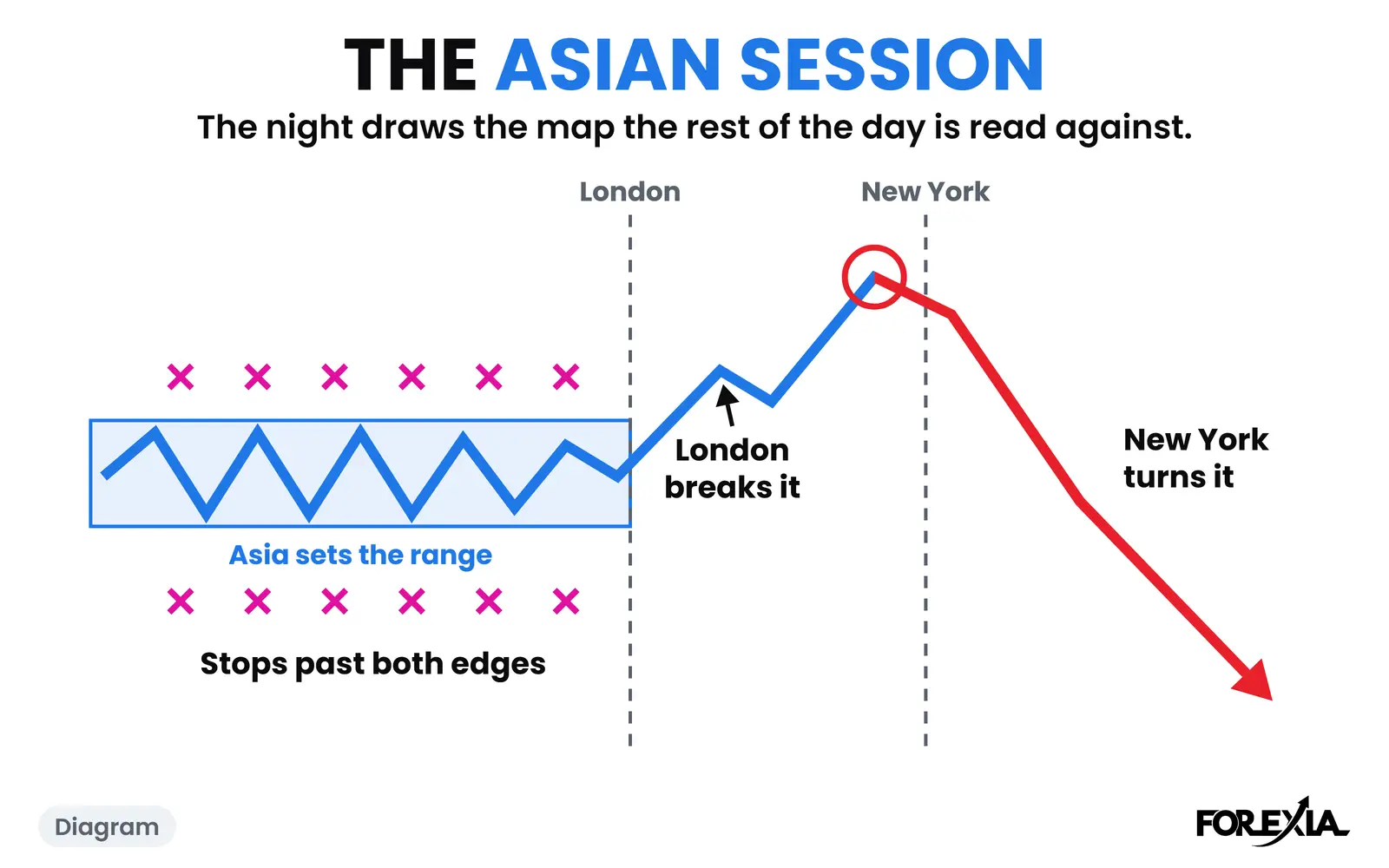
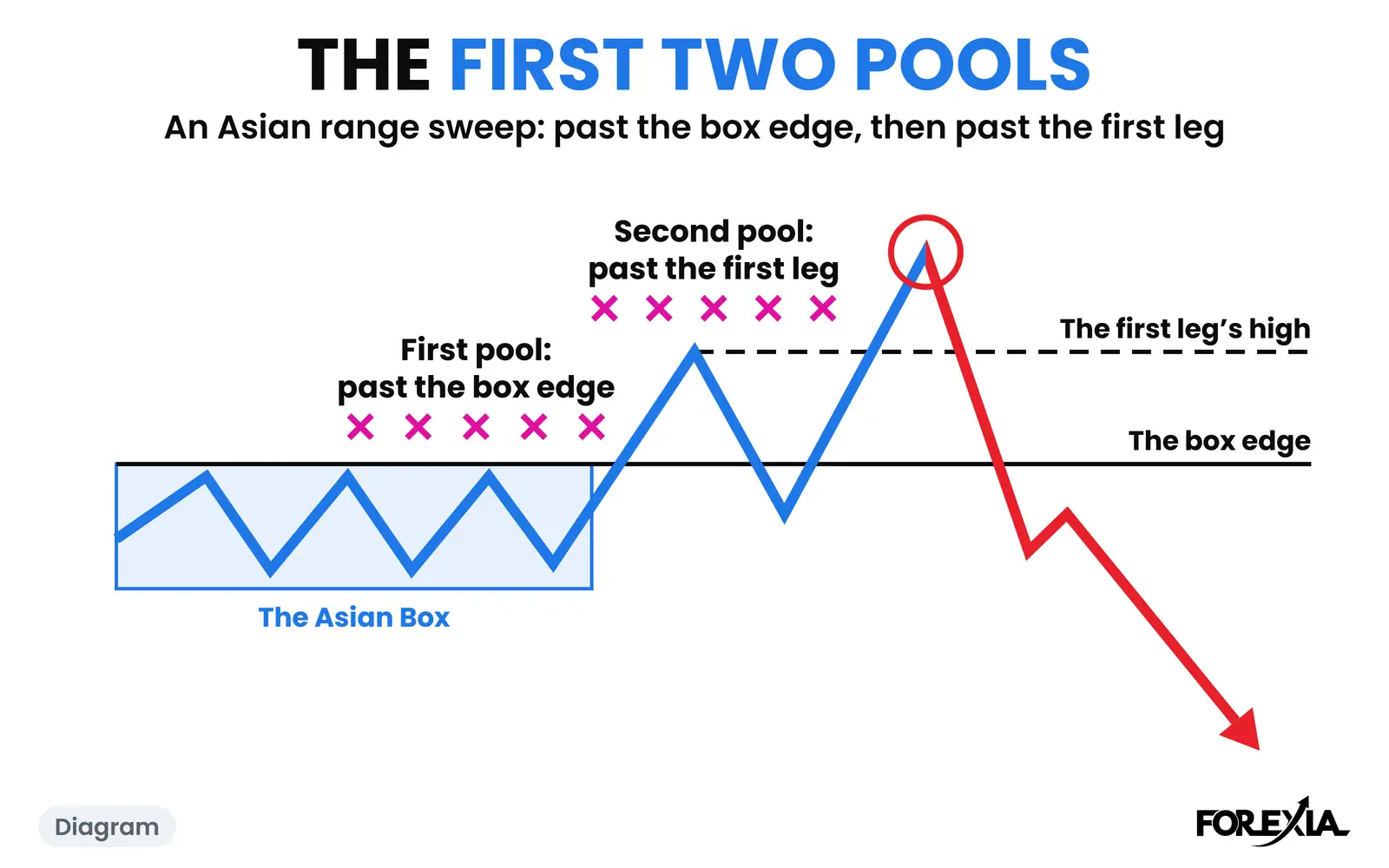
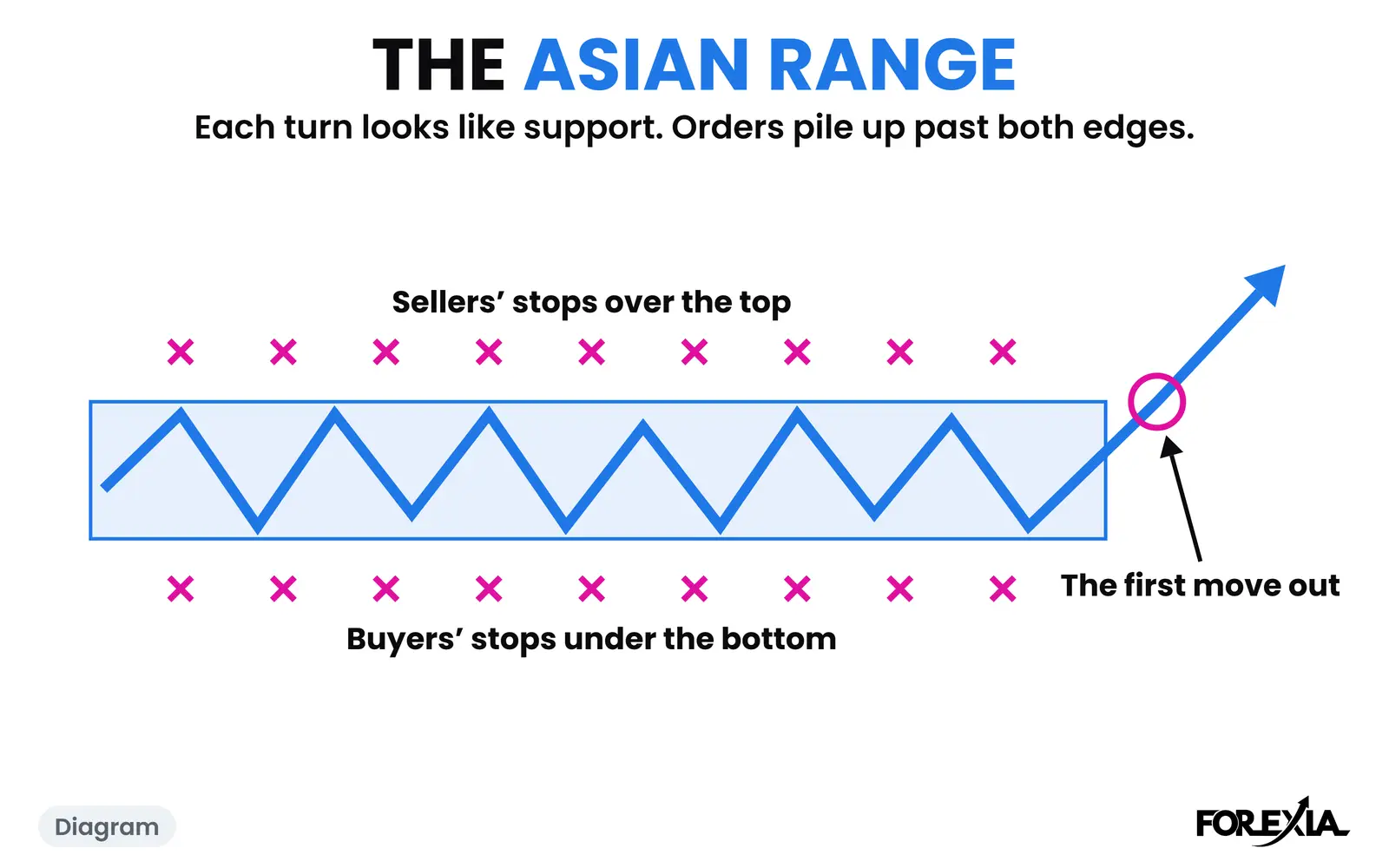
Each window leaves something on the chart, and we read the day through those. The night leaves the Asian Box, the high and low from the session break to the London open. London often closes outside it, and the first close is what we call the London Breakout. On 285 of 1,030 market-days, from 6 April to 1 October 2026 on seven majors and gold, no London candle closed outside it at all. New York then sometimes runs past London's extreme and closes back inside, which we call the New York Reversal.
None of this happens because a clock says so, and the courses read it from another line. The session break at 17:00 New York is where each trading day starts, and London's usual open is ten hours after it and New York's fifteen. A clock tells you which sessions are open. It does not tell you what any of them will do.
A clock is most useful looking back. When you review a forex trading week, check each trade's time against the cities' clocks for that date, since a time that is right in June can be an hour out in March.
This sits with our other forex tools. Course 2 of ForexiaPRO, The Chaos Pattern, teaches the read from the session break step by step, from lesson 2.1.1, Asia Sets It, London Breaks It, New York Turns It.
Frequently asked questions
Does the forex market hours clock change with daylight saving by itself?
Yes. Each session is stored in its own city's hours, and your browser's time zones work out what that city's clock reads now. New York, London and Sydney change on their own dates and Tokyo never does, and none of that needs a table of dates or an update from us.
Why does the clock not show the session hours in my own time?
The table stays in each city's time because that part never changes. Your own time sits beside the cities' clocks at the top. To place an open in your day, take the gap between your clock and that city's clock. If you read 14:30 while London reads 13:30, London's 08:00 is 09:00 for you today.
Why does my trading platform show a different time?
Your platform shows your broker's server time, not yours. Many brokers set the server so that 17:00 New York reads as midnight, which puts it two hours ahead of UTC in the US winter and three in the US summer. Compare it with this clock once and you will know the gap, until the clocks next change.
Does the clock know about bank holidays?
No. It knows the week and the hours, and no holidays. On Friday 25 December 2026, at 15:00 UTC, it will show London and New York as open. Brokers publish their own holiday hours in advance, so check their notice around Christmas and New Year.
Does the clock show when gold trades?
It shows the forex week. Gold starts an hour later on our feed, at 18:00 New York on Sunday, and has no candles in the first hour after each day's session break. Your broker's gold hours may differ from either, so take them from its specification sheet.