Weekly Trading Routine Forex: Sunday's Map to Friday's Score
Dylan Forexia6 min read
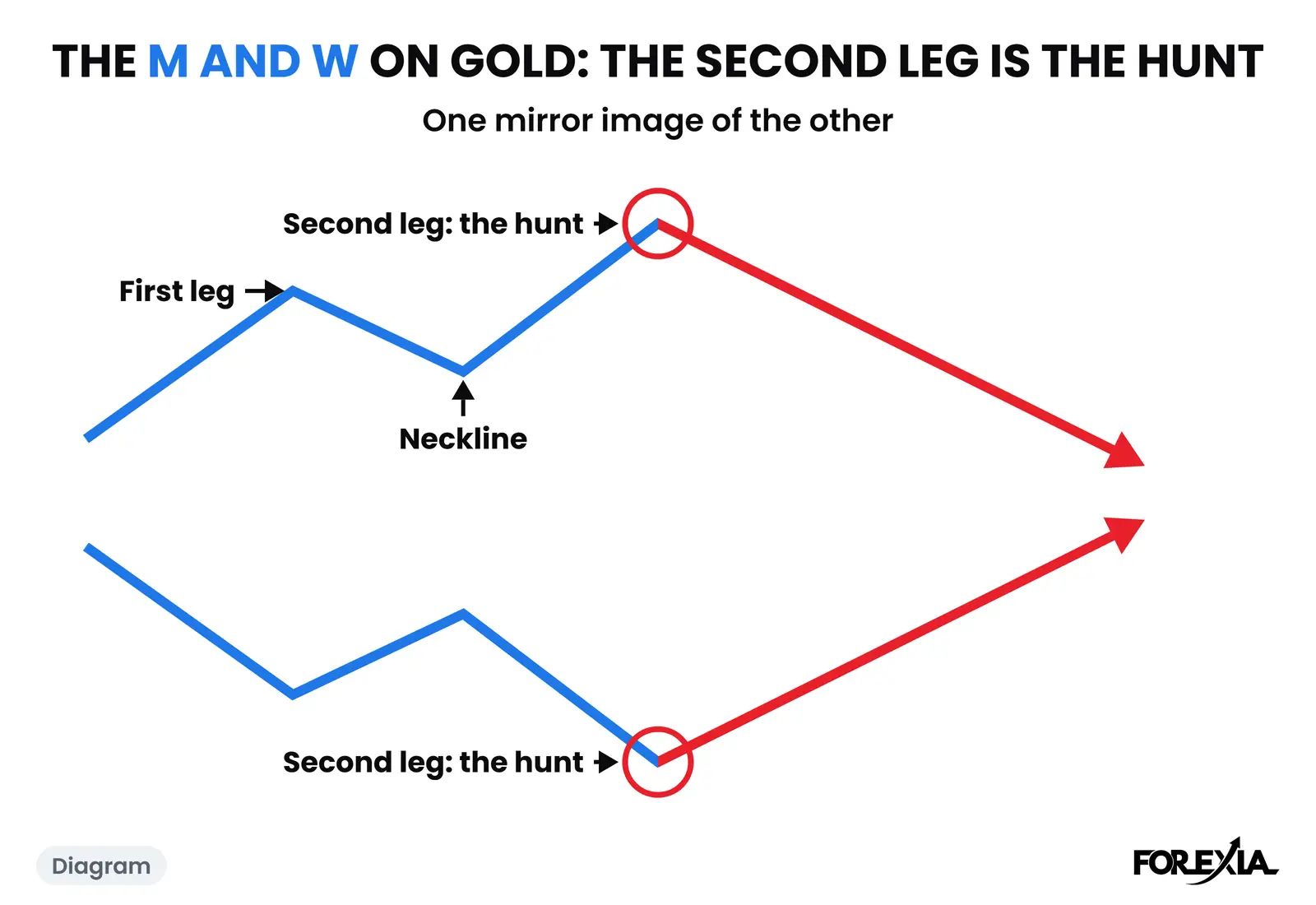
A weekly trading routine forex traders can keep, in our format, is one job a day: a map on Sunday, a read of the trend on Monday and Tuesday, a check for the trap on Wednesday, a look at the run on Thursday and a score on Friday. It reads the week. It does not forecast it, and it gives no entry, stop or target. It rests on the Weekly Script, the order of the induction, the trap and the reversal.
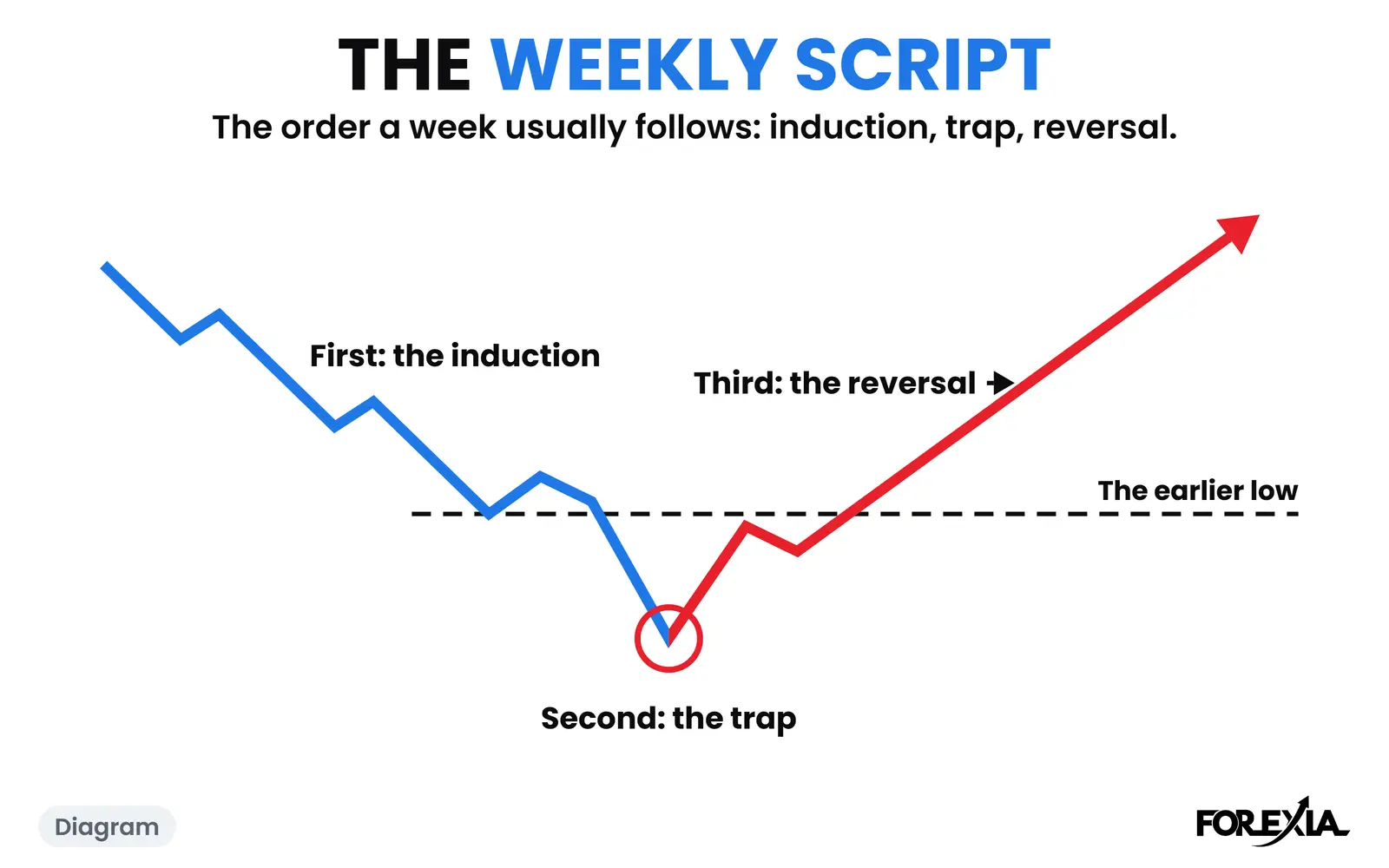
Below, each day's job, with the real figure that makes it worth doing. The routine sits inside the weekly cycle, and each day links to the page with the detail.
What do you do on Sunday?
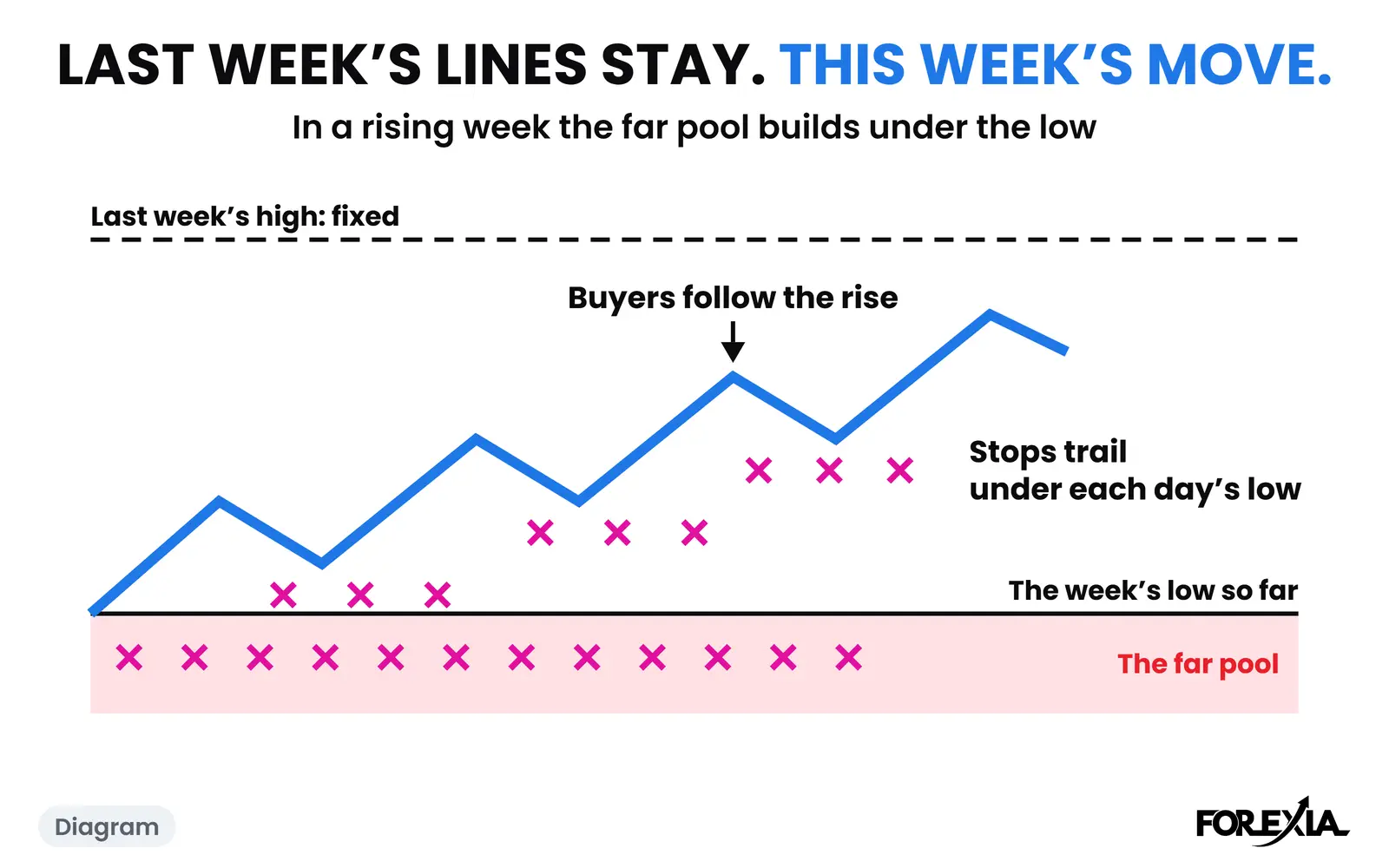
You draw the map, and you do not forecast. A forex day runs from the 17:00 New York session break to the next, so the week's first candles come on Sunday evening. Mark last week's high and low, note where the week opened against them, read the COT stance and list the week's high-impact releases by session. The forex weekly outlook covers each item.
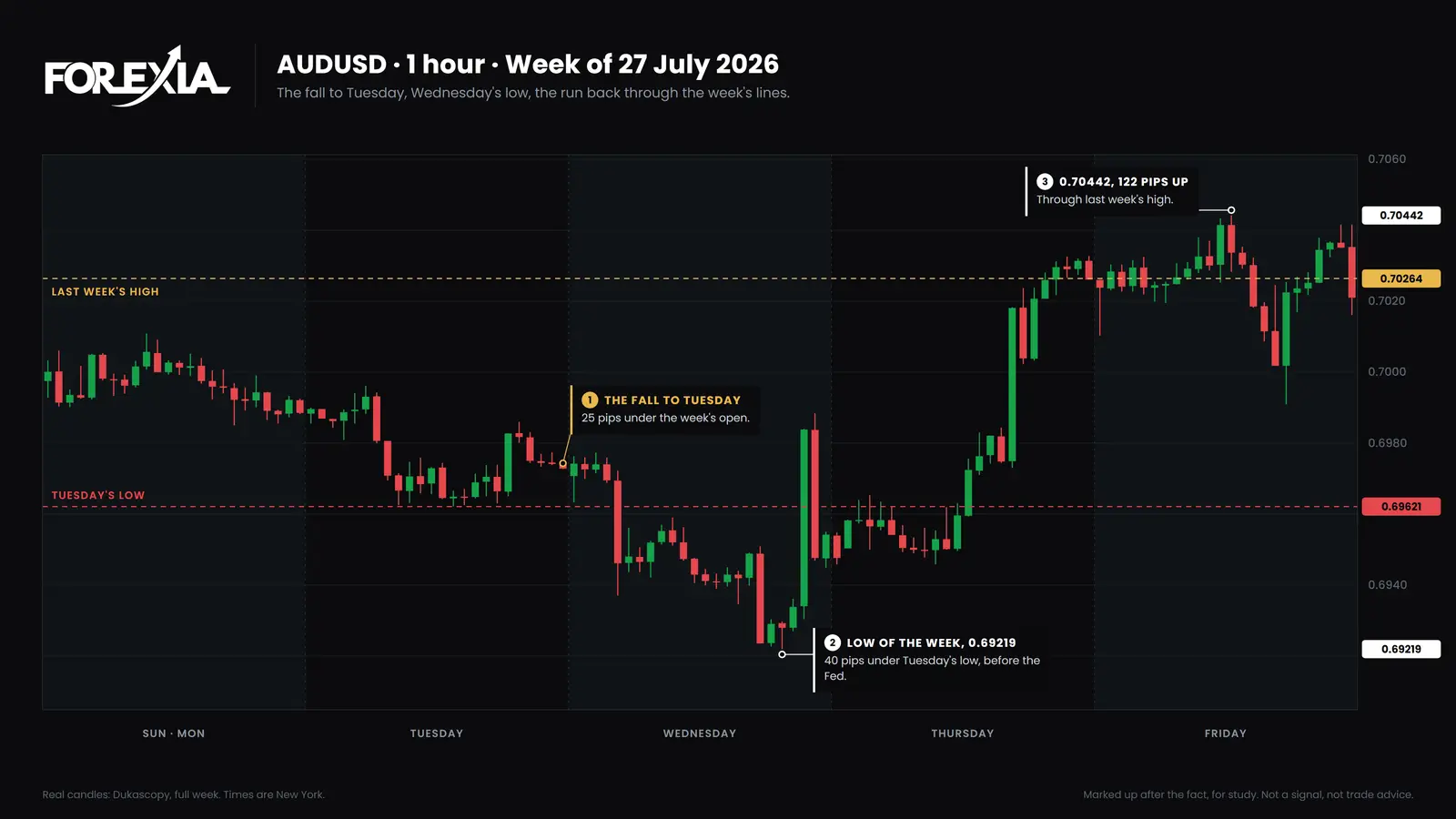
Take the Sunday before the AUD/USD week of 27 July 2026. Last week's high was 0.70264 and its low 0.69618, 65 pips apart, and the week opened at 0.69975, nearer the high. Australian CPI and a Fed decision were both in Wednesday's session. That is the whole map, and it says where stops are likely to rest. Both lines went that week, in an order nothing on Sunday gave.
What do you do on Monday?
You note Monday's high and low and ask whether a trend has started. Do not expect a large day. Monday's median range was 86% of the market's own average day in our count of seven majors and gold from 6 April to 1 October 2026, which is below Wednesday and Thursday at 97% but not the smallest, since Tuesday was 83%. Why Monday looks slow has the numbers behind it. The job is to write down Monday's extreme, because it is the first level of the week that everyone can see.
What do you do on Tuesday?
You read how easy the trend looks and how much of the usual day Tuesday has used. The Induction Trend is the trend of Sunday, Monday and Tuesday that the crowd follows, and by Tuesday it is easiest to join. ADR Met Tuesday is one confirmation: Tuesday reached its 20-day average on 49 of 176 market-days, 28%, and 8 of those came on one release day. Average daily range on Tuesday explains the count.
Then watch Monday's extreme. If Tuesday goes past it and closes back, that is the Tuesday Anchor. If it goes past and stays, nothing has turned yet, and how to spot the Tuesday Anchor shows both.
What do you do on Wednesday?
You ask which line price has just gone past, and whether it came back. Wednesday is the usual place for the Midweek Trap, and it is also the day most likely to carry a release: in our sample 168 of 208 Wednesdays had a high-impact US item, and the median day was 97% of the market's average. Mark the time of any extreme and whether a release was on its candle. How to spot a mid-week reversal is the hourly read.
On the AUD/USD week the low came at 12:15, before the Fed at 14:00, and the 14:30 candle closed back over Tuesday's low at 0.69707. Wednesday still closed at 0.69542, under that line. A routine does not call that a turn. It records two facts and waits.
What do you do on Thursday?
You follow the levels. The WTF Reversal is the run back through the stops the first half of the week built, and Thursday is where you see how far it has got. On the AUD/USD week the 09:30 candle closed at 0.70043, over Tuesday's high and the week's open. The 09:45 candle closed over Monday's high at 0.70181, and by 12:15 a candle had closed over last week's high of 0.70264. Tick off each level as a candle closes past it, and note which are left.
Also watch for a late turn. If Wednesday did not turn, Thursday may, as on USD/CHF in the week of 28 September 2026. Thursday reversal forex covers it. And a week may never turn: USD/CAD in the week of 21 September closed higher on every day.
What do you do on Friday?
You score the week and read the new COT report. Friday's median range was 89% of the market's average and it reached its 20-day average on 70 of 166 days, so it is not a small day. Its particular feature is the weekend: nothing trades until Sunday's open, and a gap can follow. Is Friday a bad day to trade forex has real Fridays. The scoring is in how to review a forex trading week: four checks against the textbook weekly cycle, filed as textbook or partial.
How do you grade every single day?
The same way, one day at a time. Our day charts are filed Textbook or Partial after the day is over, and of the 332 day charts marked up between 6 April and 1 October 2026, 209 were filed Textbook and 123 Partial. That counts where a chart was filed, nothing more, and our folders hold only days we marked up, which are days that reversed.
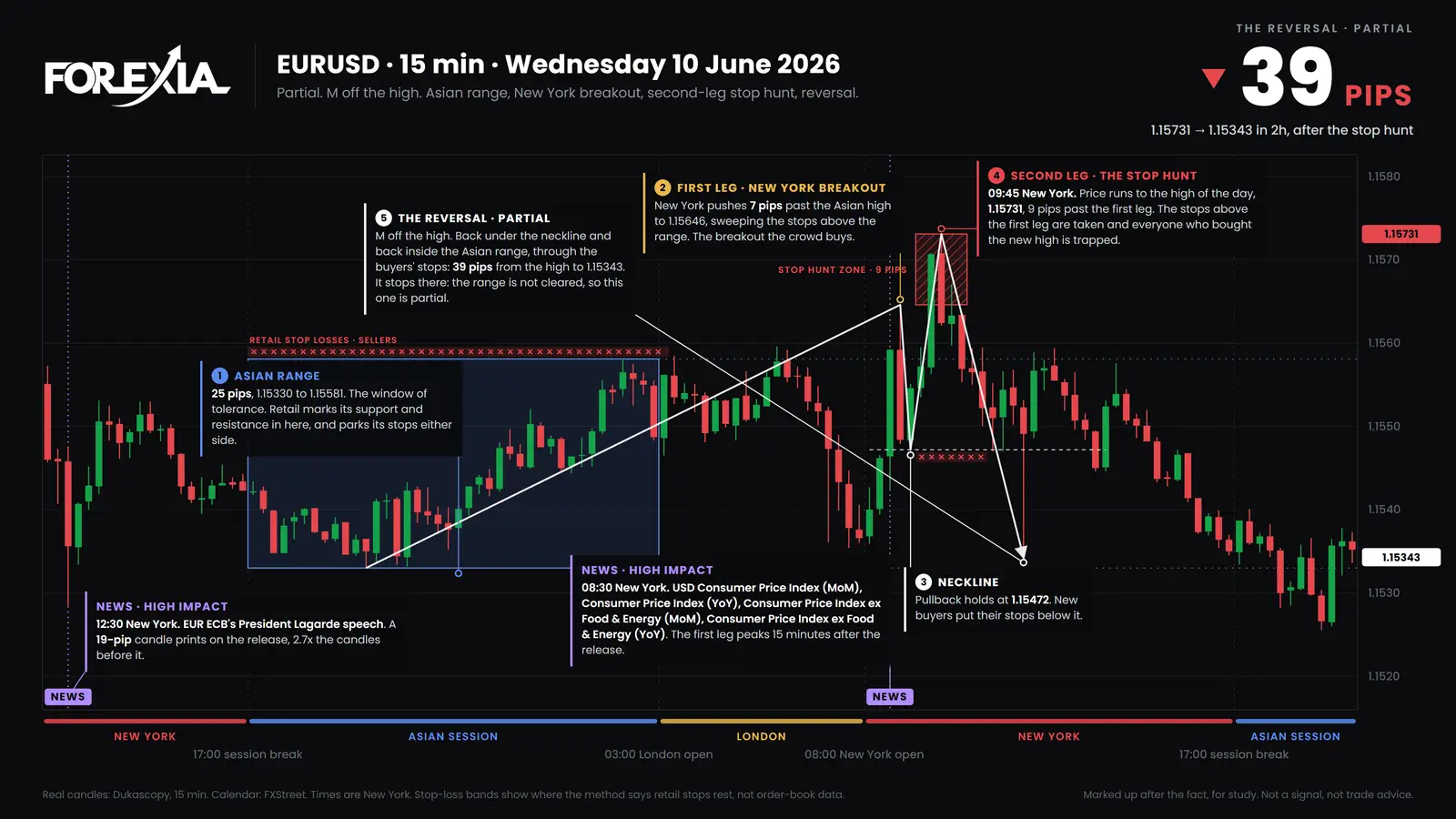
Textbook or Partial is the page for the filing. The grade comes from the whole reversal, known after the close, so it is a record and not a signal.
What does a weekly trading routine in forex leave out on purpose?
It leaves out any direction, any entry, any stop and any target, and it leaves out the idea that a week needs a trade in it. A week with nothing to read is a week the routine files as such. Those belong to a method with its own tests, and our own test of the daily setup as a mechanical rule did not make money. A routine that makes you look at the same things in the same order each week is useful on its own, because it catches the weeks that do not play the order, and nothing in it depends on being right about next week.
It also leaves out any claim about how often a day will turn, because we have not counted that. The Three Seats apply to the routine as to any read: retail asks which way, the market maker, on our reading, asks where the orders are, and the observer asks which part of the week it is in. The routine is written from the third seat.
Sources
The AUD/USD week is read from our chart write-ups on Dukascopy candles in New York time. The range counts are from scripts/seo-counts.mjs. The day grades are from the Textbook or Partial glossary page. The Fed's decision time is on its meeting calendar, and the COT report is published on the CFTC's Commitments of Traders page.
Course 5 of ForexiaPRO, The #SignatureTrade, in production, teaches the daily read and the grading of each day.
For study only. This page is not a signal and not trade advice. Charts are Dukascopy candles, marked up after the fact.
Frequently asked questions
What is a good weekly trading routine for forex?
One job a day: a map on Sunday, a read of the trend on Monday and Tuesday, a check for the trap on Wednesday, a look at the run on Thursday, and a score on Friday. The routine reads the week. It makes no forecast and gives no entries.
How long should a weekly routine take?
The Sunday map is a few minutes of drawing: two lines, an opening price, a stance and the calendar. The daily read is a look at the candles against that map. Friday's review is the longest, because it files the week.
Does a routine make a trading plan?
No. A routine is a habit of looking. A plan has risk, entry and exit rules that have been tested. Our own test of the daily setup as a mechanical rule did not make money, so nothing here is a rule to follow.